Open Nav



For decades, through-hole technology was the standard approach. But starting in the 1980s, surface mount technology began revolutionizing the industry with its ability to pack more functionality into smaller spaces at lower costs. Today, SMT dominates high-volume production, while THT remains important for specific applications where mechanical strength and reliability are paramount.
This guide will break down everything you need to know about SMT vs. THT: how each technology works, their respective advantages and disadvantages, where each is used, and how manufacturers decide which approach to use for a given product. By the end, you will have a clear understanding of both technologies and be better equipped to make informed decisions for your next electronics project.
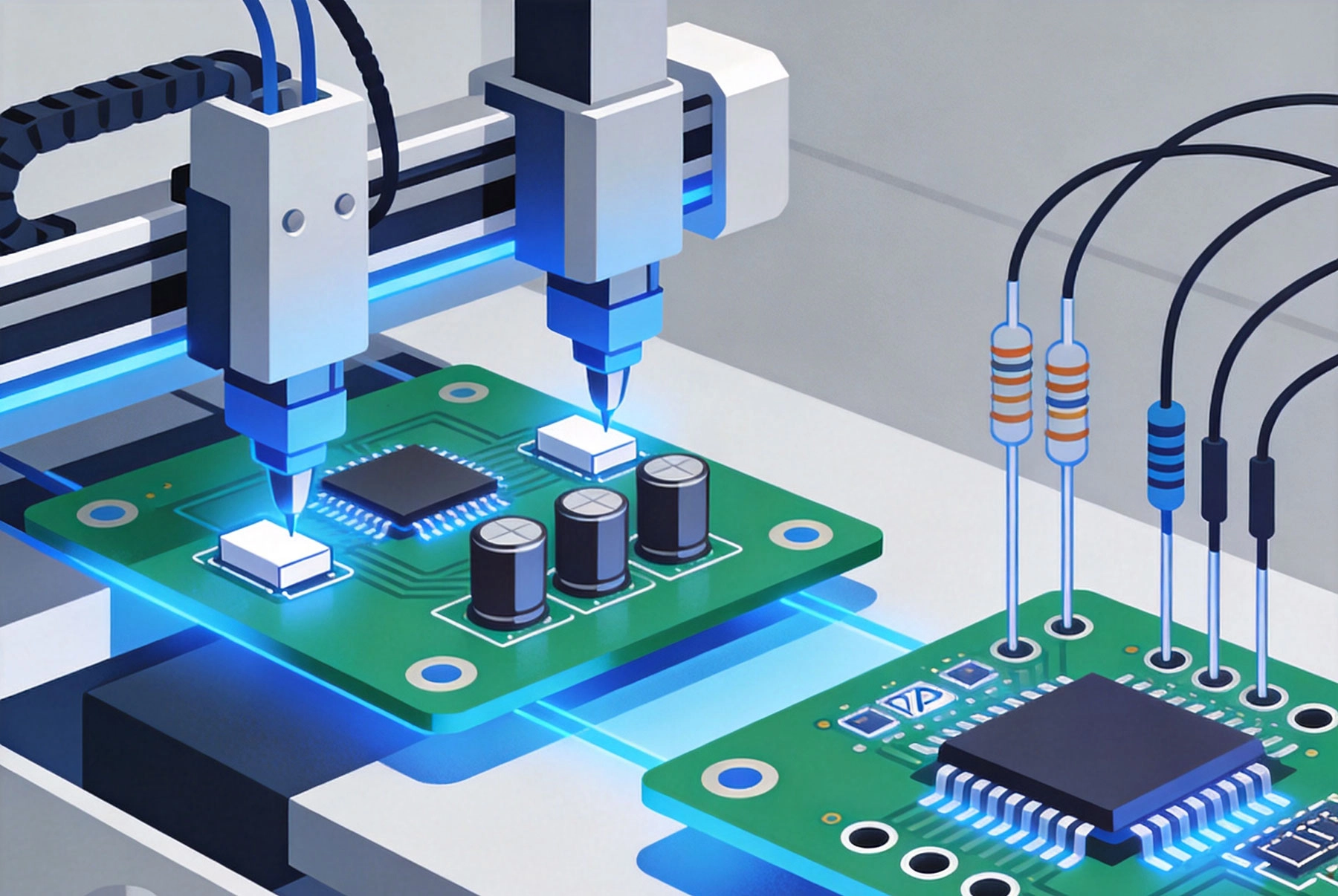
Through-Hole Technology was the original method for assembling electronic circuits on PCBs. In THT, components are mounted by inserting their leads through holes drilled into the PCB and soldering them to pads on the opposite side. The leads pass completely through the board, creating a mechanical connection that is inherently strong and stable.
The process works like this: first, the bare PCB is manufactured with holes pre-drilled at specific locations corresponding to the component leads. During assembly, workers or automated machines insert each component's leads into the appropriate holes. The board is then placed on a wave solder machine or hand-soldered, where molten solder flows around the leads and forms a reliable electrical and mechanical bond.
THT components come in several package styles:
The defining characteristic of THT is that the component leads physically pass through the board. This creates a four-layer bond: component lead, solder, pad, and PCB substrate. That physical penetration gives THT joints exceptional mechanical strength, making this technology the go-to choice for applications where boards face physical stress.
Surface Mount Technology represents a fundamentally different approach. Instead of inserting leads through holes, SMT components are placed directly onto the surface of the PCB. The components have small metal terminations (called "leads" or "terminations") that sit on top of corresponding pads on the board. Solder paste is applied to the pads, components are placed on top, and then the entire board goes through a reflow oven where the solder melts and forms permanent connections.
SMT components are dramatically smaller than their through-hole counterparts. A standard SMT resistor in an 0603 package measures just 0.6mm by 0.3mm—small enough to fit on your fingertip with room to spare. These tiny components enable manufacturers to create impossibly compact devices like smartphones, smartwatches, and hearing aids.
Common SMT package types include:
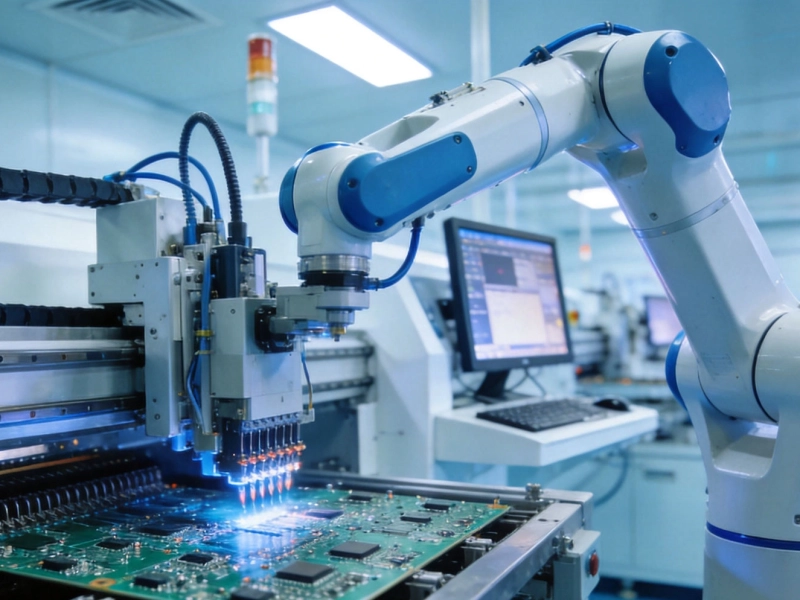
The SMT assembly process is highly automated. Pick-and-place machines can position tens of thousands of components per hour with accuracy measured in hundredths of a millimeter. This speed and precision are why SMT became the dominant technology for volume production.
Understanding the core differences between these two technologies helps in selecting the right approach for any given application. Here is how they compare across several important dimensions.
SMT components are vastly smaller than THT components. A 0402 SMT resistor is roughly 100 times smaller by volume than a typical axial resistor with the same electrical specifications. This size advantage compounds across an entire board—using SMT instead of THT can reduce board area by 50% or more for equivalent functionality.
Higher density means more functionality in less space. Modern smartphones contain thousands of SMT components per board, density levels that would be physically impossible using through-hole technology. The miniaturization trend in consumer electronics is entirely driven by SMT.
When it comes to high-volume production, SMT is significantly faster and more cost-effective. Automated pick-and-place machines handle the vast majority of SMT assembly with minimal human intervention. Once the initial setup is complete, boards roll through the production line at remarkable speeds—thousands of panels per hour for standard products.
THT assembly is more labor-intensive. While insertion machines can automate some through-hole placement, many THT components still require manual insertion or specialized equipment. Wave soldering adds additional processing time compared to SMT reflow. For high-volume consumer electronics, THT labor and equipment costs make it economically impractical for most components.
However, for low-volume or prototype production, the cost equation can reverse. SMT setup costs (stencils, programming, fixtures) can be expensive for small runs, while THT prototyping can sometimes be faster with hand assembly.
This is where THT has a decisive advantage. Because THT leads pass completely through the PCB and are soldered on both sides, the mechanical bond is exceptionally strong. THT joints can withstand significant physical stress—vibration, shock, thermal cycling, and physical handling—without failing.
SMT joints, by contrast, are surface bonds. While modern solder alloys and processes create very reliable connections, SMT joints are more susceptible to mechanical failure under extreme stress. The component sits on top of the pad rather than being anchored through the board, making it more vulnerable to shear forces.
For applications where the board will be subjected to harsh physical conditions, THT is often the safer choice. The automotive, aerospace, industrial, and military sectors frequently specify THT or mixed-technology assemblies for this reason.
SMT components offer superior high-frequency electrical performance. The shorter lead lengths and reduced parasitic capacitance and inductance make SMT ideal for radio frequency (RF) circuits, high-speed digital designs, and microwave applications.
THT components have longer leads that can act as small antennas or introduce unwanted inductance at high frequencies. For applications operating above several hundred megahertz, SMT is generally preferred. This is why RF modules, wireless communication devices, and high-speed processors almost exclusively use SMT.
THT components typically have better thermal dissipation characteristics because the leads provide a direct path for heat to flow between the component and the PCB. This makes THT suitable for power electronics where thermal management is critical.
SMT thermal performance has improved dramatically with newer package designs—thermal pads, bottom-side vents, and exposed dies help—but THT still holds an advantage for high-power applications. Power supplies, motor controllers, and LED drivers often use a mix of both technologies for this reason.
| Factor | SMT Advantages | SMT Disadvantages | THT Advantages | THT Disadvantages |
|---|---|---|---|---|
| Size | Much smaller components, higher density | Requires precise handling and inspection | Larger components, easier to handle manually | Requires drilled holes, larger board area |
| Cost at Volume | Lower assembly cost, highly automated | Higher setup cost for small runs | May be lower setup cost for prototypes | Higher assembly cost, more labor |
| Mechanical Strength | Good with proper design | Less robust under extreme stress | Excellent, leads pass through board | Heavier components, more stress on pads |
| High Frequency | Better RF performance, shorter leads | Smaller pads require careful design | Longer leads limit high-frequency use | Parasitic inductance at high speeds |
| Repair/Rework | Requires hot air rework station | More difficult for fine-pitch components | Easier hand soldering and repair | Replacing through-hole parts takes longer |
| Thermal Management | Modern packages have good thermal design | Less surface contact for heat transfer | Leads provide direct thermal path | Component size limits power handling |
Surface mount technology is the clear choice for most modern electronics:
In all these applications, the driving factors are miniaturization, cost reduction at scale, and high-frequency performance. SMT enables manufacturers to pack billions of transistors into a smartphone processor while keeping the device pocket-sized and affordable.
Through-hole technology remains essential in applications where its strengths are irreplaceable:
Many real-world products use both SMT and THT in a hybrid approach. This mixed-technology assembly combines the benefits of both:
A typical automotive ECU board might have 90% SMT components for the control circuitry, with THT connectors and power components for the interface and high-current sections. This approach optimizes both cost and reliability.
Selecting the right technology—or the right combination—depends on understanding your specific requirements. Here are the key decision factors.
For high-volume production (thousands to millions of units), SMT is almost always the answer. The cost per unit drops dramatically with SMT automation, and the manufacturing speed is unmatched. The higher initial tooling costs (stencils, fixtures, programming) are easily amortized across large runs.
For low-volume production or prototypes, the calculation changes. If you need 100 boards or fewer, SMT setup costs may outweigh the per-unit savings. In these cases, THT or a mix may be more economical, especially if manual assembly is feasible.
Ask yourself: what physical conditions will this board experience? If it will be subjected to constant vibration (automotive, industrial), significant thermal cycling (outdoor, aerospace), or physical handling (portable devices, military field equipment), THT's mechanical strength becomes valuable.
For benign environments—indoor consumer electronics, office equipment, controlled laboratory conditions—SMT is entirely appropriate and will provide excellent reliability.
If miniaturization is a priority, SMT is non-negotiable. If you need to fit your circuit into a small enclosure or pack more functionality onto a board, surface mount is the only practical choice. THT simply cannot achieve the same density.
For high-frequency applications (above approximately 500 MHz), SMT is the clear winner. The shorter signal paths and reduced parasitic effects give SMT a decisive edge in RF and high-speed digital designs.
For power applications, the answer depends on the power level. Low-power circuits benefit from SMT, but high-current applications may require THT components for their superior thermal and electrical characteristics.
If the product will need to be field-repaired or upgraded, THT may be preferable. Hand soldering through-hole joints is a skill that many technicians possess, while SMT rework requires specialized equipment and training. However, modern rework stations have made SMT repair much more accessible, so this factor is less critical than it once was.
For products with planned obsolescence or limited service life—many consumer electronics are designed not to be repaired—SMT is fine. The focus is on manufacturing cost, not serviceability.
Both SMT and THT continue to evolve, with new packaging technologies and assembly techniques emerging to meet the demands of increasingly sophisticated electronics.
SMT is pushing toward even smaller packages. Chip-scale packaging (CSP) places the semiconductor die directly on the PCB with minimal encapsulation, achieving near-theoretical minimum package sizes. Wafer-level packaging (WLP) takes this further by building the package at the wafer level before dicing.
Embedded components—passives and actives buried inside the PCB layers—are becoming more practical, eliminating surface mount entirely for some components. This technology enables even higher density and better electrical performance but requires sophisticated manufacturing capabilities.
Advanced packaging like chiplets is revolutionizing high-performance computing. Instead of one monolithic chip, multiple specialized chiplets are assembled together using advanced interconnects, combining different process nodes and functions in a single package.
Through-hole technology is not standing still. Press-fit technology allows components to be inserted without soldering—special compliant pins are pressed into plated-through holes, creating gas-tight connections that are both strong and reworkable. This is increasingly used for high-reliability automotive and industrial applications.
Selective soldering machines can now solder specific through-hole components on a board that is mostly SMT, reducing the need for full wave soldering and improving process control. This flexibility supports mixed-technology assemblies more efficiently.
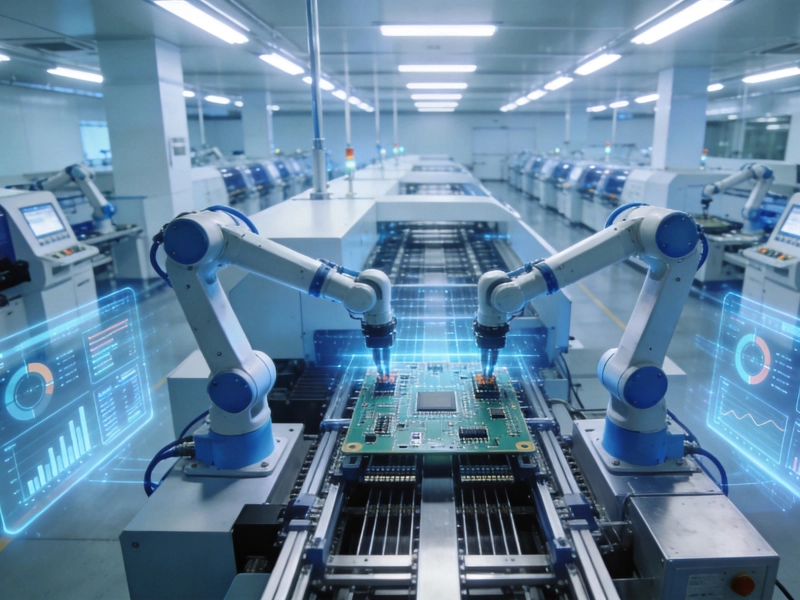
Both technologies benefit from increasing automation and Industry 4.0 integration. Smart factories use real-time monitoring, machine learning for defect prediction, and automated quality control to improve yields and reduce costs. Whether your board is predominantly SMT or THT, modern assembly lines deliver consistent, high-quality results.
SMT stands for Surface Mount Technology. It is a method of mounting electronic components directly onto the surface of a PCB rather than inserting them through holes.
THT stands for Through-Hole Technology. It is a method of mounting components by inserting leads through holes drilled in the PCB and soldering them on the opposite side.
SMT is more cost-effective for high-volume production. Automated pick-and-place machines can assemble boards much faster than through-hole insertion, and SMT components are generally less expensive. Setup costs for SMT are higher but easily amortized across large production runs.
Yes, SMT components can be used in harsh environments with proper design and qualification. Automotive-grade SMT components are tested to survive extreme temperatures, vibration, and humidity. However, for the most demanding applications (under-hood automotive, aerospace, military), THT may still be preferred or required.
Mixed-technology assembly uses both SMT and THT components on the same board. This approach leverages SMT for most components (cost and density) while using THT for specific parts that benefit from through-hole mounting (connectors, power components, mechanical mounts).
No, THT is not becoming obsolete. While SMT dominates high-volume consumer electronics, through-hole technology remains essential for applications requiring high mechanical strength, power handling, or specific connector types. Both technologies will continue to coexist.
For prototyping, THT can be more convenient because components can be hand-soldered and replaced easily without specialized equipment. However, many prototypes use SMT for final testing to match production conditions. The best choice depends on your specific situation, volume, and testing requirements.
SMT is the assembly technology (the process of mounting components). SMD is the Surface Mount Device (the component itself). All SMDs are assembled using SMT, but the terms refer to different things: SMD is the part, SMT is the method.
The debate between SMT vs. THT is not about which technology is better overall—it is about choosing the right tool for the job. Surface mount technology excels in miniaturization, high-volume cost efficiency, and high-frequency performance. Through-hole technology provides unmatched mechanical strength, excellent thermal characteristics, and proven reliability in harsh environments.
Most modern electronics rely primarily on SMT, with through-hole components reserved for applications where their specific advantages are necessary. Mixed-technology assemblies give designers the flexibility to optimize for cost, reliability, and performance simultaneously.
As electronics continue to evolve, both technologies will adapt. New packaging approaches, advanced materials, and smarter manufacturing processes will push the boundaries of what is possible with each method. The fundamentals, however, remain constant: understand your requirements, know the strengths of each technology, and make informed decisions that balance performance, cost, and reliability.
Whether you are designing the next generation smartphone or building a rugged industrial controller, the SMT vs. THT decision is one of the foundational choices in your project. Approach it systematically, and you will build products that perform reliably for years to come.
X-Ray Inspection: Detecting Hidden Defects in BGA and QFN PackagesAugust/10/2026
The True Cost of Poor Quality in PCB Assembly ServicesJuly/13/2026
Rapid Prototyping: Getting Your Electronics from Concept to RealitySeptember/11/2026
Smart Factories: The Digital Transformation of PCBA LinesSeptember/17/2026
High-Reliability PCB Assembly Services for Automotive ElectronicsJuly/08/2026