Open Nav



Every electronics project reaches a decision point: should this board be assembled by hand or by machine? It's a question that sounds simple but carries real consequences. Choose wrong, and you either overpay for a project that didn't need automation, or ship boards with defects that would have been prevented by a pick-and-place machine.
The honest answer is: it depends. Not on what sounds most impressive, but on your specific board characteristics, volume requirements, quality targets, and timeline. This article breaks down the genuine trade-offs so you can make an informed decision for your next project.
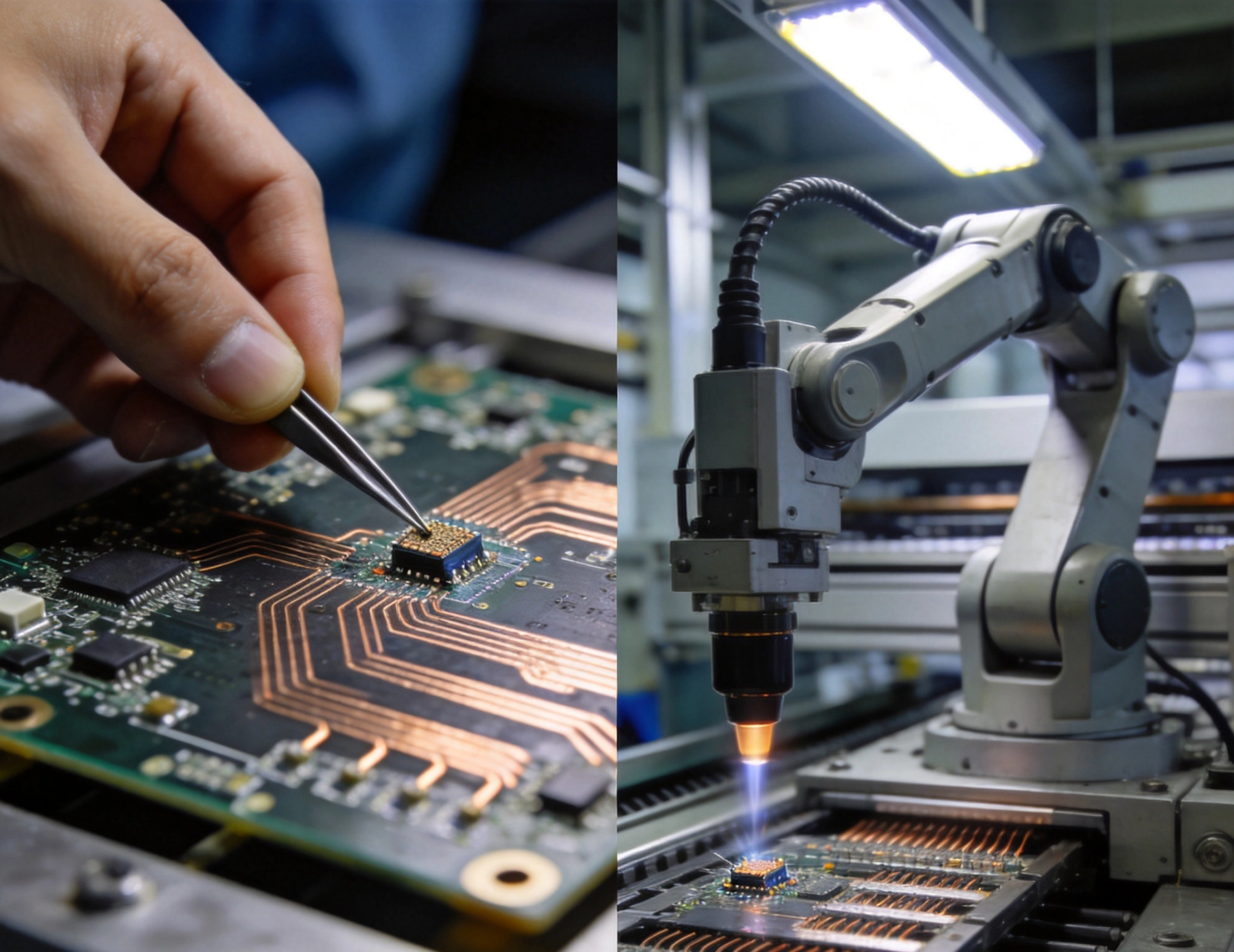
Manual assembly isn't just "hands on a board." It's a defined process with skilled technicians using controlled techniques: solder paste dispensed by stencil or syringe, components placed with tweezers under magnification, reflow in a benchtop oven or hot plate, and through-hole parts soldered with a calibrated iron.
What many engineers underestimate is the skill involved. A competent hand-assembler isn't just poking components onto a board. They're managing paste volume, controlling placement accuracy, monitoring reflow temperatures, and inspecting joints under magnification. Done properly, hand assembly is genuinely demanding work.
The practical limits of hand assembly are real: components below 0402 (the tiny ones) become error-prone and exhausting to place manually. Fine-pitch packages like 0.4mm pitch BGAs are essentially impossible to hand-assemble reliably. High component counts mean long build times and mounting fatigue, which directly translates to defects.
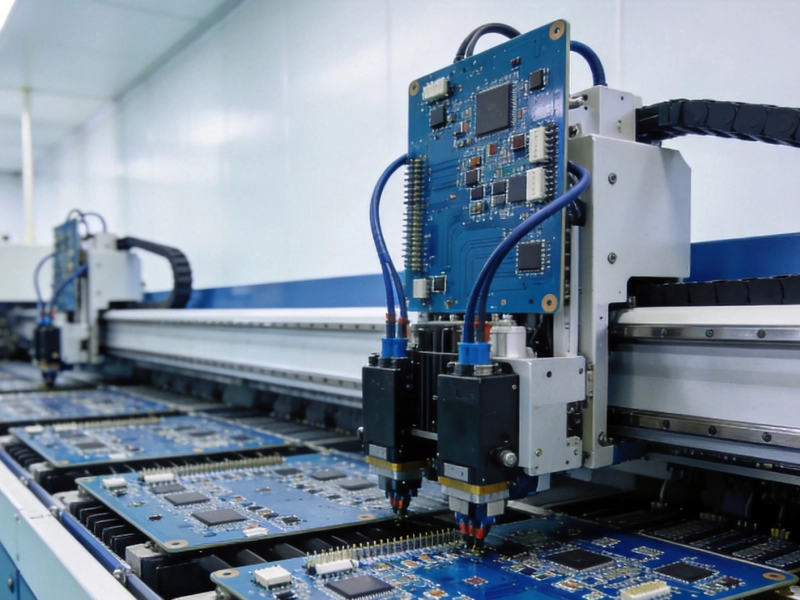
Automated assembly uses pick-and-place machines to deposit components at speeds measured in components per second. These systems range from modest desktop machines that handle basic packages to high-speed lines capable of placing 50,000+ components per hour with placement accuracy measured in microns.
The process still involves human oversight—programming the machine, loading feeders, performing first-article inspection—but the actual placement and soldering are mechanical. This eliminates the fatigue and variability that affect human assemblers over extended build times.
The hidden cost of automation is setup. Every unique board configuration requires machine programming, feeder setup, stencil alignment, and a process development run to verify parameters. For a single board, these setup costs can easily exceed the per-board assembly cost over the production lifetime of that design.
Automated assembly earns its value in specific scenarios. Repetitive placement of the same components across hundreds or thousands of boards is where pick-and-place machines demonstrate their advantages. The consistency is real—a machine places component 1,247 exactly the same as component 1. A human operator, after 1,200 placements, is subtly fatigued.
Fine-pitch components are where automation becomes non-negotiable. A 0.5mm pitch BGA with 200+ balls is not a hand-assembly candidate. The alignment precision required, combined with the inspection difficulty, makes automated placement with X-ray verification the only practical approach.
High-mix, low-volume environments complicate the picture. A contract manufacturer running dozens of different board designs per week can't achieve the same efficiency on any single board as one dedicating a production line to a single design. The setup-to-run ratio matters enormously.
Let's be direct about what each approach actually costs you:
Manual assembly costs: labor time (which scales linearly with component count), defect rate (which tends to increase with build time and complexity), and consistency (which varies between different operators and even between the start and end of the same build session).
Automated assembly costs: setup time and expense, minimum quantity requirements at some facilities, and reduced flexibility for last-minute changes. If you need to modify a board after the production line is programmed, you're paying for reprogramming.
The decision isn't always obvious. A 50-unit run of a board with 200 components and no fine-pitch parts might be faster and cheaper by hand. A 500-unit run of the same board almost certainly belongs on an automated line. The crossover point depends on component density, package types, and your quality requirements.
Work through these questions systematically:
If your bill of materials includes BGAs, QFNs with pitch below 0.5mm, or 01005 resistors, automation becomes necessary. These packages require placement precision that hand assembly cannot reliably achieve, regardless of operator skill.
For prototype runs of 1 to 25 boards with standard surface-mount packages, hand assembly is often the most practical choice. The setup cost of automation rarely makes sense for quantities this low. Once you're regularly building 100+ boards, automation's per-unit economics typically improve.
If you're building prototypes for internal testing, a small number of defects might be acceptable. If these boards go to customers or into products where failure has real consequences, the consistency advantage of automation matters more than the per-board cost.
Automated lines require scheduling. A busy contract manufacturer might have a two-week lead time before your job hits the machine. Hand assembly can often start immediately, which matters for urgent prototype needs or design iterations.
A simple two-layer board with 0402 components and SOIC packages is manageable by hand in moderate quantities. Add mixed technology (surface-mount plus through-hole), fine-pitch parts, or multilayer stackups, and the hand-assembly difficulty increases significantly.
Most production environments actually use both approaches, sometimes on the same board. Common scenarios include:
Automated placement with manual through-hole insertion. Fine-pitch surface-mount parts go on the pick-and-place line, while bulky through-hole connectors, transformers, or heat sinks get installed by hand. This is genuinely common in industrial and power electronics.
Automated assembly with manual rework. A production run produces boards that mostly pass, while a smaller number of boards with defects get manually reworked by technicians. This assumes the defect rate is low enough that rework economics make sense.
Hand assembly for prototypes, automated for production. Many teams start with hand-built prototypes during development, then move to automated assembly once the design stabilizes and volume justifies the investment.
When evaluating costs, don't compare machine time to labor time directly. Compare total delivered cost:
Hand assembly costs include labor (typically $25-$50 per hour for skilled operators, plus overhead), consumables (solder paste, flux,wipe materials), inspection time, and the real cost of rework and defects.
Automated assembly costs include setup (machine programming, stencil fabrication, feeder setup), per-board variable cost (components, paste, energy), inspection (AOI or X-ray), and first-article qualification time.
The comparison shifts as quantities increase. At low volumes, hand assembly's lower setup cost wins. At high volumes, automated assembly's lower per-board cost and higher consistency wins. The crossover point varies, but it's commonly in the range of 100 to 500 boards for typical industrial assemblies.
Quality isn't just about whether a board works—it's about whether it keeps working. Automated assembly tends to produce more consistent solder joints, fewer tombstoned components, and better placement accuracy. These factors matter more for boards that will experience thermal cycling, vibration, or long operational lifecycles.
Hand assembly can achieve excellent quality, but it requires more inspection effort and depends heavily on operator skill consistency. A well-trained technician building boards daily will produce better results than one who assembles boards occasionally. This skill degradation is real and often unmeasured.
For regulated industries—medical devices, automotive, aerospace—automated assembly often becomes a requirement rather than a preference. The documentation, traceability, and process control that automation provides align better with regulatory expectations.
Hand assembly makes sense when: prototypes need to be built quickly with design changes still likely, boards use only standard packages (0805, 1206, SOIC, TSSOP, and larger), quantities are low (under 50 units), budget for setup costs isn't available, one-off or custom boards need building, or through-hole components dominate the bill of materials.
Automation makes sense when: boards include fine-pitch components or BGAs, volume exceeds 100 units of the same design, quality consistency is critical for the application, multiple identical boards need building regularly, boards will be produced over an extended period (making setup cost worthwhile), or regulatory requirements mandate documented process control.
If you're outsourcing assembly, communicate honestly about your needs. A good contract manufacturer will advise you on the most cost-effective approach, but they need accurate information about volumes, timelines, and quality requirements to do that effectively.
Ask your assembly partner about their recommendation for your specific board. They have experience across many designs and can often identify factors you haven't considered. The best relationships involve genuine consultation, not just order taking.
Minimum quantities vary by manufacturer. Some accept runs as low as 5 to 25 units for automated assembly, while others require 50 to 100+ due to setup economics. Setup costs are the primary driver—higher setup costs mean higher minimum orders to make the economics work.
Yes, but with limitations. Automated insertion equipment exists for through-hole parts, but many manufacturers prefer selective solder or hand assembly for low quantities of through-hole components. The choice depends on hole size, lead type, and whether the parts are odd-form (non-standard shapes).
If your board has components with pitch below 0.5mm, BGAs, or more than about 300 total placements, hand assembly becomes unreliable. Other complexity factors include mixed technology (SMT plus through-hole), high component density requiring tight placement tolerances, or demanding thermal profiles.
Generally yes, for runs under approximately 50 to 100 units with standard component packages. The avoided setup cost of automation usually outweighs the labor cost. Above that range, automated assembly's lower per-board cost typically takes over.
Design for manufacturability from the start. Use standard packages where possible, avoid unnecessarily fine pitch, optimize component placement to maximize panel utilization, and reduce the variety of unique components. Good DFM practice before sending to manufacture prevents expensive surprises.
Contact us to discuss your requirements.
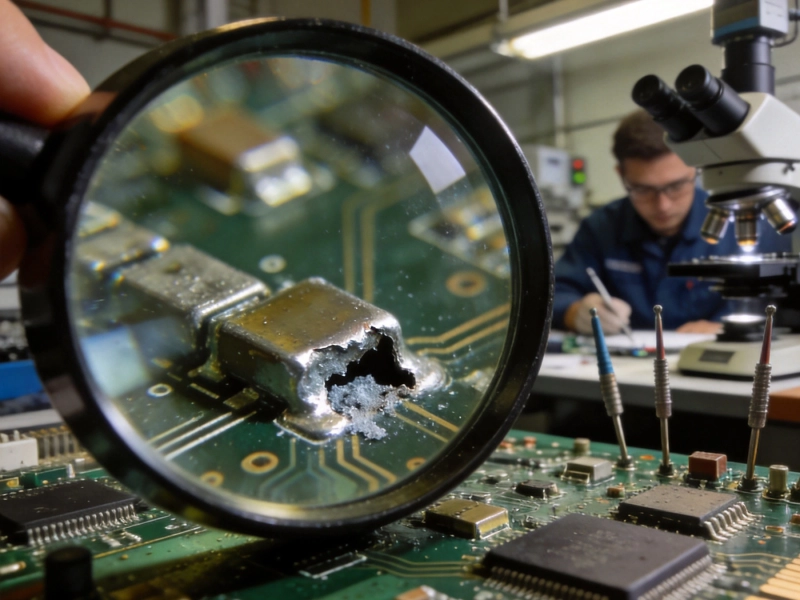
Why Your Prototype PCB Assembly Failed: A Troubleshooting Guide?September/24/2026
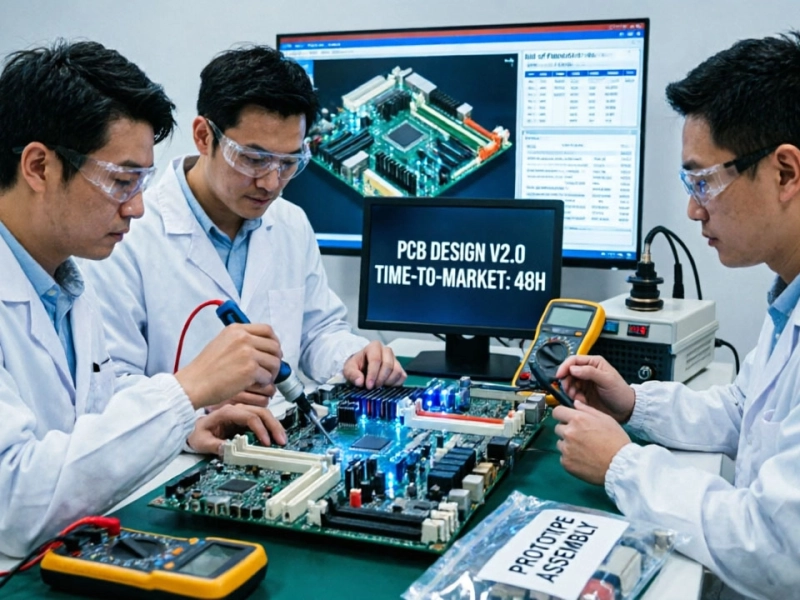
Accelerating Time-to-Market with Fast Prototype PCB AssemblyJune/10/2026
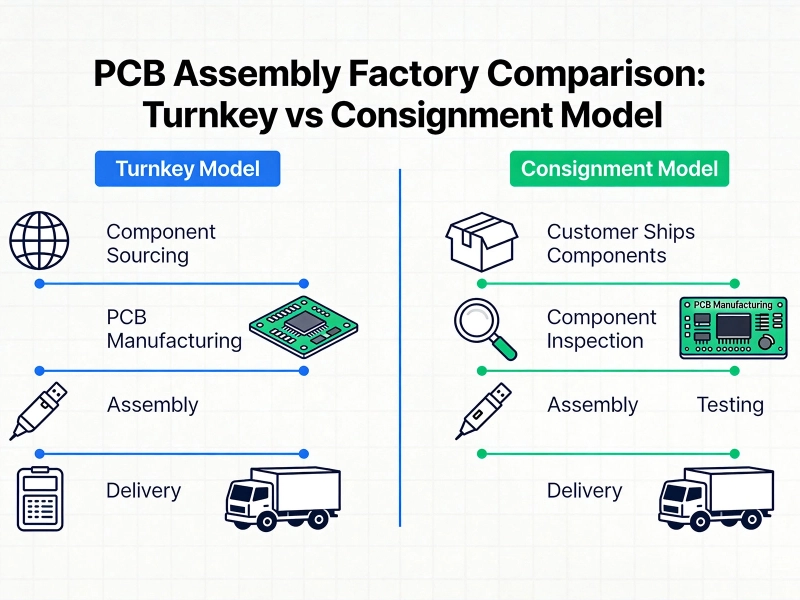
Turnkey PCB Assembly vs Consignment: Which Model Actually Fits Your Project?June/05/2026
FAQ: Can You Assemble Boards with Components on Both Sides?July/22/2026
Wave Soldering vs. Selective Soldering for Through-Hole Components: Which Process Wins?July/15/2026