Open Nav



Medical device electronics do not operate under the same rules as consumer electronics, industrial controls, or automotive electronics. A failed consumer smart watch is an inconvenience. A failed medical device PCB assembly in a diagnostic imaging system, a patient monitor, or a surgical instrument can delay a critical diagnosis, disrupt a life-saving intervention, or create a direct safety risk for the patient. The specialized PCB assembly services built exclusively for medical applications are not an incremental improvement over standard SMT Assembly Services — they are a fundamentally different manufacturing system, purpose-built around patient safety, regulatory compliance, full traceability, and documented reliability. Choosing a standard general-purpose PCB assembler for a medical device product without the specialized medical quality infrastructure is one of the costliest and riskiest decisions a medical product team can make. Understanding exactly what makes medical specialized PCB assembly different and why it matters for the entire product lifecycle will help engineering and regulatory teams make better sourcing decisions that protect patients and commercial interests.
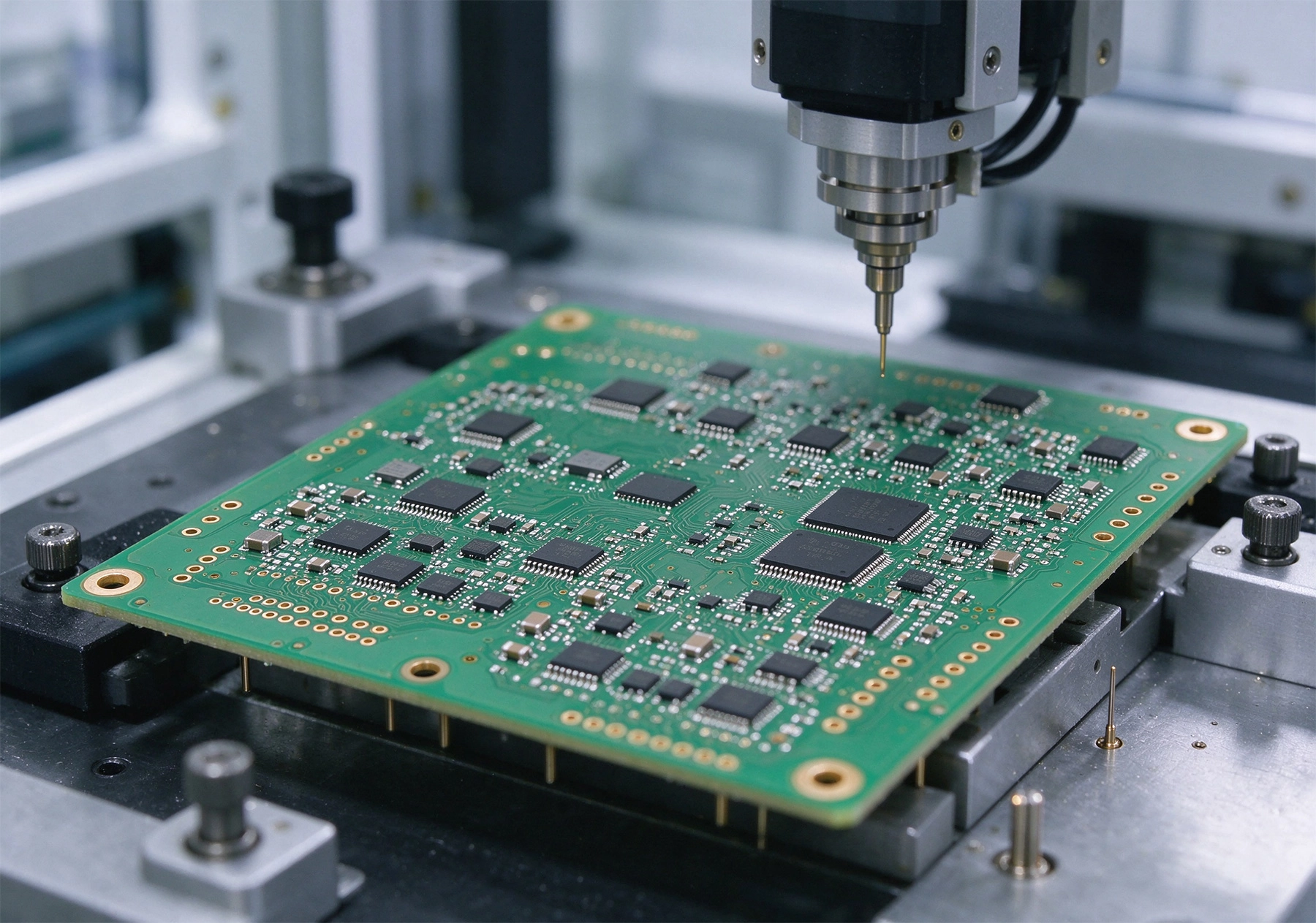
The ISO 13485 quality management system is the global benchmark for medical device manufacturing, and it defines a set of quality requirements that are far more rigorous than the generic ISO 9001 standard that applies to general-purpose manufacturing. Specialized medical PCB assembly services are built from the ground up around ISO 13485, while general-purpose SMT shops typically operate with ISO 9001 quality systems that do not satisfy the specific medical requirements.
ISO 13485 mandates that every decision, every process step, and every change that affects the safety or performance of the medical device must be documented, approved, and traceable throughout the entire product lifecycle. General-purpose PCB assemblers maintain production records at a summary level that is adequate for consumer products, but this level of documentation falls far short of the medical requirements. A specialized medical assembly service will capture individual process parameter values at each production step — reflow profile data for every production lot, solder paste inspection results, X-ray inspection images of BGA joints, and full calibration records for every piece of equipment that touches the product. This level of documentation is not an optional extra, it is a mandatory requirement for regulatory submission and audit.
The design control requirements embedded within ISO 13485 mean that any change to the assembly process must be formally evaluated for impact on the device safety and performance, even a seemingly minor change like a new lot of solder paste or a minor adjustment to the placement machine recipe. General-purpose assemblers often optimize their processes on the fly to improve yield or fix minor production issues without documenting or evaluating the changes, a practice that would constitute a major quality non-conformance in a medical manufacturing environment. Specialized medical PCB assembly teams have formal engineering change notification procedures that require cross-functional review by quality, engineering, and regulatory staff before any process change is implemented, and the change evaluation records are permanently stored in the product history file.
The management responsibility and quality audit structure in a medical specialized PCB assembly facility includes dedicated quality personnel whose full-time job is medical device quality assurance, not production efficiency. In general-purpose SMT shops, quality is usually a secondary function that reports to operations management, which creates inherent conflict of interest when production schedules must compete against quality standards. In specialized medical assembly services, the quality organization operates independently with direct reporting lines to executive management, and quality hold authority that can stop production immediately if a potential medical safety risk is identified. This separation of responsibility is a foundational requirement for reliable medical device manufacturing.
Component traceability is a feature that general-purpose PCB assemblers implement at a basic level, but for medical devices it is an absolute non-negotiable requirement that can make the difference between a targeted, efficient product recall and a full expensive product withdrawal. Specialized medical PCB assembly services have traceability systems far more robust than standard industry practices.
General-purpose PCB assemblers typically track components down to the component part number and the distributor order number. Specialized medical assemblers track every individual component lot number from the moment it enters the receiving inspection area, through kitting, through placement on the board, through test, and all the way to the finished shipment of the final product unit. The traceability record links each individual assembled PCB serial number to every component lot that was installed on that specific board. If a component supplier later issues a recall for a defective component lot, the medical manufacturer can immediately pull a report that lists every single unit in the field that contains that specific lot, and only those units. There is no need to recall entire product generations or broad production lots, which reduces the recall cost by orders of magnitude and minimizes disruption to healthcare providers and patients.
Component traceability for medical devices extends beyond passive and active electronic components to include process materials like solder paste, conformal coating material, and adhesive materials that come into contact with the PCB assembly during manufacturing. These materials can introduce contaminants or create unintended performance effects that impact patient safety, and the full lot traceability for process materials is a requirement in most medical regulatory jurisdictions. General-purpose assemblers almost never track the lot numbers of solder paste or conformal coating back to individual units, which is a documentation gap that would result in a failed regulatory audit for a medical device manufacturer.
Serialization of individual finished board units with unique, permanent serial numbers is a standard feature in specialized medical PCB assembly services, and each serial number is linked to the full DHR record for that unit. The Device History Record for each serial number contains the full timestamped manufacturing history for that specific board, including the dates and times it passed through each manufacturing station, the operator identification who performed each step, all inspection measurements, and all test results. This level of granular unit-level traceability does not exist in general-purpose SMT shops, which typically track at the lot level with no distinction between individual units.
Process validation is the formal, documented evidence that a manufacturing process is capable of consistently producing a product that meets all the predetermined specifications and quality attributes. Specialized medical PCB assembly services have fully validated all their critical manufacturing processes, while general-purpose SMT shops typically operate with informal process setup that relies on operator skill rather than formal documented validation.
The three-phase process validation methodology — Installation Qualification, Operational Qualification, and Performance Qualification — is mandatory for all critical medical manufacturing processes. IQ verifies that the equipment is installed correctly, that all utilities and supporting systems meet specifications, and that the maintenance and calibration procedures are in place. OQ verifies that the equipment operates within the full specified range of process parameters and that the process output remains consistent and acceptable across the entire operating window. PQ verifies that the process consistently produces conforming product over extended production runs under actual production conditions. Specialized medical PCB assembly facilities maintain complete IQ/OQ/PQ documentation for every reflow oven, every stencil printer, every placement machine, every test system, and every selective soldering station. General-purpose assemblers almost never maintain this level of process validation documentation, because it is not required for consumer product manufacturing.
Process capability studies, which calculate Cpk indices to quantify how well a process is centered within its specification limits, are performed on an ongoing basis for all critical medical assembly processes. For medical device applications, a minimum Cpk of 1.33 is typically required for critical parameters, and many medical products demand Cpk 1.67 or higher for safety-related processes. General-purpose assemblers rarely collect enough statistical process data to calculate meaningful Cpk values, and they operate at much wider process capability levels that produce higher defect rates that would be unacceptable for medical applications. The specialized medical assembly service uses real-time statistical process control charts to monitor critical process parameters continuously during production, and any process drift outside the pre-defined control limits triggers an immediate hold and corrective action before out-of-spec product can be manufactured.
Process change control in specialized medical assembly environments requires formal re-validation of any process after any significant change is made. If a reflow oven's heating element is replaced, or if a new generation of placement machine is introduced, the affected process must go through a full mini IQ/OQ/PQ cycle before production can resume, to prove that the process change has not negatively impacted the product quality. General-purpose assemblers will perform equipment maintenance and resume production immediately without any formal re-qualification, which creates unvalidated process variation that can introduce hidden defects into medical devices.
Contamination control is another area where specialized medical PCB assembly services operate at a far higher standard than general-purpose assembly operations. Even tiny amounts of ionic residue, flux residue, or particulate contamination on a medical PCB can cause long-term reliability problems that manifest after months of operation in the clinical environment.
The cleanliness requirements for medical device PCBs are far more stringent than IPC Class 3 requirements for general electronics. The maximum allowable ionic contamination level for most medical PCB applications is below 1.5 microgram equivalents of sodium chloride per square centimeter, measured using ionic contamination testing equipment after the assembly cleaning process. Specialized medical assembly facilities operate dedicated industrial-grade cleaning lines with DI water filtration systems that are continuously monitored for resistivity and total organic content, to ensure that the cleaned boards meet the strict cleanliness specifications. General-purpose SMT shops often use cheaper, less capable cleaning systems or no-clean solder paste processes that leave higher levels of flux residue on the board surface, which is perfectly acceptable for consumer electronics but not acceptable for medical devices that must operate reliably for many years.
Conformal coating application for medical devices is a controlled, validated process in specialized medical assembly services. The conformal coating material lot traceability, the coating thickness measurement, the cure profile validation, and the inspection criteria for coating coverage and pinholes are all fully documented and controlled. The coating room is typically a separate controlled environment with filtered air and temperature and humidity regulation, to prevent particulate contamination and ensure consistent coating cure. General-purpose assemblers often apply conformal coating in open assembly areas with minimal process control, leading to variable coating thickness, pinholes, and coating defects that compromise the long-term environmental protection of the medical PCB.
ESD control for medical device electronics is also elevated to a higher standard in specialized medical assembly environments. The entire manufacturing floor is built as a fully ESD-protected area with continuous monitoring of wrist strap connectivity, work surface grounding, and ESD garment usage. All sensitive medical assemblies are transported in ESD-shielded containers at all times between process steps, and every operator completes annual ESD control training with documented verification of understanding. General-purpose assembly operations often have partial ESD protection that works well for less sensitive consumer components, but does not meet the strict ANSI/ESD S20.20 requirements that are mandatory for medical device manufacturing.
Specialized medical PCB assembly services employ regulatory affairs personnel who understand FDA 21 CFR Part 820, ISO 13485, and European MDR requirements, and who can actively support the medical device manufacturer during regulatory audits and product submissions. This regulatory expertise does not exist in general-purpose PCB assembly houses.
The specialized medical assembler understands exactly which records must be made available during a regulatory audit, how to present the documentation to auditors, how to respond to auditor questions in a way that avoids misunderstandings, and how to implement corrective actions for any findings that are raised during the audit. They have experienced hundreds of notified body audits, FDA inspections, and NMPA audits, and they know exactly what the auditors are looking for. General-purpose assemblers have almost no experience with medical regulatory audits, and they will often struggle to produce the documentation on demand that auditors request, which can cause serious delays or even major non-conformances in the medical device manufacturer's audit.
Specialized medical assembly partners can provide pre-compiled documentation packages that medical device manufacturers can directly incorporate into their 510(k) submissions, CE technical files, and other regulatory submissions. This includes the material certification documents, the process validation summary, the DHF and DMR contributions, and the quality system certificate documentation. General-purpose assemblers do not maintain this type of documentation, and the medical device manufacturer will have to spend extra months compiling the missing documentation themselves before they can submit their regulatory filing.
When a quality issue or a product non-conformance is identified, the specialized medical assembly provider already has a well-defined CAPA process in place that follows medical regulatory expectations, including formal root cause analysis, corrective action implementation, effectiveness verification, and full documentation of every step. General-purpose assemblers typically use informal problem-solving processes that do not meet the rigorous CAPA documentation requirements of medical regulators, which means that the medical device manufacturer cannot use their supplier's documentation to close out regulatory CAPA actions.
Specialized medical PCB assembly services maintain dedicated component supply chains that are pre-qualified for medical device applications, separate from the general consumer component market, to mitigate the risk of counterfeit components, obsolescence surprises, and supply chain disruptions that are particularly damaging for long-lifecycle medical products.
All components sourced by specialized medical assembly providers are purchased directly from authorized franchised distributors or directly from the original component manufacturers, never from independent open-market brokers where counterfeit or substandard components are most commonly encountered. Every incoming component lot goes through enhanced incoming inspection that includes visual verification of component markings, X-ray inspection for counterfeit components, and electrical parametric testing for critical components. This rigorous incoming inspection process prevents counterfeit components from ever entering the medical product bill of materials, a critical protection that general-purpose assemblers do not provide, because they regularly source components from the lowest-cost available suppliers to minimize part cost.
Component obsolescence management in specialized medical assembly facilities is a proactive ongoing process that monitors the lifecycle status of every component part number in every active medical BOM. Long before a component manufacturer issues an end-of-life notification, the medical assembler will work with the customer's engineering team to identify pin-compatible medical-qualified alternate components and begin the pre-qualification and validation process, so there is no disruption to production. General-purpose assemblers provide almost no obsolescence notification services, and they will often substitute non-medical alternate components without notification when the original part becomes unavailable, which can create major regulatory compliance issues for medical device products.
Long-term component safety stock programs that extend for 5 to 10 years are standard practice in specialized medical assembly environments, to support the multi-decade product lifecycle requirements of medical devices. When a critical medical component is nearing end of life, the assembler will coordinate with the customer to place a final lifetime buy of components that will cover the remaining production volume for the entire remaining product lifecycle. General-purpose assemblers do not offer lifetime buy programs, because they operate on short-term product lifecycles typical of consumer electronics that rarely exceed 2 years.
Specialized PCB assembly services built exclusively for medical device applications are not a premium-priced luxury — they are a fundamental safety infrastructure that protects patients, protects the medical device manufacturer's brand reputation, and ensures compliance with the stringent global medical regulatory requirements. The differences between medical specialized assembly and general-purpose SMT assembly extend across every single dimension of the manufacturing operation: quality system design, traceability granularity, process validation methodology, contamination control, regulatory expertise, and supply chain resilience. Attempting to save short-term cost by using a general-purpose PCB assembler for a safety-critical medical device exposes the manufacturer to enormous long-term risks, including regulatory audit failures, product recalls, field failures that endanger patients, and devastating brand damage that far exceeds any minor component or assembly cost savings.
For medical product teams that are committed to delivering safe, reliable, and regulatory-compliant products to healthcare providers and patients, selecting a specialized medical PCB assembly partner with proven ISO 13485 experience is the most important manufacturing sourcing decision they will make. The specialized capabilities of these partners are built over many years of dedicated investment in medical quality systems, trained personnel, and regulatory expertise that cannot be replicated by general-purpose assembly operations.
Contact us to discuss your medical device PCB assembly requirements and to explore how our specialized medical manufacturing services, quality systems, and regulatory support capabilities can help you achieve your product safety and regulatory compliance objectives.
How Flexible Are Low Volume PCB Assembly Manufacturers?May/18/2026
Turnkey PCB Assembly vs Consignment: Which Model Actually Fits Your Project?June/05/2026
Do You Offer BGA Reballing and Rework Services?September/16/2026
High-Mix Low-Volume (HMLV) Manufacturing: Is Your Supplier Ready?October/12/2026
The Power of Turnkey PCB Assembly: One Vendor, Total ResponsibilityJune/12/2026