Open Nav



As product lifecycles shorten and customer demand for customization grows, more companies are shifting from traditional high-volume mass production to high-mix low-volume (HMLV) manufacturing strategies. This approach allows businesses to offer a wider range of product variants, reduce inventory costs, and respond faster to market changes — but it also requires a fundamentally different set of capabilities from your contract manufacturing partner. Not all suppliers are equipped to handle the unique challenges of HMLV production, and choosing the wrong partner can lead to delayed launches, quality issues, and unexpected costs.
In this guide, we'll break down exactly what HMLV manufacturing entails, the key challenges it presents for suppliers, and the critical capabilities you should look for when evaluating potential manufacturing partners for your high-variety, low-volume production needs.
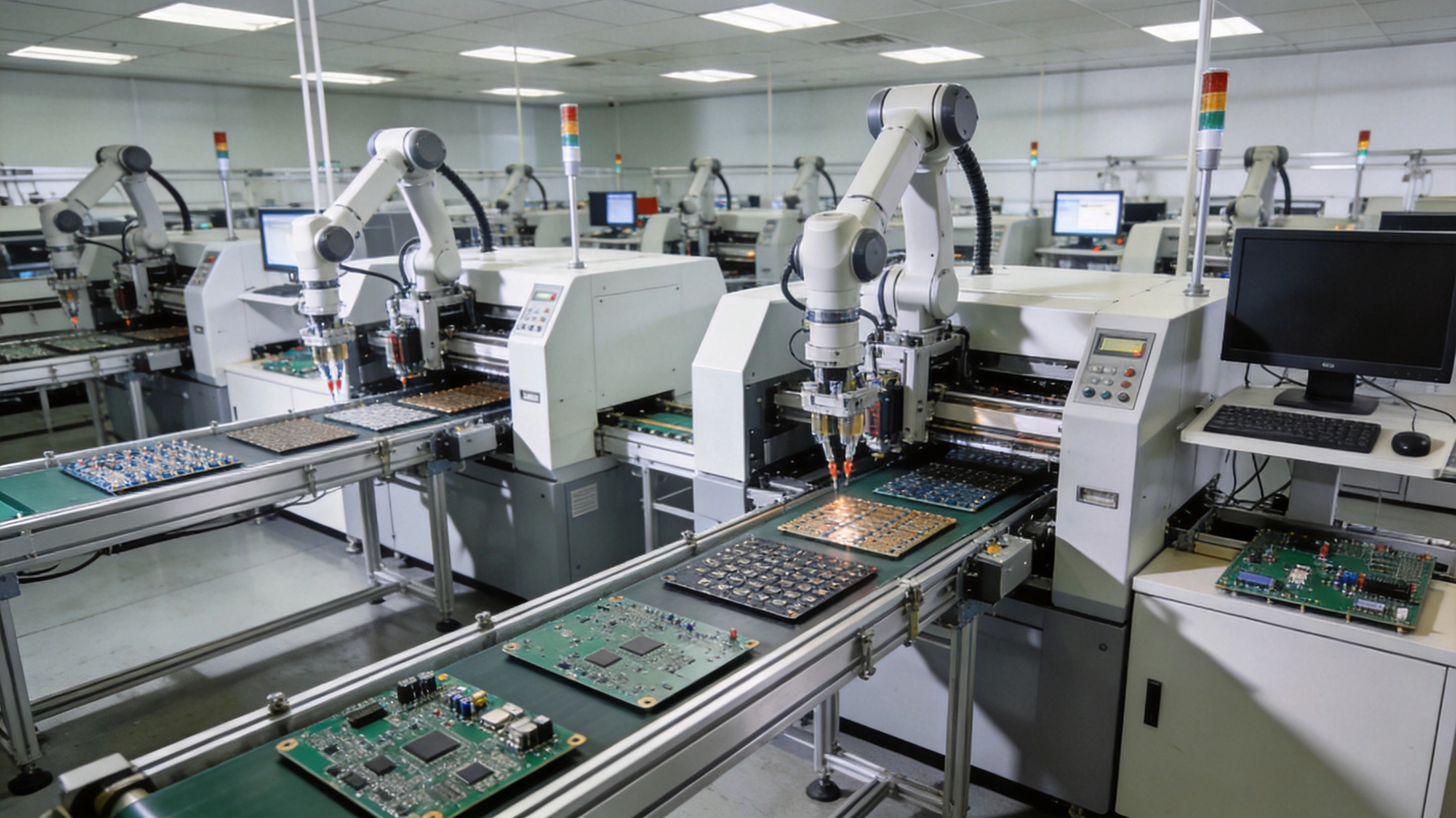
High-mix low-volume manufacturing refers to a production model where a facility produces a wide variety of different products in relatively small quantities. This is the opposite of traditional mass production, which focuses on producing very large volumes of a single standardized product with minimal variation.
HMLV production is particularly common in industries such as:
Unlike mass production, where setups are done once and run for weeks or months, HMLV environments require frequent changeovers between different products, often multiple times per day. This creates unique operational challenges that many traditional contract manufacturers are not prepared to handle efficiently.
HMLV production places significant demands on manufacturing operations that are typically optimized for high-volume, low-variety production. The most common challenges include:
Suppliers that have only ever operated in a high-volume environment often struggle with these challenges, leading to missed delivery deadlines, quality issues, and higher-than-expected pricing for low-volume orders.
When evaluating potential manufacturing partners for your HMLV needs, look for these 8 critical capabilities that indicate a supplier is prepared to handle high-variety, low-volume production effectively:
The most important capability for HMLV suppliers is the ability to switch between different product runs quickly and efficiently. Look for suppliers that use single-minute exchange of die (SMED) methodologies and have standardized setup processes that allow them to change over production lines in 30 minutes or less, rather than the hours or days required for traditional high-volume lines.
Modular workstations, universal fixturing, and configurable test equipment are all good indicators that a supplier has invested in the flexibility needed for HMLV production.
With multiple product variants running through the facility at the same time, rigorous document control is essential to avoid errors. Your supplier should have a digital document management system that ensures the correct version of assembly instructions, BOMs, and test procedures is always used for each production run.
Full batch traceability is also critical for HMLV, especially in regulated industries like medical devices or aerospace. The supplier should be able to track every component used in each unit back to its original manufacturer lot number, and provide complete production records for every order.
HMLV suppliers need to be proficient at sourcing small quantities of hundreds or thousands of different components, often with short lead times. Look for suppliers that have established relationships with component distributors, maintain strategic safety stock for commonly used parts, and have systems in place to identify and qualify alternative components when parts are obsolete or on long lead times.
Suppliers that specialize in HMLV will also be able to handle consigned inventory and customer-provided components efficiently, which is a common requirement for low-volume production runs.
Unlike high-volume facilities where workers perform the same repetitive task all day, HMLV production requires staff who are trained on multiple different assembly processes and product lines. Ask potential suppliers about their training programs and cross-training policies: the best HMLV facilities typically train their production staff on at least 3-4 different workstations to maximize flexibility.
Low employee turnover rates are also a good indicator, as experienced staff who are familiar with a wide range of products make far fewer errors during changeovers and production runs.
HMLV suppliers need to be proficient at sourcing small quantities of hundreds or thousands of different components, often with short lead times. Look for suppliers that have established relationships with component distributors, maintain strategic safety stock for commonly used parts, and have systems in place to identify and qualify alternative components when parts are obsolete or on long lead times.
Suppliers that specialize in HMLV will also be able to handle consigned inventory and customer-provided components efficiently, which is a common requirement for low-volume production runs.
Unlike high-volume facilities where workers perform the same repetitive task all day, HMLV production requires staff who are trained on multiple different assembly processes and product lines. Ask potential suppliers about their training programs and cross-training policies: the best HMLV facilities typically train their production staff on at least 3-4 different workstations to maximize flexibility.
Low employee turnover rates are also a good indicator, as experienced staff who are familiar with a wide range of products make far fewer errors during changeovers and production runs.
Statistical quality control methods that work well for high-volume production are often ineffective for small batches, where a single defect can represent a significant percentage of the total order. Look for HMLV suppliers that have adapted their quality processes for low-volume environments, including mandatory first-article inspection (FAI) for every new product run, 100% functional testing for all units (rather than sampling), and dedicated quality engineers assigned to each customer account.
Suppliers with experience in regulated industries like medical devices or aerospace will typically have the most rigorous quality control systems that translate well to HMLV production in any industry.
In HMLV production, design changes are common, and small inefficiencies in the design can have a disproportionate impact on production cost and lead time. The best HMLV suppliers have in-house engineering teams that can provide DFM feedback early in the design process, helping you optimize your product for easier assembly, lower cost, and higher reliability without sacrificing functionality.
Look for suppliers that offer this DFM support as part of their standard service, rather than charging extra for engineering input. This indicates they are invested in long-term partnership rather than just transactional production.
One of the biggest advantages of HMLV production is the ability to start small and scale up as demand grows. Your supplier should be able to handle production runs ranging from just a few prototype units up to thousands of production units seamlessly, without requiring you to switch suppliers as your volumes increase.
Ask about their typical order size range, and how they handle volume fluctuations. The best HMLV suppliers have flexible capacity that can be allocated to different customers as needed, so you don't have to wait weeks for production slot availability when you need to place a rush order.
HMLV production will always have a higher per-unit cost than mass production, but your supplier should be transparent about how they price small-batch orders, with no hidden fees or unexpected charges. Look for suppliers that provide detailed, itemized quotes that break down costs for materials, labor, setup, and testing, so you understand exactly what you're paying for.
Avoid suppliers that charge exorbitant NRE (non-recurring engineering) fees or have extremely high minimum order quantities (MOQs) that force you to buy more units than you need. Good HMLV partners work with you to optimize costs at every volume level.
Watch out for these warning signs that a potential supplier doesn't have the capabilities to handle your HMLV needs effectively:
If you encounter any of these red flags during the evaluation process, it's usually best to look for a supplier that specializes specifically in HMLV production.
Follow these steps to ensure you select a supplier that is fully prepared to meet your HMLV manufacturing needs:
Taking the time to evaluate these factors carefully will help you avoid costly mistakes and build a long-term partnership with a supplier that can grow with your business.
Working with a supplier that specializes in HMLV manufacturing delivers significant business benefits beyond just reliable production:
Choosing the right manufacturing partner is one of the most critical decisions you'll make when bringing a new product to market, especially when working with a high-mix low-volume production model. By prioritizing the capabilities outlined in this guide, you can select a supplier that is not just ready to handle your current production needs, but can grow and adapt with your business as your requirements evolve.
If you're looking for a reliable HMLV manufacturing partner for your electronics or PCB assembly needs, our team has the capabilities and experience to handle your high-variety, low-volume production requirements. Contact us to discuss your project.
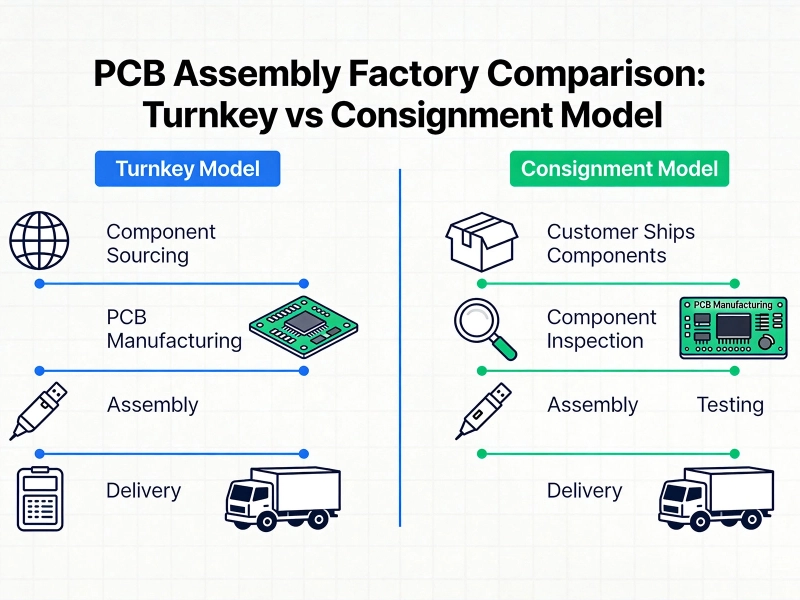
Turnkey PCB Assembly vs Consignment: Which Model Actually Fits Your Project?June/05/2026
Accelerating Time-to-Market with Fast Prototype PCB AssemblyJune/10/2026

What's the Difference Between Prototype PCB Assembly and Low Volume PCB Assembly ?May/18/2026
Understanding PCBA: The Core of Modern Electronics ManufacturingAugust/08/2026
How to Evaluate a Reliable Prototype PCB Assembly PartnerJuly/29/2026