Open Nav



In the fast-paced world of electronics manufacturing, managing multiple suppliers for your printed circuit board assembly (PCBA) projects can feel like conducting an orchestra without a conductor. You juggle communication with your PCB manufacturer, source components from distributors, coordinate with assembly houses, and somehow try to keep quality consistent across every handoff. Sound familiar? This is exactly why turnkey PCB assembly has emerged as a game-changing approach for businesses seeking efficiency, accountability, and accelerated time-to-market.
Turnkey PCB assembly consolidates your entire manufacturing process under a single vendor—from initial design files and component procurement through final testing and packaging. Instead of coordinating between three, four, or even five different suppliers, you submit your Gerber files and BOM, and receive fully assembled, tested circuit boards ready for integration. This streamlined approach eliminates communication gaps, reduces overhead, and places accountability squarely where it belongs: with one partner who owns the entire process from start to finish.
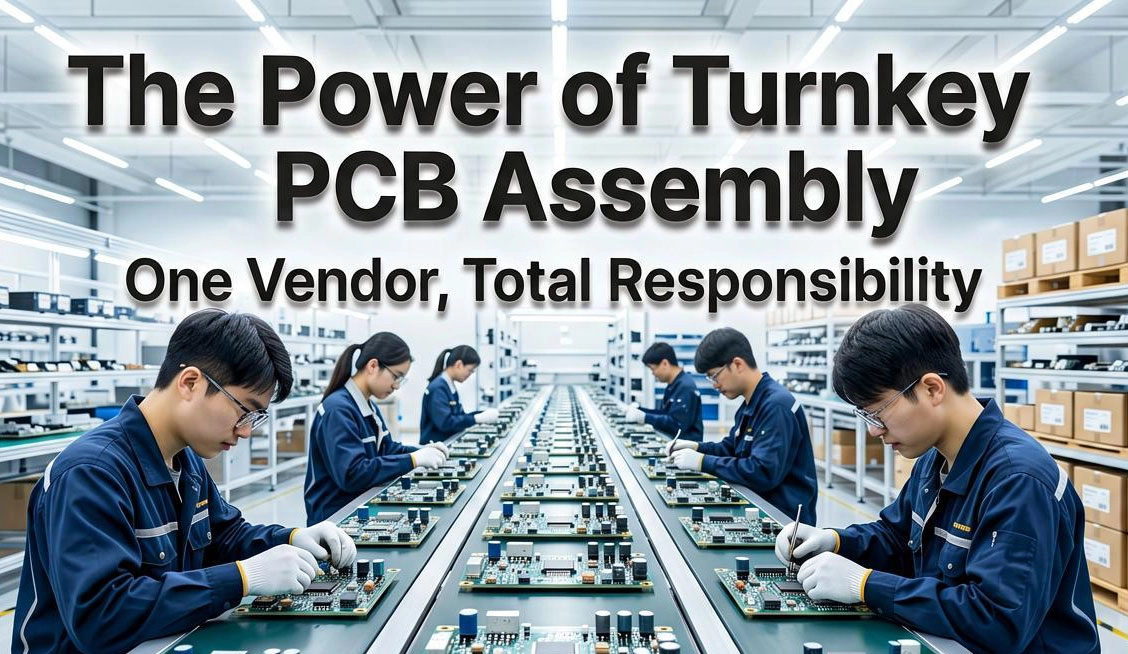
Turnkey PCB assembly is a comprehensive manufacturing service where a single electronics manufacturing services (EMS) provider handles every stage of your PCB project. When you choose turnkey assembly, the service provider takes responsibility for:
The term "turnkey" comes from the idea that when the project is complete, you simply need to "turn the key" to access your finished product. You provide the design intelligence; they handle everything else. This model contrasts sharply with traditional approaches where companies must piece together different vendors, each responsible for only their narrow portion of the process.
Before exploring the benefits of turnkey solutions, it's worth understanding what you're actually paying for when managing multiple vendors. The visible costs—component prices, assembly fees, and tooling charges—are only part of the picture. Hidden costs silently erode your margins and extend your timelines in ways that aren't immediately obvious.
Every vendor handoff creates potential for miscommunication. Your PCB manufacturer might interpret design files differently than your assembly house expects. Your component distributor ships the wrong part, and weeks pass before discovery during testing. Each correction cycle adds days to your project and requires your team to play translator between parties who have competing interests and limited visibility into each other's processes.
When something goes wrong with a multi-vendor approach, determining responsibility becomes a finger-pointing exercise. Was the failure caused by a defective PCB? A component that didn't meet specifications? An assembly error? Tracing root causes across multiple suppliers consumes engineering time and delays corrective action. Meanwhile, your product launch slips and your customers grow impatient.
Coordinating component procurement with your assembly schedule requires meticulous planning. Order too early and you bear inventory carrying costs and risk obsolescence. Order too late and your assembly line sits idle waiting for parts. Managing this balance across multiple product lines while your components flow through various suppliers creates operational complexity that distracts from your core product development work.
Turnkey PCB assembly addresses these challenges by consolidating responsibility. Here's how businesses benefit from this integrated approach:
When a single vendor controls your entire assembly process, they can optimize workflows in ways that aren't possible across multiple organizations. Component procurement happens in parallel with PCB fabrication. Assembly programming begins while materials are in transit. Quality inspections flow seamlessly into functional testing. This parallel processing can reduce total project timelines by 30-50% compared to sequential multi-vendor approaches. For companies racing to market with new products, this time savings translates directly into competitive advantage.
Managing one vendor relationship instead of five dramatically simplifies your operations. You maintain a single point of contact, negotiate one set of terms, and receive one consolidated invoice. Your procurement team spends less time tracking purchase orders and more time on strategic sourcing activities. The reduction in administrative overhead alone often justifies the switch to turnkey services.
Turnkey providers have end-to-end visibility into your project's quality profile. They control component incoming inspection, monitor assembly processes in real-time, and can trace any quality issue back to its precise origin within their facility. This integrated accountability drives higher quality standards because the provider knows they're responsible for the complete outcome, not just their portion of it.
Professional turnkey PCB assembly providers aggregate purchasing across many customers, giving them negotiating leverage with component distributors that individual companies can't match. These volume discounts translate into lower component costs for you. Additionally, experienced providers know the market intimately—they identify alternative components when your specified parts are unavailable or overpriced, and they spot opportunities to reduce your BOM cost without sacrificing performance.
Every component in your assembly carries documentation: lot numbers, supplier sources, inspection records, and production parameters. When your turnkey provider delivers your finished boards, they can provide complete traceability for every element. This documentation proves invaluable for industries with regulatory requirements, for failure analysis, and for continuous product improvement initiatives.
Understanding the turnkey process helps you appreciate its efficiency and plan your projects effectively. Here's what happens when you engage a turnkey PCB assembly provider:
You submit your design files—typically Gerber files, a Bill of Materials (BOM), and any assembly drawings or test specifications. Your turnkey provider reviews these files for manufacturability, identifying potential issues before production begins. This Design for Manufacturability (DFM) review catches problems that would otherwise cause delays or require expensive rework later.
Your provider sources all components from their network of verified distributors and manufacturers. They verify component authenticity, check shelf life for date-sensitive parts, and ensure all materials meet your specifications. If any components are obsolete, allocated, or experiencing supply constraints, your provider identifies alternatives and confirms substitutions with you before proceeding.
If your turnkey service includes PCB manufacturing, your provider fabricates your boards in-house or through trusted partners. They control the entire process: material selection, imaging, etching, plating, and final inspection. Because they handle both fabrication and assembly, they can optimize the interface between these processes for maximum reliability.
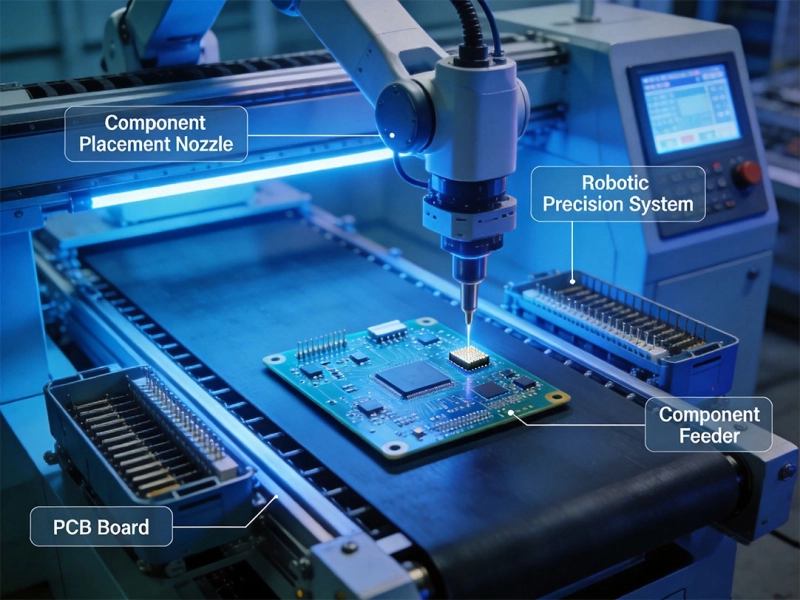
SMT lines place components on your boards with precision measured in microns. Automated optical inspection (AOI) verifies placement accuracy and identifies solder defects immediately. For through-hole components or special requirements, hand assembly and selective soldering complete the build. Throughout assembly, your provider monitors process parameters to ensure consistency across all boards in your order.
Your assembled boards undergo rigorous testing based on your requirements. This may include In-Circuit Testing (ICT) to verify electrical connectivity, functional testing to confirm proper operation, burn-in testing to identify early-life failures, and X-ray inspection for hidden solder joints like BGA packages. Your provider documents all test results and delivers them with your finished product.
Approved boards receive appropriate packaging for their final application—anti-static bags, conformal coating if specified, and custom labeling. Your turnkey provider coordinates shipping through their logistics partners, providing tracking information and ensuring proper handling throughout transit.
While any company can benefit from consolidated assembly services, certain profiles gain exceptional value from turnkey approaches:
Early-stage companies typically lack established supply chains and procurement teams. Turnkey services let you access professional manufacturing infrastructure without building internal capabilities. You focus on product definition and market validation while experienced partners handle production complexity.
When you're iterating on a new design, waiting weeks for prototype assemblies kills momentum. Turnkey providers specializing in quick-turn assembly can deliver prototypes in days rather than weeks. Multiple design iterations in compressed timeframes accelerate learning and improve final product quality.
The transition from prototype volumes to production quantities often reveals gaps in your manufacturing approach. A turnkey provider who knows your design from the prototype stage can seamlessly scale to production volumes, maintaining continuity of process and personnel that would be lost switching vendors.
If your product line includes many variants or requires specialized assemblies, managing multiple vendors becomes exponentially complex. Turnkey services provide flexibility to handle high-mix, low-volume production without requiring you to maintain parallel supplier relationships.
Not all turnkey providers deliver equal value. When evaluating potential partners, consider these critical factors:
Experienced turnkey providers maintain active monitoring of the global components market. When shortages affect your specified parts, they proactively identify pin-compatible alternatives, buffer stock strategies, or lifetime buys for long-lead items. Their supplier relationships often provide access to allocation programs unavailable to individual buyers.
Because a single vendor owns the complete process, accountability is clear. Quality issues trigger root cause analysis within one organization, and corrective actions address systemic problems rather than shifting blame. Reputable providers offer warranties and clear escalation procedures for defect resolution.
Many turnkey providers offer scalable capacity, supporting prototype quantities as low as 5-10 pieces while also handling production runs in the thousands. This flexibility lets you maintain a single vendor relationship as your product matures from concept through market launch and beyond.
While turnkey pricing may appear higher on a line-item basis, the total cost of ownership often favors this approach. When you account for reduced administrative overhead, lower defect rates, faster time-to-market, and eliminated inventory carrying costs, turnkey services frequently deliver better economics—especially for projects where your time has meaningful value.
Turnkey PCB assembly represents more than a convenient service option—it's a strategic approach to electronics manufacturing that aligns incentives, reduces risk, and accelerates your path to market. By consolidating design files, component procurement, assembly, testing, and packaging under a single responsible vendor, you eliminate the friction that accumulates across multiple handoffs.
The benefits extend beyond operational convenience. When one partner owns your complete manufacturing outcome, they have both the motivation and authority to optimize every step of the process. Quality improves because accountability is clear. Costs decrease through integrated efficiency. Timelines shrink through parallel processing and simplified coordination.
For companies seeking to focus their energy on product innovation and market development rather than manufacturing complexity, turnkey PCB assembly offers a compelling value proposition. Your design expertise combined with a capable turnkey partner creates a powerful combination—streamlined production that delivers reliability your customers expect and competitive advantage your business requires.
Ready to experience the efficiency of one-vendor PCB assembly? Submit your design files today and discover how turnkey services can transform your manufacturing experience.
How Long Does Prototype PCB Assembly Usually Take?July/09/2026
How We Source Hard-to-Find Components for Your PCBA Projects?July/07/2026

Wave Soldering vs. Selective Soldering for Through-Hole Components: Which Process Wins?July/15/2026
Why Choose Low Volume PCB Assembly for Your Next Product Launch?July/02/2026
What is PCB Assembly?May/19/2026