Open Nav



Ball Grid Array (BGA) packages remain among the most challenging components to service once mounted on a printed circuit board. When a BGA component develops connection problems—whether from solder joint failure, pad damage, or thermal stress—engineers and technicians often face a critical decision: replace the entire board or pursue BGA reballing and rework services.
Understanding what BGA rework involves, when it makes sense, and how to find qualified service providers helps you make cost-effective decisions that extend the life of your assemblies and reduce unnecessary e-waste.
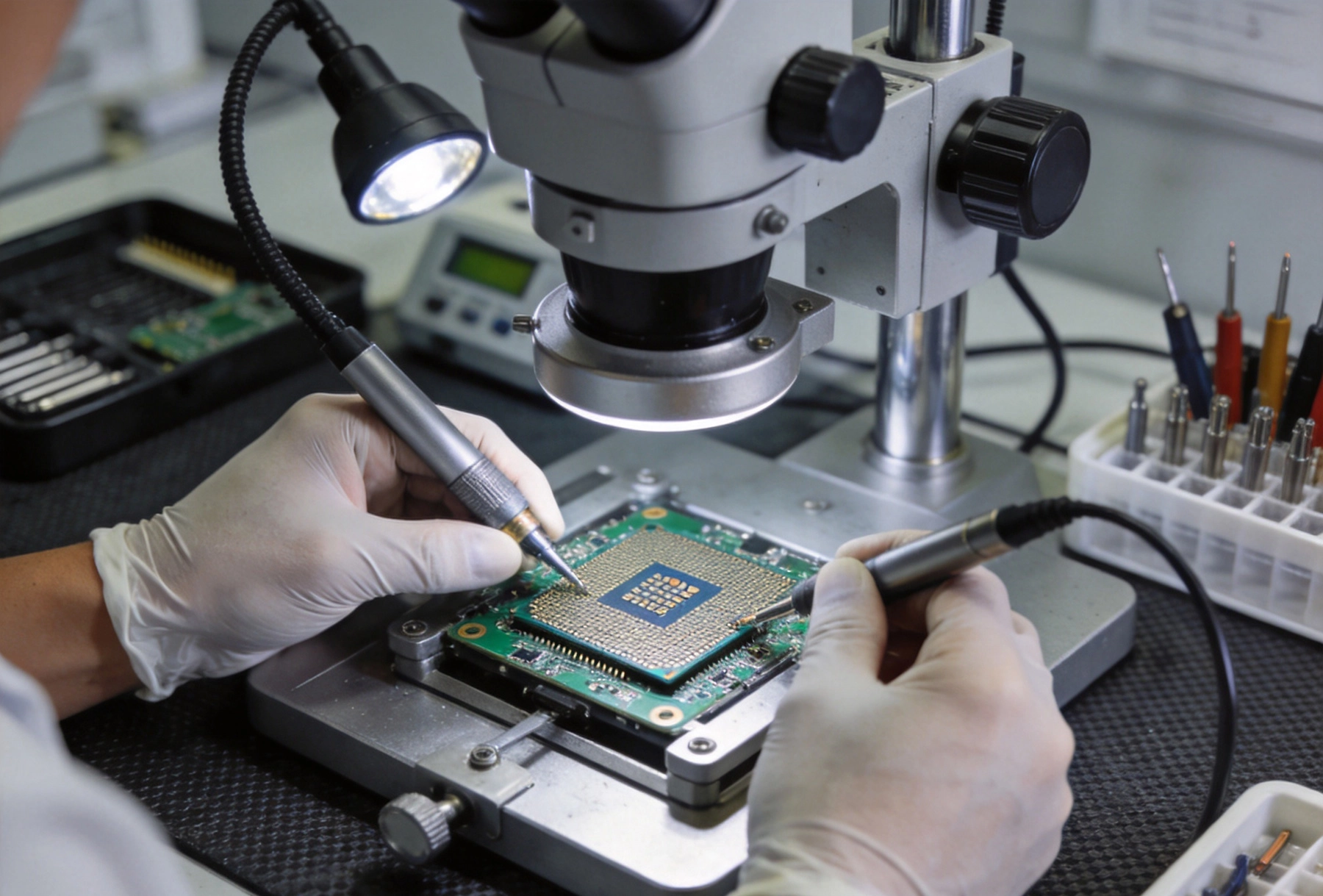
BGA reballing refers to the process of removing old solder balls from a BGA component and replacing them with fresh solder spheres before reinstalling the component on the circuit board. This becomes necessary when the original solder balls have degraded due to thermal cycling, oxidation, or contamination.
During manufacturing, BGA components arrive from the factory with solder balls already attached to the package contacts. These balls create the electrical and mechanical connection between the component and the board when reflowed during assembly. Over time or under certain stress conditions, these connections can fail. Reballing restores the component to a functional state without requiring a brand-new replacement.
The reballing process requires precision equipment and expertise. Each BGA package has a specific ball layout—varying in pitch (distance between ball centers), ball diameter, and alloy composition. Matching these specifications exactly ensures reliable reconnection.
BGA rework encompasses a broader set of services that address problems with BGA components already mounted on circuit boards. While reballing focuses on the component itself, rework addresses the entire repair process including:
Rework specialists distinguish between field rework performed on-site and depot-level rework conducted in controlled workshop environments. Each approach has its place depending on the complexity of the repair and the equipment available.
Not every BGA failure warrants rework. Evaluating the situation carefully helps determine the most appropriate path forward.
BGA rework proves most valuable when the board itself is otherwise functional and expensive. Replacing an entire board due to a single failed BGA connection often costs five to ten times more than professional rework services. This calculation becomes even more favorable for:
Complete board replacement makes more sense when the substrate itself has suffered damage beyond repair, when multiple BGA components have failed indicating systemic issues, or when rework costs approach the cost of a new assembly. In high-volume production scenarios, identifying and fixing the root cause of BGA failures typically delivers better long-term value than repeated rework cycles.
Professional BGA rework follows a systematic approach designed to maximize repair success rates while minimizing risk to surrounding components.
Before any physical work begins, technicians use diagnostic tools to confirm that the BGA connection is indeed the source of the problem. X-ray inspection reveals internal solder joint quality that cannot be seen visually. Thermal imaging can identify hot spots indicating poor connections. Functional testing validates whether the suspected BGA is causing the observed symptoms.
The board is cleaned to remove any conformal coating, residues, or contaminants that could interfere with the rework process. Surrounding components may need to be protected or removed if they are heat-sensitive. The board is then secured on a rework station with proper support to prevent warpage during heating.
Using specialized BGA rework equipment, technicians apply controlled heat to the component following a precise temperature profile. The profile accounts for the specific solder alloy used, the component size, and the board characteristics. Once the solder reaches reflow temperature, the component is carefully lifted away from the board using vacuum pickup or mechanical tools.
After removal, both the board pads and the component contacts are inspected under magnification. Any damaged pads—lifted pads, missing pads, or traces that have separated—must be repaired before reinstallation. The component contacts are cleaned of old solder and prepared for reballing.
Fresh solder spheres matching the original specification are placed on the component contacts using a stencil or precision dispensing equipment. The component is then reflowed to create uniform, reliable solder balls. Some rework services use lead-free solder while others offer leaded alternatives depending on the original assembly and customer requirements.
The board pads are fluxed and the reballed component is precisely aligned using optical recognition systems or careful visual reference. The component is placed and reflowed following another carefully controlled temperature profile. Successful reinstallation requires maintaining exact positioning throughout the heating cycle.
The repaired assembly undergoes inspection to verify solder joint quality. X-ray imaging confirms proper ball collapse and connection. Electrical testing validates that the repaired BGA functions correctly within the larger system. Burn-in testing may be employed for critical applications where long-term reliability must be confirmed.
The quality of BGA rework depends heavily on the equipment and expertise available. Professional rework facilities typically employ:
Facilities investing in modern, properly calibrated equipment achieve significantly higher success rates than those relying on improvised or outdated tools.
Selecting the right rework partner requires evaluating several factors beyond simple pricing.
Confirm that the provider has experience with your specific BGA package type—pitch, ball count, and alloy composition all matter. Ask about their typical success rates and how they verify repair quality. Providers should be willing to share their process documentation and quality procedures.
Modern BGA rework demands modern equipment. Inquire about the age and calibration status of their rework stations. Facilities using equipment older than five to seven years may struggle with fine-pitch BGA packages that have become standard in contemporary electronics.
Professional rework includes inspection at every stage. Ask about their process for handling pad damage discovered during rework. Understand their criteria for determining whether a board is suitable for rework or should be replaced. Reputable providers will be transparent about scenarios where rework may not be the best recommendation.
Depending on your urgency, turnaround time may be a critical factor. Standard turnaround typically ranges from three to seven business days. Rush services may be available for time-sensitive situations, though premium pricing usually applies.
Providers experienced with consumer electronics may not be the best fit for aerospace or medical applications where documentation and traceability requirements differ. Match the provider's experience to your industry and quality requirements.
BGA rework costs vary widely based on component size, package complexity, and the extent of repairs needed. Single BGA rework typically ranges from $50 to $300 per component for standard packages. High-density, fine-pitch BGA packages command higher prices due to the precision required and the greater risk involved.
Board pad repair adds to the base cost when damage is discovered. Trace repair, via repair, and other board-level interventions each contribute to the final invoice. Professional rework providers should quote a not-to-exceed price that accounts for common scenarios while explaining what additional repairs would cost if discovered.
When comparing costs, consider the alternative: replacement board pricing, downtime costs, and the environmental impact of discarding functional boards unnecessarily.
While rework addresses existing failures, preventing BGA problems reduces long-term costs and improves product reliability. Design and manufacturing practices that minimize BGA stress include:
Root cause analysis of BGA failures—whether in manufacturing or field service—often reveals opportunities to improve processes and reduce future failures.
Most BGA packages can be reballed if the component body has not been damaged by overheating. However, some extremely fine-pitch packages with very small balls may not be practical for field reballing. The component must also be worth salvaging—a damaged substrate or cracked die cannot be repaired through reballing.
Standard turnaround for single BGA rework typically ranges from three to seven business days including inspection and testing. Complex boards with multiple repairs or board-level damage require additional time. Rush service may be available for urgent needs, typically with a 50% to 100% premium.
Professional rework facilities typically report first-pass success rates of 90% to 95% for single BGA replacement on boards without pre-existing damage. Success rates decrease for boards with damaged pads, multiple BGA repairs, or very fine-pitch packages. Professional providers should offer warranty coverage on their rework services.
Yes, professional rework facilities are equipped to handle both leaded and lead-free solder alloys. The key is matching the rework process parameters—temperature profiles, flux types, and solder composition—to the original assembly. Lead-free solder requires higher reflow temperatures and tighter process control, which experienced rework providers understand.
Reputable rework providers quote a base price and separately price any pad repair work discovered during the process. They should photograph and document any damage, obtain approval before proceeding with repairs, and adjust pricing accordingly. Board pad repair capabilities vary—some providers can rebuild missing pads while others may recommend board replacement in severe cases.
BGA reballing and rework services provide a cost-effective alternative to full board replacement for many scenarios. The process requires specialized equipment, technical expertise, and systematic quality procedures to achieve reliable results.
When evaluating rework services, prioritize providers with modern equipment, documented processes, and transparent communication about capabilities and limitations. The best rework partners serve as consultants who recommend repair when appropriate and replacement when rework does not serve your interests.
Preventive practices during design and manufacturing reduce BGA failure rates, but when failures occur, professional rework extends the useful life of valuable assemblies while controlling costs. Understanding the process helps you make informed decisions about when rework makes sense and how to select the right service provider for your needs.
Ready to learn more about BGA rework capabilities for your specific applications? Consult with a professional rework service to evaluate your boards and discuss repair options.

What is Low Volume PCB Assembly?May/18/2026
How Flexible Are Low Volume PCB Assembly Manufacturers?May/18/2026
The Power of Turnkey PCB Assembly: One Vendor, Total ResponsibilityJune/12/2026

What's the Difference Between Prototype PCB Assembly and Low Volume PCB Assembly ?May/18/2026
How to Prepare the Perfect BOM (Bill of Materials) for Turnkey Assembly?July/17/2026