Open Nav



Flexible assembly services have become essential for companies practicing agile hardware development. The ability to quickly produce small quantities, make rapid design changes, and iterate based on real-world testing separates successful product launches from delayed ones. Understanding why flexibility matters helps companies choose the right manufacturing partners.
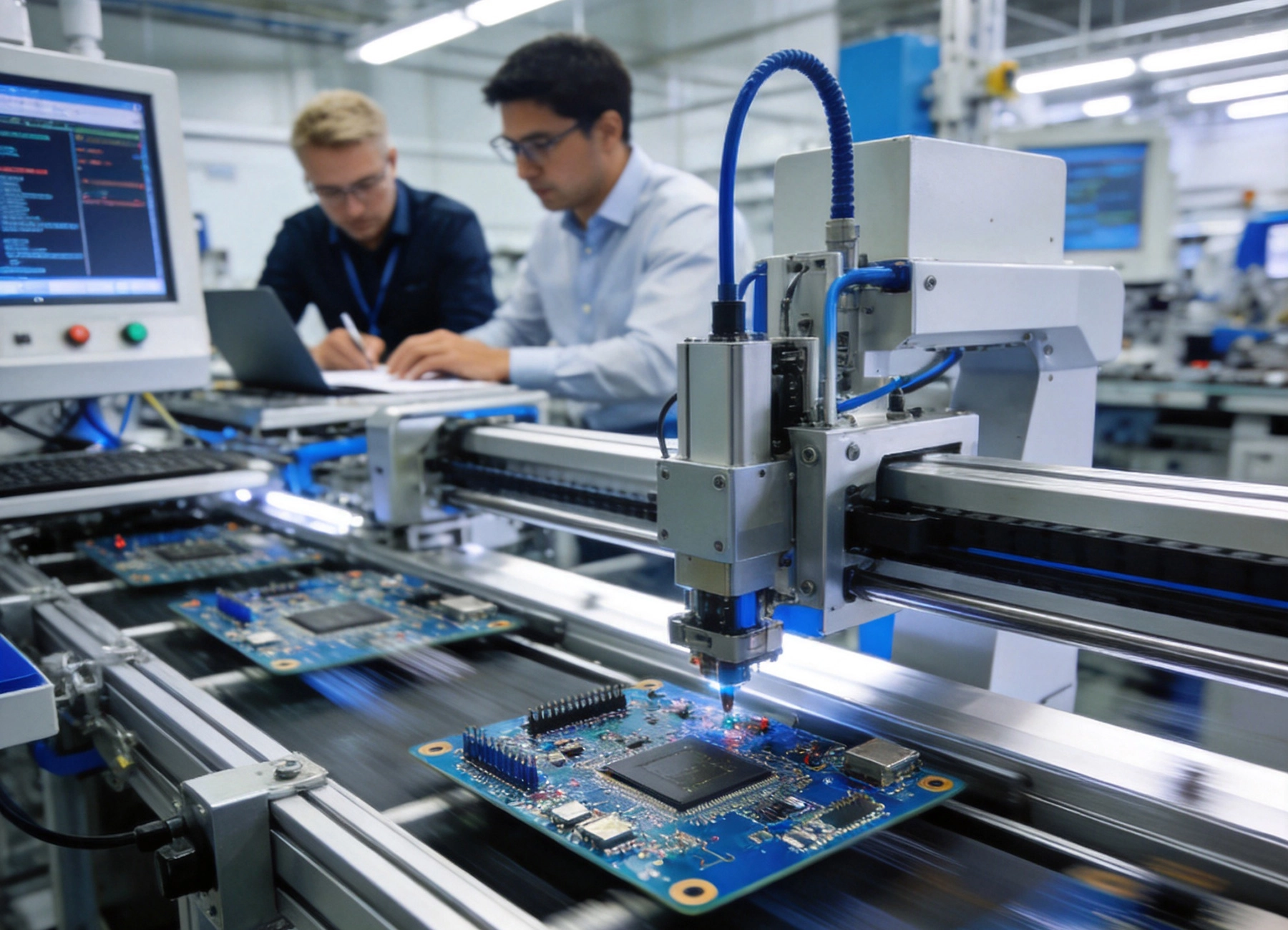
Traditional hardware development treated each phase as discrete: design, prototype, test, revise, and finally produce. This approach worked when product cycles were measured in years and competition moved slowly. Today, software updates can ship daily, but hardware products still need months to reach customers. Bridging this gap requires a different approach.
Agile hardware development borrows principles from software development, emphasizing iterative cycles, continuous feedback, and rapid adaptation. Rather than perfecting a design before building anything, agile teams build small batches, test thoroughly, learn from failures, and refine continuously. This approach reduces risk by validating assumptions early rather than discovering problems after committing to production tooling.
Flexibility in assembly services encompasses several dimensions. First, volume flexibility allows manufacturers to produce anywhere from a single prototype to thousands of units without significant pricing penalties or lead time increases. Second, design flexibility means accepting engineering change orders quickly, accommodating component substitutions, and supporting design iterations without lengthy retooling.
Third, schedule flexibility lets companies adjust delivery timelines based on development progress. When a design needs another spin, flexible manufacturers accommodate delays without penalizing customers. Fourth, process flexibility involves supporting multiple assembly technologies, from standard SMT to more advanced techniques like buried components or embedded dies, depending on project needs.
Many established PCB assembly manufacturers were designed for high-volume production. They optimize for efficiency, running identical boards for days or weeks to amortize setup costs. While this model works well for stable products, it conflicts with the rapid iteration that agile development requires.
Traditional manufacturers often require minimum lot sizes to justify setup costs. Requesting five boards when the minimum is fifty creates pricing and scheduling challenges. When agile teams need to test a design change that might be wrong, waiting weeks for a large batch while paying for fifty boards nobody needs makes little sense.
Setup processes at traditional manufacturers also tend to be rigid. Changing a component might require entirely new tooling or significant reconfiguration. Agile development, by contrast, thrives on making small changes frequently. Manufacturers optimized for volume struggle to support this rhythm.
Large contract manufacturers typically organize around dedicated account managers and production facilities. Communication chains become long, with changes requiring approval from multiple stakeholders. When an agile team needs to make a quick decision about a component substitution, waiting days for manager approval can derail an iteration cycle.
Flexible assembly services often operate with flatter organizations where engineers can directly communicate with production staff. This direct communication enables faster decision-making and reduces the friction that slows agile development cycles. When problems arise on the assembly line, immediate access to decision-makers accelerates resolution.
The primary advantage of flexible assembly services is faster iteration. When you can order ten boards today and receive them in a week, you can test assumptions quickly and move to the next design iteration. This speed compounds over a product development cycle, enabling more iterations within the same timeframe as traditional approaches.
Consider a product that needs three significant design changes before production. Using traditional manufacturing, each change might require four weeks, totaling twelve weeks of iteration time. With flexible services that deliver prototypes in one week, the same three changes might take three weeks, freeing nine weeks for additional refinements or earlier market entry.
Agile development with flexible assembly reduces financial exposure at each stage. Rather than committing to production tooling and large batches before validating design decisions, companies produce only what they need for testing. If a design direction proves wrong, the financial loss is limited to small prototype quantities rather than expensive production tooling.
This risk reduction enables companies to pursue more ambitious projects that might be too risky under traditional development models. Startup teams with limited capital can iterate their way to successful products rather than betting everything on a single design direction that might not resonate with customers.
More iterations generally produce better products. Each test cycle reveals issues that desk analysis cannot identify: thermal behavior under real load, RF performance in actual enclosures, mechanical reliability over time. Flexible assembly services enable this testing frequency by making each iteration affordable and timely.
The feedback loop between testing and design improvement shortens dramatically with flexible manufacturing. Engineers receive test results, identify problems, modify designs, and order new boards within days rather than weeks. This rapid cycling through design-test-fix iterations distinguishes successful hardware companies from those that struggle.
True flexibility starts with accepting any order quantity. Some manufacturers now offer single-board prototyping alongside production runs, removing the artificial barrier of minimum quantities. This approach serves agile development perfectly, enabling prototype orders without forcing purchase of unnecessary boards.
When evaluating manufacturers, ask about minimum order quantities and pricing tiers. The best flexible services maintain reasonable pricing even at low volumes, recognizing that small orders serve an important development function. They earn profit through relationship longevity rather than margin per order.
Speed distinguishes flexible services from traditional manufacturing. Quick-turn capabilities, sometimes offering next-day or same-week delivery for simple boards, enable the rapid iteration cycles that agile development requires. Even for complex multilayer boards, delivery within five to ten business days keeps momentum moving.
Expedited services often carry premium pricing, but flexibility means having the option when needed without forcing expedited timelines for every order. Look for manufacturers who offer multiple speed tiers, letting customers choose delivery speed based on actual urgency rather than manufacturing convenience.
Flexible assembly services recognize that their customers often lack extensive manufacturing expertise. They provide design for manufacturing review, identifying potential issues before production. This proactive support prevents prototype spins caused by avoidable manufacturing problems.
Some manufacturers go further, offering application engineers who can suggest component substitutions, recommend design optimizations, and help troubleshoot problems. This support transforms the manufacturer relationship from transactional to strategic, with shared interest in successful product outcomes.
Component availability remains a constant challenge in electronics manufacturing. Flexible assembly services help navigate supply chain complexity by maintaining relationships with distributors, offering component substitution guidance, and sometimes holding inventory for repeat customers.
For agile development, component sourcing assistance proves especially valuable. Design iterations might require components not in the original BOM. Quick access to alternatives that work with existing designs keeps iteration cycles moving without extensive redesign work.
Adopting agile hardware development begins with changing expectations. Rather than designing complete products before building anything, start with minimal viable prototypes that test core assumptions. Each prototype should answer specific questions, enabling focused iteration toward the final product.
Work with flexible assembly services that support this incremental approach. Initial prototypes might test only the most critical circuits, with secondary functions added in later iterations. This modular approach to prototyping matches the modular nature of good system design.
Rapid iteration only adds value when each iteration includes meaningful testing. Define clear success criteria before ordering each prototype batch. Know what questions you need answered and design tests that provide those answers efficiently. Without rigorous testing discipline, fast prototypes produce fast failures without learning.
Document test results thoroughly, creating institutional knowledge that informs future design decisions. The cumulative learning from multiple iterations builds competitive advantage that compounds over time, even if competitors move faster in individual iterations.
Flexible assembly services work best when manufacturers understand your products and priorities. Invest time building relationships with key partners, sharing your roadmap and development philosophy. Manufacturers who understand your goals can offer more valuable support than those who see you as just another order.
Regular communication keeps manufacturers informed about upcoming changes and potential issues. This advance notice enables them to prepare for your needs, whether that means sourcing components, adjusting production schedules, or allocating engineering support. The relationship becomes a competitive asset over time.
Fast iteration tempts teams to make changes without clear purpose. Iterating for its own sake wastes resources and can lead to endless development cycles without reaching production. Set clear milestones and decision points that determine when a design is ready for production, even if imperfect.
The goal of agile development is learning, not change itself. Each iteration should test specific hypotheses and produce actionable insights. If a design change does not address a known problem or validate a key assumption, it probably is not worth the time and expense.
Prototype designs often contain shortcuts that work for testing but fail in production. Agile teams sometimes become too comfortable with prototype-friendly designs that cannot scale. Regular review of design for manufacturing considerations keeps prototypes aligned with eventual production requirements.
Building a small pilot production run before committing to full production reveals transition issues early. This pilot provides feedback about yield, quality, and supply chain readiness, enabling corrections before scaling investment.
Cost savings from the cheapest manufacturing options often prove illusory. Assembly defects, quality issues, and delivery delays cost more than the initial savings. Evaluate manufacturing partners on total cost, including rework, delays, and reputation risk, not just quoted prices.
Reliable flexible services might cost slightly more per board but deliver value through consistent quality and responsive support. This reliability enables the confidence that makes agile development work.
Demand for flexible assembly continues growing as more companies adopt agile hardware development. Manufacturers respond by expanding quick-turn capabilities, reducing minimum order requirements, and developing customer support models suited to development-stage companies rather than just production customers.
Technology advances enable new forms of flexibility. Automated assembly lines can reconfigure for different products more quickly. Digital inventory systems track component availability in real time. AI-assisted design review identifies manufacturing issues faster than manual review. These capabilities expand what flexible manufacturing can offer.
The separation between prototype and production manufacturing continues blurring. Manufacturers who once served only production now offer prototype services, while prototype specialists build capabilities for small production runs. This convergence benefits companies at all stages, enabling seamless transition from development to production with the same partner.
Agile hardware development demands flexible assembly services that support rapid iteration, accommodate design changes, and enable testing at every stage. The traditional model of large minimum orders, lengthy lead times, and rigid processes conflicts with agile principles. Companies that embrace flexible manufacturing achieve faster development cycles, lower financial risk, and better product outcomes.
Choosing the right assembly partner significantly impacts development success. Look for manufacturers who understand agile development, offer genuine flexibility in volume and scheduling, and provide engineering support that accelerates rather than impedes iteration. The right partnership transforms manufacturing from a necessary expense into a competitive advantage.
As hardware development continues evolving toward agile methodologies, flexible assembly services become not just helpful but essential. Companies that build relationships with responsive manufacturing partners position themselves to succeed in markets that reward speed and adaptability. In the race to bring innovative products to market, manufacturing flexibility can make the critical difference.
Quick-turn services focus on fast delivery, typically offering expedited production for standard specifications. Flexible assembly encompasses a broader range of capabilities, including volume flexibility, design change accommodation, engineering support, and schedule adaptability. Quick-turn is one component of overall flexibility.
Flexible assembly services often carry a price premium for low volumes due to lower economies of scale. However, when accounting for reduced risk, faster iteration, and lower total development cost, flexible services typically prove more economical for development-stage companies. The premium varies widely based on complexity and turnaround requirements.
Many flexible manufacturers now support both prototype and production volumes, offering seamless transition as products mature. Some specialize in low-to-medium volume production while maintaining the flexibility that development requires. Evaluate each manufacturer's production capabilities before committing to a long-term partnership.
Start by assessing your specific needs, including volume requirements, technology needs, and timeline flexibility. Then research manufacturers who specialize in your industry and development stage. References from other companies with similar needs help identify reliable partners. Many manufacturers offer trial orders that let you evaluate quality and responsiveness before major commitments.
Key qualifications include proven quality systems (ISO certification, IPC standards compliance), relevant technology experience, responsive communication, transparent pricing, and willingness to support development-stage customers. Request sample work and references from similar projects when evaluating potential partners.
Understanding PCBA: The Core of Modern Electronics ManufacturingAugust/08/2026
How to Prepare the Perfect BOM (Bill of Materials) for Turnkey Assembly?July/17/2026
FAQ: Can You Assemble Boards with Components on Both Sides?July/22/2026
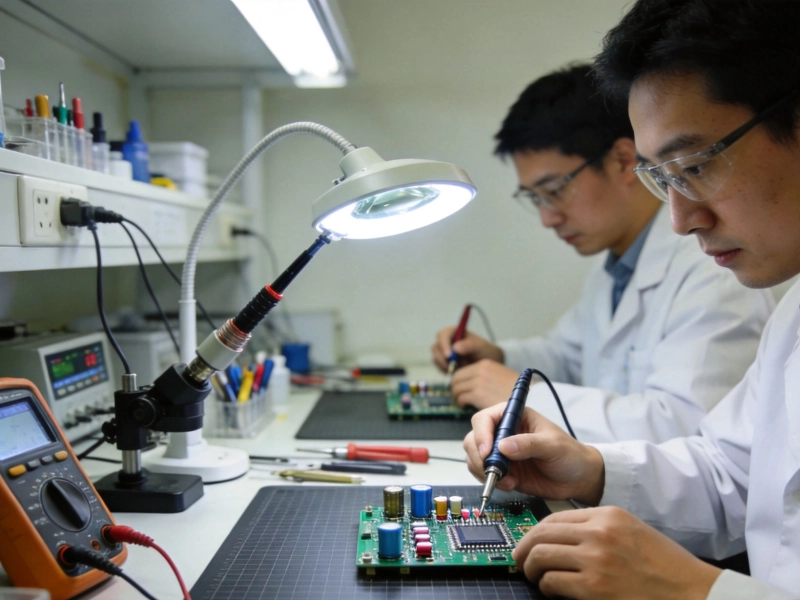
Prototype PCB Assembly Explained: Why It's Crucial for R&DJuly/14/2026
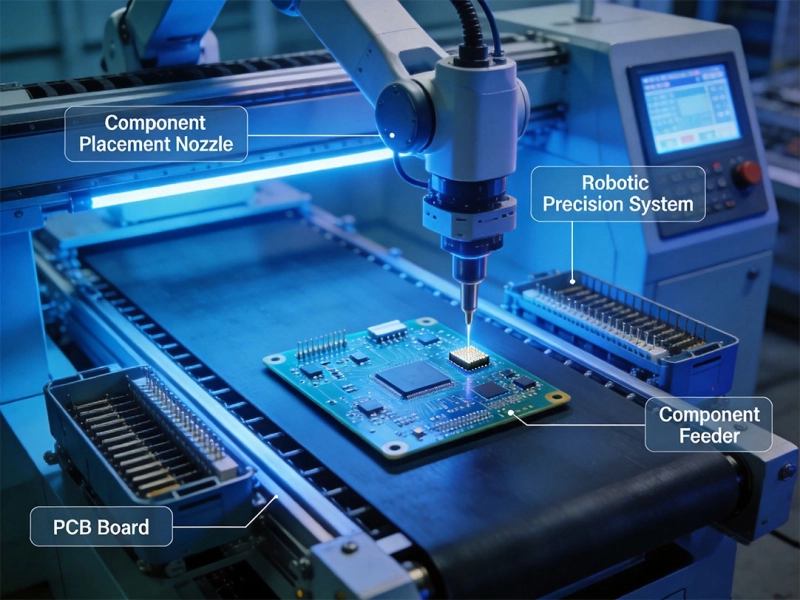
What is PCB Assembly?May/19/2026