Open Nav



Quality and reliability in electronics manufacturing don't happen by accident—they result from adherence to established industry standards. IPC standards provide the framework that defines acceptable workmanship, ensures consistency across manufacturers, and ultimately protects end-users from product failures. For engineers and procurement professionals sourcing PCB assembly services, understanding these standards is essential for evaluating manufacturer capabilities and specifying quality requirements.
The Institute for Printed Circuits, now known as IPC-Association Connecting Electronics Industries, develops and maintains the standards that govern virtually every aspect of PCB design, fabrication, and assembly. These internationally recognized standards have become the de facto quality benchmark across the electronics industry, from consumer electronics to aerospace and medical devices.
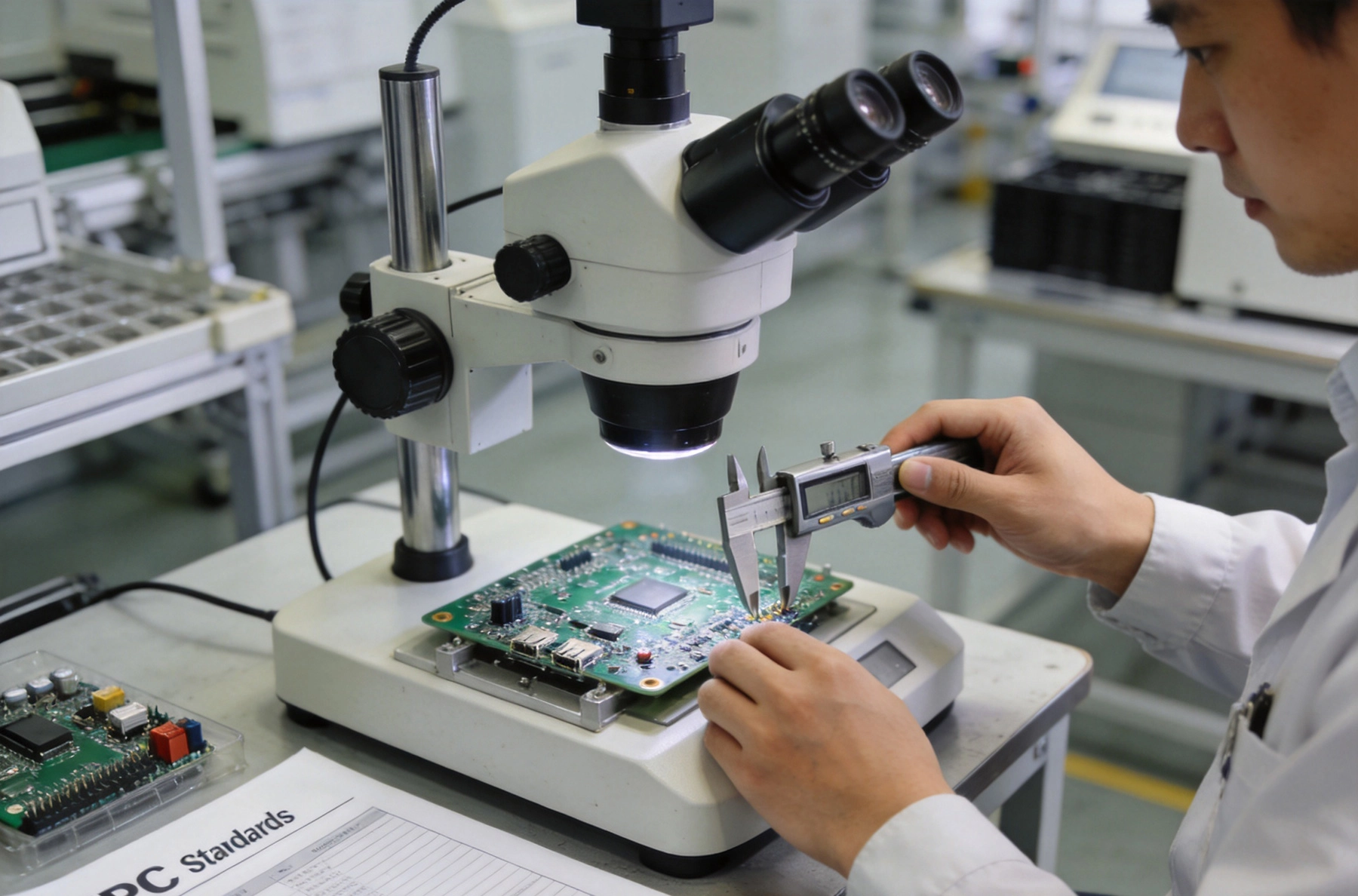
IPC standards are industry-developed specifications that define requirements for printed circuit board design, materials, fabrication, assembly, and acceptance criteria. Unlike regulatory requirements imposed by governments, IPC standards are voluntary consensus standards developed by industry participants including manufacturers, users, and suppliers. However, their widespread adoption has made them essential for commercial electronics production.
The standards development process involves committees of industry experts who collaborate to create, update, and maintain specifications that reflect current technology capabilities and market requirements. This consensus-based approach ensures standards remain relevant as manufacturing technology advances while maintaining the quality and reliability requirements that protect end-users.
IPC standards exist at several levels within the electronics supply chain. Design standards specify layout requirements and design-for-manufacturing guidelines. Material standards define substrate, laminate, and solder paste specifications. Fabrication standards govern PCB manufacturing processes. Assembly standards address component mounting, soldering processes, and acceptance criteria. Understanding this hierarchy helps engineers apply appropriate standards at each stage of product development.
Several IPC standards directly impact PCB assembly services. Understanding these specifications helps engineers communicate quality requirements effectively and evaluate manufacturer capabilities accurately.
IPC-A-610 represents the most widely referenced standard for PCB assembly acceptance criteria. This visual standard defines what constitutes acceptable, process indicator, and non-conforming workmanship across virtually every aspect of electronic assembly. From component placement accuracy to solder joint quality, IPC-A-610 provides the reference images and acceptance criteria that inspectors use to evaluate finished assemblies.
The standard includes three classification levels reflecting different reliability requirements. Class 1 covers general electronic products where cosmetic defects may be acceptable if function isn't compromised. Class 2 addresses dedicated service electronics where extended reliability and life are required. Class 3 applies to high-reliability applications where downtime cannot be tolerated—medical devices, aerospace systems, and critical industrial equipment.
For procurement professionals, specifying IPC-A-610 Class 3 requirements signals that your application demands rigorous quality standards. However, this classification also increases assembly cost due to tighter process controls and more extensive inspection requirements. Matching classification level to application requirements optimizes both quality and cost.
J-STD-001 defines process and materials requirements for creating reliable solder interconnections. This standard complements IPC-A-610 by specifying the processes needed to achieve acceptable solder joints, rather than just defining acceptance criteria for finished work. J-STD-001 covers soldering materials, equipment, methods, and verification requirements across multiple assembly types.
The standard addresses critical process parameters including soldering temperature profiles, time above liquidus, heating rates, and cooling rates. These parameters directly impact solder joint microstructure and reliability. Manufacturers citing J-STD-001 compliance must maintain process documentation demonstrating that their soldering processes meet specified requirements.
Materials requirements in J-STD-001 specify solder alloy compositions, flux types, and acceptance criteria for incoming materials. This aspect becomes particularly important for lead-free soldering, where different alloy compositions exhibit varying wetting characteristics, joint strength, and reliability under thermal cycling conditions.
While IPC-A-610 focuses on assembly operations, IPC-A-600 defines acceptance criteria for bare printed circuit boards. This standard specifies what constitutes acceptable workmanship in PCB Fabrication, including plating quality, conductor definition, hole quality, and solder mask application. Understanding IPC-A-600 helps engineers evaluate incoming board quality before components are mounted.
Defects in bare boards—insufficient plating in holes, delamination, conductor breaks—propagate into reliability problems in finished assemblies. IPC-A-600 provides the acceptance criteria that assembly services should apply when receiving boards from fabrication suppliers. Reputable assembly providers verify incoming board quality against IPC-A-600 requirements before beginning assembly operations.
IPC-2221 provides the foundational design requirements that affect both board fabrication and assembly. This standard addresses design parameters including conductor spacing, trace width requirements, material selection, and thermal management considerations. While designers primarily reference IPC-2221 during layout development, its requirements directly impact assembly manufacturability.
For assembly services, IPC-2221 compliance in incoming designs indicates that the board layout follows established design-for-manufacturing principles. Designs violating IPC-2221 spacing requirements or thermal relief patterns may cause assembly difficulties or reliability problems. Savvy assembly providers review designs against IPC-2221 requirements during DFM checks.
IPC standards serve multiple critical functions in electronics manufacturing beyond simply defining acceptance criteria. Understanding these functions helps engineers appreciate why standard compliance matters for product reliability.
Without standardized acceptance criteria, each manufacturer might apply different quality thresholds based on internal capabilities or customer requirements. This inconsistency makes comparing quotes difficult and creates quality risks when transferring production between facilities. IPC standards provide a common language that ensures consistent quality interpretation across the global electronics supply chain.
For companies sourcing assembly services from multiple regions, IPC standards create a quality baseline. A Class 2 assembly should meet the same acceptance criteria whether manufactured in North America, Europe, or Asia. This standardization reduces supply chain risk and enables global sourcing strategies without sacrificing quality consistency.
IPC standards emphasize process control and defect prevention rather than relying solely on final inspection. J-STD-001 requirements for soldering processes, for example, specify the parameters that create reliable solder joints, reducing dependence on inspection to catch defects after they occur. This proactive approach improves yield rates and reduces rework costs.
Process control requirements also create traceability benefits. When manufacturers maintain process documentation as standards require, they can investigate root causes of any defects that occur and implement corrective actions. This systematic approach to quality improvement benefits both manufacturers and their customers.
Specifying IPC standards provides a concise way to communicate quality expectations to assembly providers. Rather than developing custom quality specifications from scratch, engineers can reference established standards that manufacturers already understand and have procedures to support. This common framework reduces miscommunication and ensures quality requirements are properly interpreted.
IPC standards use a three-tier classification system that enables matching quality requirements to application needs. Understanding these classifications helps engineers specify appropriate quality levels without over-engineering or under-specifying requirements.
Class 1 applies to consumer electronics and general-purpose applications where cosmetic defects may be acceptable if functionality isn't compromised. Products such as computer peripherals, consumer audio equipment, and non-critical household electronics typically fall into this category. Assembly cost is lowest for Class 1 due to relaxed inspection requirements and broader acceptance criteria.
However, Class 1 doesn't mean poor quality. Components must still be properly soldered, connections must be reliable, and the assembly must function as intended. The classification simply acknowledges that minor cosmetic imperfections don't warrant rejection when functionality remains intact.
Class 2 addresses products where extended reliability and operational life are required, and where interruptions in service would be inconvenient but not life-threatening. Telecommunications equipment, industrial controls, and business computing systems typically require Class 2 assembly standards. This classification represents the quality level most commercial electronics products target.
Assembly providers targeting Class 2 must maintain tighter process controls than Class 1 requires. Inspection criteria are more stringent, and process documentation requirements increase. This added rigor improves reliability but increases assembly cost compared to Class 1.
Class 3 applies to products where equipment downtime cannot be tolerated, and where reliability is critical. Medical devices, aerospace systems, automotive safety electronics, and critical industrial control systems require Class 3 quality levels. Assembly providers must implement comprehensive process controls and inspection procedures to achieve consistent Class 3 compliance.
Class 3 assemblies require 100% inspection of solder joints and component placement, rather than sampling inspection acceptable for lower classifications. Process documentation must demonstrate that all parameters remain within specified limits for each assembly. This rigorous approach ensures highest reliability but significantly increases assembly cost.
Not all claims of IPC compliance are equivalent. Effective evaluation requires understanding what to look for beyond simple assertions of standard adherence.
IPC offers certification programs that validate understanding of standards requirements. Certified IPC Trainers can train and certify operators within their organizations. Manufacturers with certified personnel demonstrate commitment to proper standards interpretation and application. Ask potential assembly providers about their certification status and training programs.
Operator certification ensures that assembly personnel understand the acceptance criteria they're evaluating. For Class 3 applications, operators inspecting assemblies should hold current IPC-A-610 certification. This training ensures consistent interpretation of visual acceptance criteria across different inspectors.
IPC compliance requires more than inspection against acceptance criteria—it demands process control and documentation. Ask manufacturers to describe their process control procedures, calibration schedules, and documentation practices. Providers should maintain records demonstrating that soldering profiles, inspection equipment calibration, and material verification meet standard requirements.
For critical applications, request process capability data and statistical process control records. These documents demonstrate that the manufacturer consistently achieves required quality levels rather than relying on inspection to catch defects after they occur.
IPC standards work most effectively when integrated into a comprehensive quality management system such as ISO 9001 or AS9100. Ask manufacturers how they've integrated IPC requirements into their quality systems. The integration should address incoming material verification, process control, inspection procedures, and continuous improvement processes.
Different industries apply IPC standards with varying levels of rigor and additional sector-specific requirements.
Medical electronics assembly typically requires IPC-A-610 Class 3 standards combined with FDA Quality System Regulation requirements. Manufacturers serving medical markets must maintain traceability, validation documentation, and change control procedures beyond basic IPC compliance. These additional requirements ensure that medical device assemblies meet regulatory standards for patient safety.
Aerospace applications often require Class 3 assembly standards plus additional specifications from documents like AS9100 quality management requirements or military specifications. The aerospace industry also emphasizes NADCAP accreditation for special processes including soldering. Assembly providers serving aerospace must demonstrate compliance with these sector-specific requirements beyond basic IPC standards.
Automotive electronics balance high-reliability requirements with cost sensitivity. IPC-A-610 Class 2 typically applies to non-safety-critical automotive electronics, while safety systems like braking or steering controls require Class 3 standards. Automotive industry standards including IATF 16949 supplement IPC requirements with additional quality management provisions.
IPC standards provide the quality framework that enables consistent, reliable electronics assembly across the global supply chain. Understanding these standards helps engineers specify appropriate quality requirements, evaluate manufacturer capabilities, and ensure products meet application-specific reliability needs.
When sourcing PCB assembly services, look beyond simple claims of IPC compliance. Evaluate manufacturer certification status, process control procedures, and quality system integration. The right assembly partner will demonstrate comprehensive understanding of IPC requirements and systematic approaches to achieving consistent compliance.
Matching IPC classification levels to application requirements optimizes both quality and cost. Class 1 suits consumer electronics where cosmetic imperfections don't compromise function. Class 2 addresses commercial products requiring extended reliability. Class 3 ensures the rigorous quality levels needed for critical applications where failure isn't an option.
IPC originally stood for Institute for Printed Circuits, the organization that developed standards for PCB design and manufacturing. Today the organization operates as IPC-Association Connecting Electronics Industries, but the IPC acronym remains in use for the standards they develop. IPC standards are internationally recognized specifications for PCB Fabrication, assembly, and acceptance criteria.
IPC-A-610 defines acceptance criteria for finished assemblies—what constitutes acceptable, process indicator, or non-conforming workmanship. J-STD-001 specifies the process and materials requirements needed to create acceptable solder connections. Together, they address both the outcome (IPC-A-610) and the process to achieve it (J-STD-001).
IPC Class 3 applies to high-reliability electronics where equipment downtime cannot be tolerated. Products requiring Class 3 include medical devices, aerospace systems, and automotive safety electronics. Class 3 assemblies require tighter process controls, 100% inspection, and comprehensive documentation compared to Class 1 or Class 2 classifications.
Evaluate the consequences of product failure. If downtime would be inconvenient but not life-threatening or safety-critical, Class 2 typically applies. If failure could cause injury, significant financial loss, or mission failure, Class 3 is appropriate. When uncertain, consult with your assembly provider about their recommendations based on similar applications.
IPC standards are voluntary consensus standards, not regulatory requirements. However, they've become de facto requirements for commercial electronics manufacturing because customers specify them and insurers expect them. For certain regulated industries like medical devices, adherence to IPC standards may be referenced in regulatory submissions as evidence of quality system effectiveness.

Streamlining Production with Integrated PCB Fabrication and AssemblyJuly/20/2026
The Science of Solder Paste Printing: Keys to Perfect SMT AssemblyMay/19/2026
The Shift Towards Miniaturization in Electronics AssemblyJune/26/2026
Precision SMT PCB Assembly for Wearable TechnologyJune/16/2026
Key Terminologies You Need to Know Before Ordering PCB Assembly ServicesSeptember/07/2026