Open Nav



Managing separate vendors for PCB fabrication and assembly introduces friction at every handoff. Files get lost in translation. DFM feedback arrives too late. Rework gets shuffled between facilities. And when something goes wrong, pointing fingers becomes more productive than solving problems.
Integrated PCB fabrication and assembly—sometimes called box-build or turnkey manufacturing—consolidates these operations under a single roof, single quote, and single accountability chain. The benefits sound straightforward on paper, but the practical implications for your product development timeline, cost structure, and quality outcomes are substantial.
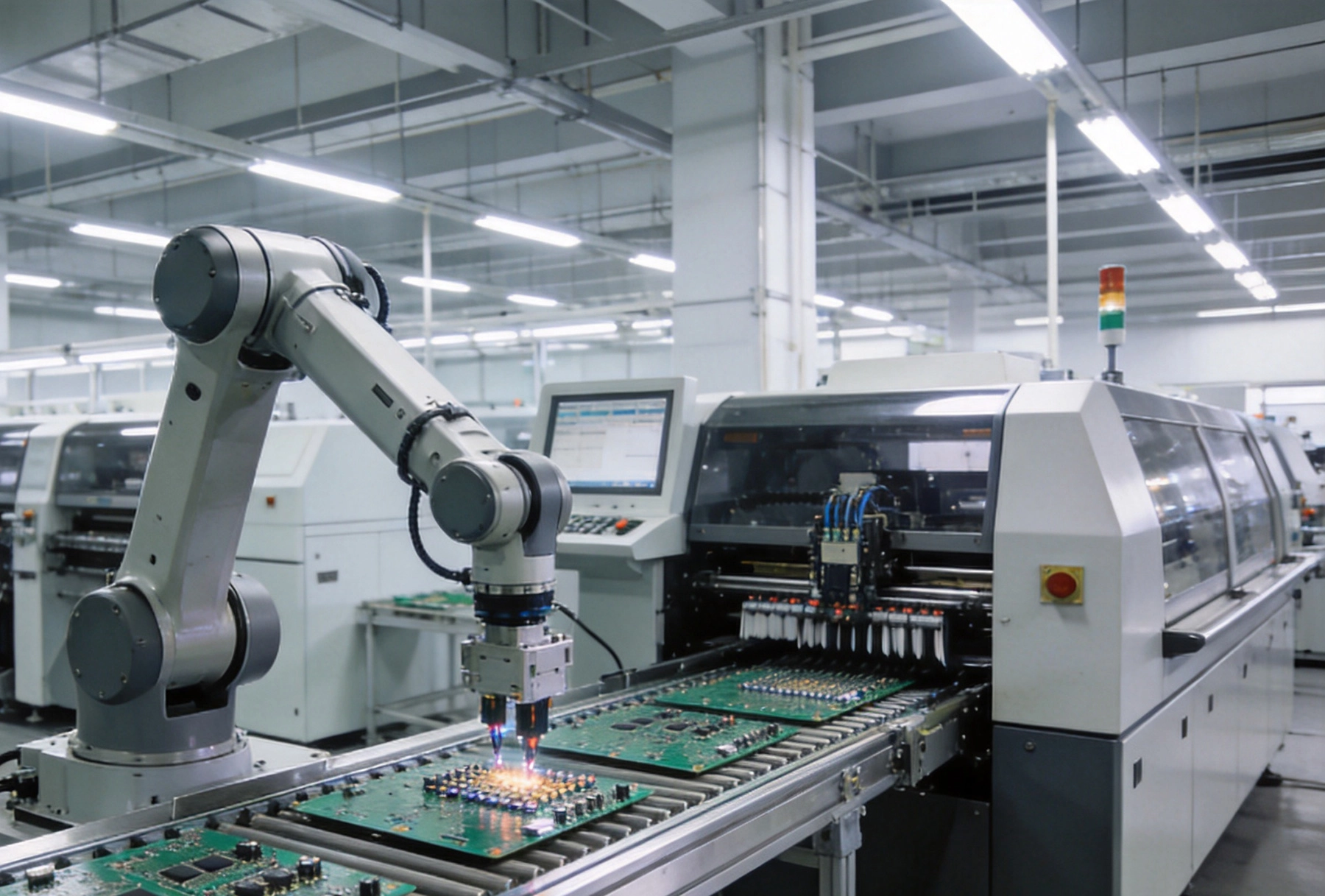
True integration goes deeper than having a fabrication shop and assembly line in the same building. It means the fabrication team and assembly team share the same data systems, communicate in real time, and optimize decisions based on the full picture rather than isolated stages.
In practice, this translates to design data flowing directly from your CAD files into fabrication tooling without manual re-entry. It means the assembly engineer can flag a via placement issue to the fabrication engineer before the first panel is etched. And it means when assembly yields drop, the root cause analysis doesn't require coordinating across three different companies' IT systems.
The distinction matters because many shops claim integration while maintaining separate departments with separate systems and separate profit centers. Genuine integration aligns incentives across the entire production chain toward your project's success.
When fabrication and assembly happen at different facilities, the interface between them becomes a failure point. The PCB arrives at assembly, and something doesn't match expectations—maybe a footprint dimension, maybe a surface finish that affects solderability, maybe a board thickness that doesn't fit the assembly tooling.
These mismatches consume time. An email to the fabricator, a clarification, a revised file, a new shipment. Each round-trip adds days to your lead time. For prototypes or products in active development, these delays compound because multiple iterations are often necessary.
The cost isn't just calendar time. Mismatches that get caught late in assembly often require hand-soldering workarounds, bridge repairs, or scrapping boards entirely. When both stages share the same facility, these issues get caught during the DFM review that precedes fabrication, not after assembly reveals the problem.
I've worked with companies that treated PCB procurement as a commodity purchasing decision—always chasing the lowest fabrication bid. Their total cost of ownership was dramatically higher than companies that paid slightly more for integrated manufacturing because rework rates, scrap, and engineering time consumed the savings many times over.
Integrated manufacturing compresses timelines at every stage. During design, a combined DFM review catches issues that span both fabrication and assembly before any money gets spent on production. The fabricator's process capabilities inform assembly planning, and assembly constraints feed back into board design decisions.
When moving to prototype runs, integrated manufacturers can often produce boards and complete assembly in a single continuous operation. There's no waiting for boards to ship from an offshore fabricator, no customs delays, no separate assembly scheduling. A well-run integrated facility can turn around simple multilayer boards with assembly in five to seven business days.
For products in iterative development, this speed compounds. If your first spin reveals an issue, the cycle time for the next iteration determines how quickly you converge on a production-ready design. Integrated manufacturing often shaves two to three weeks off development cycles compared to split-supply approaches.
When a defect originates in fabrication but manifests during assembly, the handoff problem becomes an accountability problem. Was the board defective when it shipped? Did assembly handling cause the damage? Without integrated responsibility, answering these questions consumes engineering time and often remains inconclusive.
Integrated facilities own the entire outcome. The fabrication team takes responsibility for board quality because assembly yield affects their metrics. The assembly team pays attention to incoming inspection because their output depends on board quality. The natural tension between departments in separate companies disappears when both teams share the same management and the same performance goals.
This accountability structure shows up most clearly in failure analysis. When something fails, the integrated team can trace the failure mode across the entire production chain without jurisdictional disputes. The root cause gets identified faster, and corrective actions address the actual source rather than the symptom nearest to the failure point.
Managing multiple vendors for a single product creates overhead that scales with complexity. Each vendor relationship requires RFQ management, quality agreements, payment terms, and relationship maintenance. When fabrication and assembly consolidate, your vendor management overhead drops by a third to a half for a typical board-level product.
Integrated manufacturing also simplifies inventory management. You purchase finished boards rather than raw boards plus components plus assembly services from separate vendors. For turnkey arrangements, the integrated manufacturer manages component procurement entirely, eliminating the need to maintain purchasing relationships with multiple distributors or manage component sourcing for obsolete parts.
For companies with limited procurement resources, this simplification often provides more value than the direct cost savings. A startup trying to move fast doesn't need the overhead of managing three vendor relationships when one delivers the complete solution.
Integrated manufacturing provides the most benefit in specific scenarios.
Complex boards with tight interaction between design and process perform better through integrated channels. When blind/buried vias, controlled impedance, and fine-pitch components combine on the same board, the fabrication-assembly interface becomes a critical design variable rather than a routine handoff.
Products with aggressive development timelines benefit substantially from the compressed iteration cycles. The faster you can prototype, test, and revise, the quicker you reach market-ready designs.
Regulated industries—medical devices, automotive electronics, aerospace—benefit from the clear accountability chain that integrated manufacturing provides. When audit trails matter and root-cause documentation requires cross-functional visibility, consolidated operations simplify compliance.
Low-to-medium volume production often makes the most sense economically for integrated manufacturing. The setup efficiencies and reduced overhead of managing split supply chains favor the integrated model at volumes where dedicated offshore production lines don't justify their NRE costs.
Not all integrated manufacturers deliver equal value. The quality of integration varies significantly across the industry, and surface-level assessments often miss the important differences.
Ask about their design review process. A genuine integrated manufacturer conducts DFM reviews that address both fabrication and assembly before production starts. If they're not reviewing your design for assembly implications during fabrication planning, the integration is superficial.
Examine their quality system. Look for metrics that span both operations—assembly first-pass yield should be reported alongside incoming board quality, and defect tracking should trace failures to their originating stage. Separate quality reporting for fabrication and assembly suggests siloed operations rather than integrated processes.
Request references in your application area. An integrated manufacturer with deep experience in your product category will have established processes for the specific challenges your design presents. General-purpose integrators may lack the specialized knowledge that prevents common failure modes in particular applications.
Tour the facility if possible. Seeing both operations in the same building, observing how teams communicate, and watching the material flow between stages reveals more about actual integration than any sales conversation.
Price comparison often worries buyers considering integrated manufacturing. Separately sourced fabrication can sometimes undercut integrated quotes, particularly for large runs where offshore fabrication achieves economies of scale. However, the comparison needs to account for total cost, not just quoted price.
Consider the cost of DFM iterations through split vendors versus integrated review. Factor in scrap and rework rates that integration typically reduces. Include the engineering overhead of managing multiple vendor relationships. When these factors enter the calculation, integrated manufacturing often proves more economical than initial quotes suggest.
Some engineering teams worry about losing visibility into fabrication details when assembly is bundled. Good integrated manufacturers address this by providing transparent fabrication documentation alongside assembly results. You should receive fabrication traveler data, inspection reports, and process parameters just as you would with a dedicated fabricator.
Intellectual property concerns also arise. Giving one vendor access to complete design files means trusting them with your product's core technology. Reputable integrated manufacturers have robust IP protection policies, and the concentration of sensitive data in one secure facility can actually reduce exposure compared to distributing files across multiple vendors.
Switching from split to integrated manufacturing doesn't require a complete redesign of your products. Most boards transition without modification. The integration happens at the manufacturing side; your design files remain compatible with either approach.
Start with a pilot project. Choose a board that's representative of your typical production but not mission-critical. Run it through the integrated manufacturer and compare the results—quality, lead time, communication responsiveness, documentation—against your current process. The pilot provides data for the full transition decision.
Engage early in the design phase when transitioning. The earlier the integrated manufacturer participates in your design process, the more value they provide. Bring them into conversations during schematic review or early layout, not just when you're ready to release files for production.
Integrated PCB fabrication and assembly consolidates fragmented supply chains into coherent production partnerships. The benefits—compressed timelines, improved quality, simplified vendor management, and reduced total cost of ownership—accumulate across your entire product lifecycle rather than appearing as line items on individual invoices.
The decision isn't whether integration makes sense in principle. The question is whether your current supply chain carries enough friction to justify the transition effort, and whether your product characteristics align with the scenarios where integration delivers maximum value.
For most electronics products outside the highest-volume commodity categories, the answer leans strongly toward integration. The question worth asking isn't whether you can afford integrated manufacturing—it's whether you can afford to keep managing the inefficiency of split supply chains.

Inventory Management Benefits of Using a Turnkey Assembly PartnerAugust/03/2026
The Hidden Costs of DIY PCB Assembly vs. Professional ServicesAugust/11/2026
Offshore vs. Domestic PCB Assembly Services: Analyzing the Trade-offsJuly/16/2026
Medical PCBA: Meeting Strict Regulatory Standards in AssemblySeptember/01/2026
High-Reliability PCB Assembly Services for Automotive ElectronicsJuly/08/2026