Open Nav



The old ways of inspecting PCB assemblies are fading into history. Manual visual inspection, once the backbone of quality control in electronics manufacturing, cannot keep pace with the density and complexity of modern surface mount technology. Human inspectors miss defects that escape detection until products reach customers, damaging reputations and bottom lines alike. Artificial intelligence is stepping into this critical role, bringing computer vision capabilities that exceed human performance while operating at speeds that transform production line economics. The PCB assembly industry is witnessing a fundamental shift—AI-powered inspection is becoming the new standard for quality control.
Chinese electronics manufacturers have emerged as global leaders in deploying AI inspection systems. Facilities across Shenzhen, Suzhou, and other manufacturing hubs are integrating machine learning algorithms into their quality control workflows. These systems learn from millions of inspected components, developing defect detection capabilities that would be impossible for human inspectors to match. The combination of China's manufacturing scale and AI's learning capabilities is reshaping expectations for what quality inspection can achieve.
This comprehensive look at AI in SMT quality inspection explores the technology driving these advances, the benefits manufacturers achieve, and the challenges that remain. Whether you're managing electronics production or sourcing assemblies from contract manufacturers, understanding AI inspection helps you evaluate quality systems and make informed sourcing decisions.
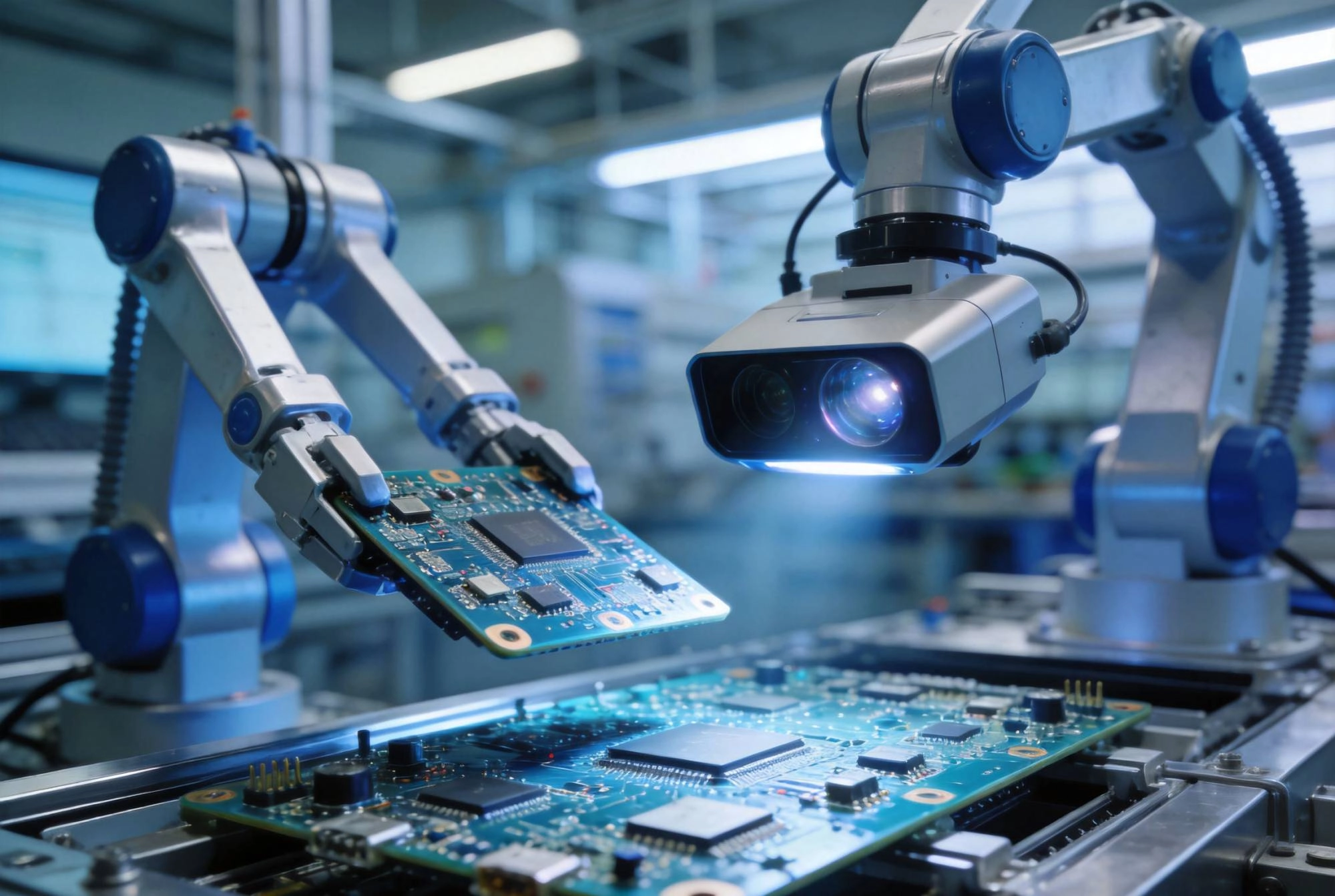
Traditional AOI systems dominated automated inspection for decades, applying rule-based algorithms to identify defects. These systems programmed specific criteria—what constitutes an acceptable solder joint, how much component shift is permissible, which visual patterns indicate problems. Programming these rules required experts who understood both the inspection technology and the manufacturing processes being inspected. Rule tuning consumed substantial engineering time, and the systems remained brittle, flagging false positives when normal process variations exceeded programmed thresholds.
SPI and AOI integration in modern production lines demonstrates the progression from basic automation to intelligent inspection. Solder paste inspection systems evaluate paste deposition before component placement; automated optical inspection examines assemblies after reflow. These stations generate enormous amounts of data, but traditional systems processed this data using fixed rules that couldn't adapt to new defect types or evolving product requirements. The data existed but couldn't improve inspection performance automatically.
X-ray inspection added another dimension to quality control, enabling verification of hidden joints in BGA and QFN packages. While X-ray technology revealed defects invisible to optical inspection, the images required expert interpretation. Automated X-ray inspection systems struggled with the same limitations as optical systems—rule-based algorithms missed defects that didn't match programmed patterns. AI is transforming X-ray inspection by enabling systems that learn what defects look like rather than requiring experts to program defect definitions.
Machine learning approaches defect detection fundamentally differently than traditional rule-based systems. Rather than programming specific defect criteria, ML systems learn from examples. Engineers feed the system thousands of images—some showing good assemblies, others showing known defect types. The algorithm learns the visual characteristics distinguishing acceptable assemblies from defective ones. This learned knowledge applies to new assemblies without requiring explicit programming for each potential defect type.
Convolutional neural networks power modern AI inspection systems. These specialized neural network architectures excel at image analysis, identifying features at multiple scales simultaneously. Low-level features—edges, textures, colors—combine into higher-level patterns that indicate defect presence. The networks train on massive datasets, developing hierarchical feature representations that capture the visual complexity of real-world PCB assemblies. This learned representation generalizes to new products and new defect types that weren't explicitly in the training data.
Transfer learning enables AI inspection systems to deploy rapidly on new products. Rather than starting from scratch for each new board type, transfer learning adapts pre-trained models to new inspection requirements. A model trained on consumer electronics assemblies can transfer much of its learned knowledge to industrial or automotive boards, requiring fewer training images to achieve acceptable performance. This transfer capability dramatically reduces the data collection burden for new product introductions.
High-resolution imaging systems provide the visual data that AI inspection requires. Modern AOI systems capture images at resolutions exceeding 10 microns per pixel, revealing solder joint details invisible to earlier systems. Multi-angle illumination setups capture different aspect ratios, providing the AI with diverse views of each inspection target. These imaging advances happened independently of AI but proved essential—AI cannot inspect what the camera cannot see.
GPU acceleration makes real-time AI inference practical on production lines. Neural network inference requires substantial computational throughput; modern graphics processors deliver this throughput economically. A single GPU can process hundreds of boards per hour, matching or exceeding the throughput of traditional AOI systems while providing better defect detection. The economics of GPU-accelerated inspection continue improving as processor capabilities increase.
Edge computing enables AI deployment without cloud connectivity. Production environments often lack reliable network connectivity, and cloud-based AI inspection introduces latency that reduces throughput. Edge AI systems embed neural network models directly in inspection hardware, processing images locally without cloud round-trips. This architecture delivers AI inspection performance while meeting the reliability requirements of production environments.
False positive reduction tops the list of AI inspection benefits. Traditional AOI systems often flag acceptable assemblies as defective, requiring expensive manual re-inspection to verify. These false alarms waste engineering time while potentially causing unnecessary board rework. AI systems learn the normal variation in acceptable assemblies, reducing false positives while maintaining or improving defect detection rates. This improvement alone can transform quality economics in high-volume production.
Consistent inspection performance eliminates the variability inherent in human inspectors. Fatigue, distraction, and training differences cause human performance to vary across shifts and operators. AI systems maintain identical performance continuously, providing inspection results that don't depend on who runs the equipment. This consistency enables meaningful comparison of quality performance across production runs and time periods.
New defect type detection distinguishes AI from traditional inspection most dramatically. Traditional systems can only detect defects they've been programmed to recognize. When novel defect types emerge—from new components, new processes, or new failure mechanisms—traditional systems remain blind until engineers program new detection rules. AI systems can identify anomalous assemblies even without explicit programming, alerting engineers to emerging quality issues before they affect large production volumes.
Training data requirements challenge AI inspection deployment. Building effective models requires thousands or millions of labeled training images—a significant investment in data collection and annotation. Some manufacturers hesitate at this data requirement, not realizing that transfer learning and synthetic data generation can substantially reduce the data burden. Understanding these techniques enables more realistic planning for AI inspection implementation.
Integration with existing production systems requires careful planning. AOI systems need to communicate withMES systems, production scheduling software, and factory networks. AI inspection adds complexity—models need updating as products change, and inspection results need tracking for continuous improvement. Successful implementations address these integration requirements from the beginning rather than treating AI as an isolated inspection station.
Model maintenance ensures long-term inspection performance. AI models can degrade as products evolve, as manufacturing processes change, or as new component types enter production. Monitoring model performance and triggering retraining when detection rates decline maintains inspection effectiveness. This maintenance requirement differs from traditional AOI, where engineers adjust rules when process changes occur. AI inspection demands systematic performance monitoring and model update processes.
Chinese electronics manufacturers lead in AI inspection adoption, driven by both competitive pressure and supportive policy environment. The intense competition in Chinese electronics manufacturing creates strong incentives for quality differentiation. Manufacturers that deliver better quality at competitive prices win customer orders; those with inferior quality lose business. This competitive dynamic accelerates AI inspection adoption as manufacturers seek advantages their competitors cannot easily replicate.
Major Chinese PCB assembly houses have developed proprietary AI inspection systems optimized for their specific product mixes. These internal developments reflect deep understanding of both AI technology and manufacturing requirements. By building rather than buying, these manufacturers create systems precisely matched to their production conditions. Smaller manufacturers benefit from commercial AI inspection systems that Chinese technology companies have developed for the broader market.
Government support for smart manufacturing in China has accelerated AI inspection deployment. Subsidies, tax incentives, and research funding have reduced the financial barriers to AI adoption. Provincial manufacturing upgrade programs specifically target quality inspection modernization, providing funding and technical support that makes AI inspection implementation affordable for manufacturers who might otherwise delay adoption.
Solder paste inspection benefits enormously from AI capabilities. SPI systems using machine learning achieve detection rates for bridge defects that exceed traditional rule-based systems. The AI learns the visual signature of solder bridges across different board types and paste conditions, detecting defects that rule-based systems miss while maintaining low false positive rates. This improvement directly reduces downstream assembly defects and field failures.
Component placement verification confirms correct placement before reflow. AI systems trained on BOM data and placement imagery detect shifted components, rotated parts, and wrong component placement. Early detection before reflow prevents costly rework and scrap. The AI learns what "correctly placed" looks like across component types, eliminating the need for manual rule programming for each new product.
Post-reflow inspection evaluates the finished assembly for all defect types—solder joints, component integrity, board conditions. AI systems excel at this comprehensive inspection, learning complex relationships between multiple inspection stations. The combined view from multiple angles and lighting conditions provides the AI with rich information for defect classification. Automated classification sorts assemblies into pass, fail, and review categories, focusing human expert attention where it adds most value.
Defect escape rate measures how many defective assemblies pass inspection. This metric directly affects customer quality and warranty costs. AI inspection typically achieves defect escape rates below traditional AOI, particularly for defect types that human inspectors commonly miss. Tracking escape rates over time reveals whether inspection performance is improving, stable, or degrading.
False positive rate quantifies the proportion of assemblies flagged as defective that are actually acceptable. High false positive rates waste inspection engineering time and may cause unnecessary board rework. AI systems typically achieve false positive rates 30% to 50% lower than traditional AOI while maintaining or improving defect detection. This improvement directly reduces quality-related costs and engineering workload.
Throughput impact measures how AI inspection affects production line speed. Some AI systems add latency that slows production; others achieve throughput matching or exceeding traditional AOI. When evaluating AI inspection options, measuring actual throughput impact under production conditions reveals whether the quality benefits come at acceptable speed costs.
Hardware costs for AI inspection include imaging systems, computing hardware, and integration infrastructure. Modern AI-capable AOI systems may cost more upfront than traditional systems, but the total cost of ownership often favors AI when considering quality costs avoided. Calculate ROI based on complete economics—reduced false positives, fewer escapes, less rework—rather than just hardware acquisition costs.
Implementation costs extend beyond hardware to include software integration, model training, and process development. Training data collection may require substantial engineering time, particularly for products with rare defect types. Planning these implementation costs realistically prevents budget surprises. Some AI inspection vendors include implementation support in their pricing, reducing the customer's implementation burden.
Operational savings from AI inspection appear across multiple cost categories. Reduced false positives save inspection engineering time. Fewer escapes reduce warranty and customer support costs. Improved quality enables premium pricing for higher-reliability products. These savings often exceed AI inspection costs within the first year of deployment, particularly in high-volume production environments.
Predictive quality represents the frontier where AI anticipates defects before they occur. Rather than detecting defects after production, predictive systems analyze process data to identify conditions that will likely produce defects. This capability enables proactive intervention—adjusting process parameters before defects form—shifting quality from detection to prevention. Chinese manufacturers are pioneering predictive quality applications that may define industry best practices.
Federated learning will enable AI models that improve continuously without sharing sensitive production data. Multiple manufacturers could collaborate to improve inspection models while keeping their proprietary product and process information private. This approach addresses data privacy concerns that have limited AI adoption in some sensitive applications. Early federated learning implementations in electronics manufacturing suggest this approach will mature rapidly.
Digital twin integration will connect AI inspection systems with virtual manufacturing models. When inspection data reveals quality issues, digital twin models will trace root causes through production processes, identifying exactly which parameter changes caused the quality problem. This integration transforms AI inspection from a detection tool into a comprehensive quality intelligence system.
Assessing your current quality metrics provides the baseline for AI evaluation. Know your current defect escape rate, false positive rate, and inspection costs before evaluating AI alternatives. These baselines reveal how much improvement AI could provide and enable meaningful ROI calculation. Without baseline metrics, evaluating AI effectiveness becomes guesswork.
Pilot programs reduce risk when evaluating AI inspection. Start with a single production line or product type, measuring AI performance against your established baselines. These pilots reveal whether AI inspection delivers expected benefits in your specific environment before committing to facility-wide deployment. Most AI inspection vendors offer pilot programs that enable low-risk evaluation.
Vendor evaluation should assess both technology and support capabilities. AI inspection technology continues evolving rapidly; choose vendors with strong development roadmaps that will keep their systems competitive. Support capabilities matter for production environments—responsive vendor support prevents quality disruptions when issues arise. Request customer references and verify that reference experiences match your requirements.
AI is transforming SMT quality inspection from a reactive process into an intelligent, adaptive system that exceeds human capabilities while operating at production speeds. The technology delivers measurable benefits across every quality metric—lower escape rates, fewer false positives, faster throughput. Chinese manufacturers leading in AI adoption demonstrate these benefits in their competitive quality performance.
Implementation requires thoughtful planning but proves manageable with appropriate vendor support and realistic expectations. Training data requirements, integration challenges, and model maintenance all have proven solutions that experienced implementations demonstrate. The investment in proper implementation pays returns through quality improvements that compound over time.
The future of SMT quality inspection belongs to AI-powered systems. As the technology matures, capabilities will expand—predictive quality, federated learning, and digital twin integration will push inspection capabilities beyond what today's systems achieve. Manufacturers who embrace AI inspection now position themselves to benefit from this continued evolution. Those who delay risk falling behind competitors who have already discovered what AI inspection can deliver.
The Importance of Fiducial Marks and Tooling Holes in PCBAAugust/12/2026
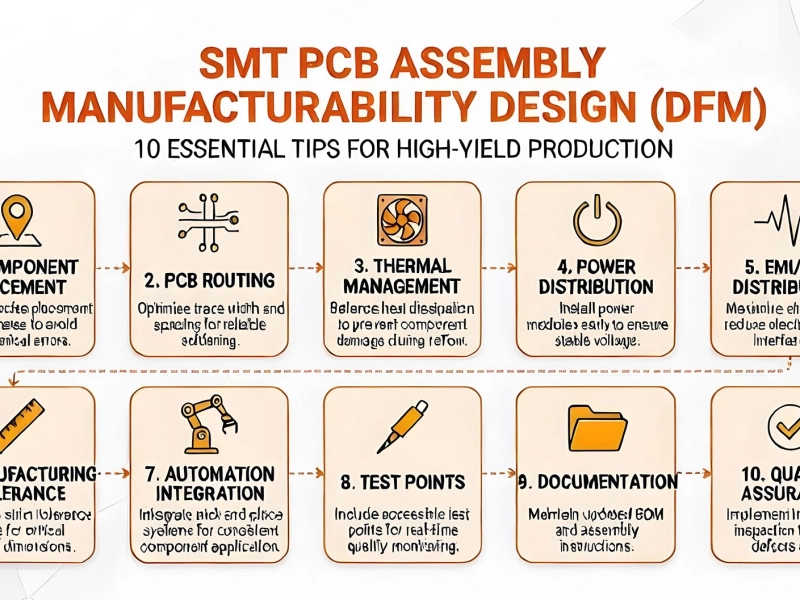
Top 10 DFM (Design for Manufacturability) Tips for SMT PCB AssemblyJune/08/2026
Avoiding Tombstoning and Bridging in Your PCB LayoutJuly/30/2026
Common SMT Defects and How to Prevent Them in Your DesignJuly/03/2026
Inventory Management Benefits of Using a Turnkey Assembly PartnerAugust/03/2026