Open Nav



The journey from a working prototype to mass production rarely follows a straight line. Between the handcrafted proof-of-concept that validates your design and the high-volume manufacturing operation that serves thousands of customers lies a crucial intermediate phase that many hardware teams underestimate: Low Volume PCB Assembly. This bridge stage—typically ranging from ten to a few hundred units—serves purposes that neither prototype development nor mass production can fulfill effectively. Understanding how to navigate low volume assembly, and why it matters for your product's success, can prevent the expensive mistakes that derail many hardware projects.
Low volume assembly occupies a unique position in the electronics manufacturing spectrum. It requires processes more sophisticated than hand-soldered prototypes but cannot justify the setup costs and process optimization that mass production demands. This middle ground presents both opportunities and challenges that demand specific strategies distinct from those used at either volume extreme.
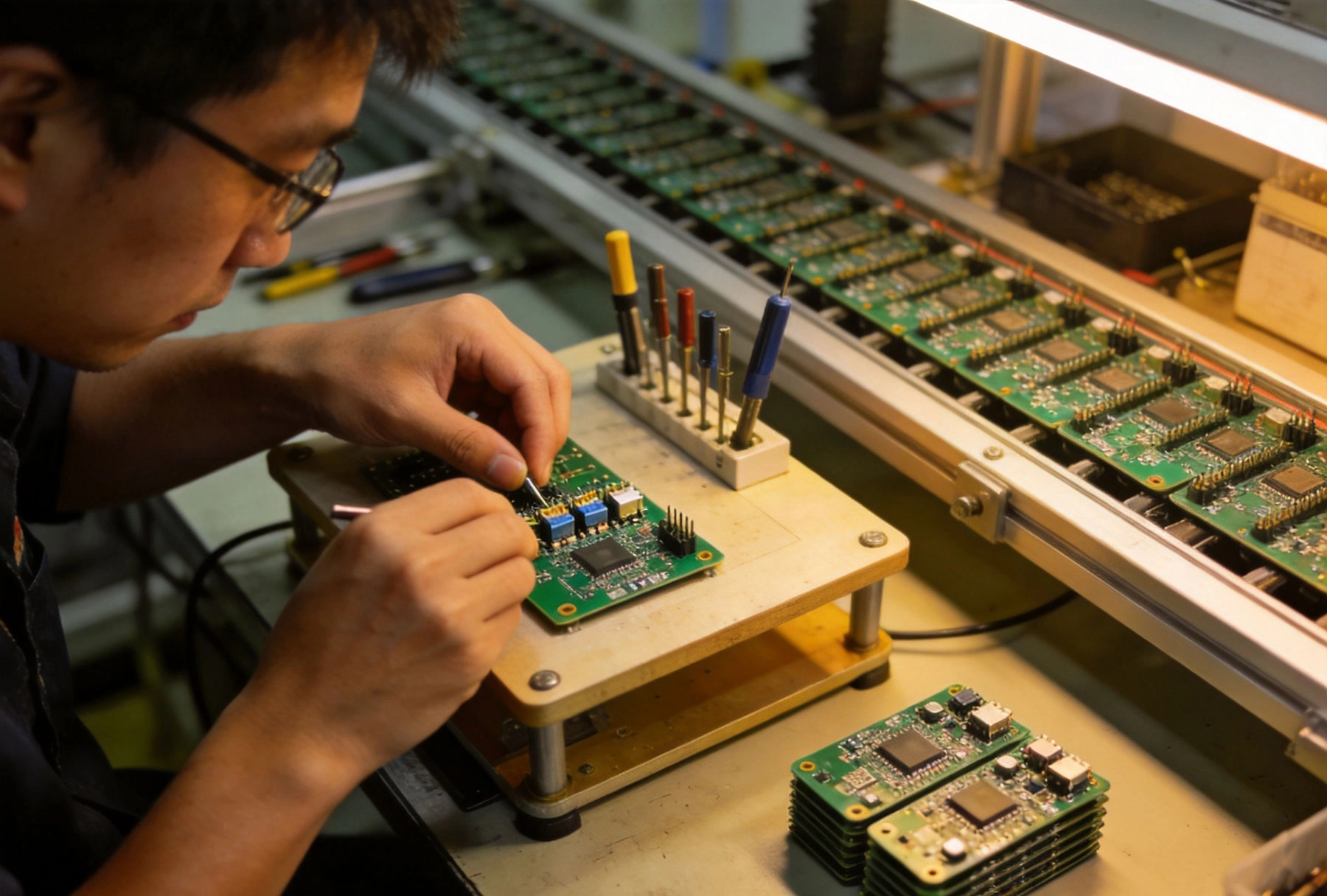
Teams often view low volume production as merely a temporary inconvenience—a necessary step on the way to "real" manufacturing at high volume. This perspective misses the strategic value that well-executed low volume assembly provides.
Design Validation Under Real Conditions
Prototypes prove that a design can work. Low volume production proves that a design can be built consistently by people who didn't create it, using standard manufacturing processes, with components sourced through normal supply channels. These are fundamentally different validations.
A design that performs beautifully when hand-assembled by the engineer who created it may reveal manufacturability problems when built by production technicians following work instructions. A component that worked perfectly when sourced from the engineer's desk drawer may show quality variation when ordered through distribution. A test procedure that seems obvious to the designer may confuse production test operators.
Low volume production exposes these gaps between design intent and manufacturing reality while the stakes remain manageable. Discovering a design flaw after building ten units generates rework costs. Discovering the same flaw after building ten thousand units generates a product recall.
Market Testing and Early Revenue
For many products, low volume production enables market testing that validates demand before committing to mass production tooling and inventory. Beta programs, early adopter sales, and pilot deployments with key customers all require quantities that exceed prototype capability but fall far short of mass production volumes.
These early market engagements generate revenue that can fund mass production development. They produce real customer feedback that shapes final product definition. They create reference customers and case studies that support sales efforts when mass production begins. Skipping this phase to rush directly to high volume risks building the wrong product at large scale.
Process Development and Refinement
Mass production processes don't materialize fully formed. They evolve through iteration and refinement based on actual production experience. Low volume assembly provides the production environment where processes can be developed, tested, and improved before scaling to higher volumes.
Assembly sequences get optimized based on actual timing studies. Test procedures get refined based on defect detection experience. Work instructions get clarified based on operator feedback. Quality checkpoints get positioned based on observed failure modes. This process development during low volume production creates the foundation for efficient high-volume operation.
Low volume manufacturing economics differ fundamentally from both prototype and mass production, requiring different decision frameworks and cost optimization approaches.
Setup Cost Sensitivity
Mass production spreads setup costs—stencil fabrication, programming, fixture preparation, process qualification—across thousands of units, making per-unit setup cost negligible. Low volume production concentrates these same setup costs across tens or hundreds of units, making setup cost a significant portion of total cost.
This cost structure affects component selection and design decisions. Components requiring special handling, custom programming, or unique fixtures may be economical at volume but disproportionately expensive at low volume. Designs that minimize setup requirements reduce low volume cost premiums.
Labor Content versus Automation
Mass production justifies extensive automation—automated placement, automated inspection, automated testing—that reduces labor content and improves consistency. Low volume production often relies more heavily on manual processes that don't require lengthy setup but carry higher per-unit labor cost.
The optimal balance between manual and automated processes shifts with volume. A process that makes sense for ten thousand units may be uneconomical for one hundred units. Low volume manufacturers must carefully select which operations to automate and which to perform manually based on setup time versus cycle time tradeoffs.
Component Procurement Economics
Component pricing and availability vary dramatically with order quantity. Mass production orders components in reels and trays that minimize per-component handling cost. Low volume production may purchase components in tube or bulk packaging that costs more per unit but avoids minimum order quantity penalties.
Component distributors offer price breaks at specific quantity thresholds—one hundred, five hundred, one thousand pieces—that low volume production may not reach. Understanding these pricing structures helps optimize component purchasing strategy, potentially consolidating component needs across multiple low volume products to achieve better pricing.
Not all contract manufacturers serve low volume production effectively. Some optimize for high volume and treat low volume as an unwelcome distraction. Others specialize in low volume and have developed processes specifically for this market segment.
Low Volume Process Capability
Evaluate potential partners based on their demonstrated low volume capability, not just their general manufacturing sophistication. Quick-turn prototype shops may lack the process control and quality systems needed for production units. High-volume manufacturers may impose setup costs and minimum order quantities that make low volume uneconomical.
Look for partners with explicit low volume service offerings. These providers have typically developed streamlined quoting processes, flexible scheduling, and pricing models appropriate for small batch production. They understand the unique requirements of low volume customers and have structured their operations to serve them effectively.
Technical Capability Assessment
Low volume doesn't mean low complexity. Many low volume products involve sophisticated technologies—fine-pitch components, BGAs, high-density interconnect—that demand capable manufacturing equipment and skilled operators. Verify that potential partners can handle your product's technical requirements regardless of volume.
Request capability documentation and, when possible, tour manufacturing facilities. Observe the equipment, processes, and quality systems that will produce your products. The investment in partner evaluation pays returns through better manufacturing outcomes and fewer production problems.
Communication and Responsiveness
Low volume production often involves more frequent product changes, engineering revisions, and schedule adjustments than high-volume manufacturing. Partners who communicate effectively and respond quickly to changes reduce the friction that these dynamics can create.
Evaluate potential partners on their communication practices. Do they provide clear status updates? Do they respond promptly to questions? Do they proactively identify problems and propose solutions? The quality of communication during evaluation predicts communication quality during production.
Design decisions that make sense for mass production may create unnecessary cost and complexity at low volume. Optimizing designs specifically for low volume manufacturing improves economics and reduces production risk.
Component Selection for Availability
Low volume production cannot justify custom component orders or long lead time procurement. Component selection should prioritize parts available from stock through standard distribution channels. Avoid components with extended lead times, high minimum order quantities, or sole-source availability.
Standard component packages simplify assembly and reduce handling costs. While advanced packaging technologies may offer performance advantages, they often require specialized assembly equipment or processes that add cost at low volume. Evaluate whether performance benefits justify cost premiums for your specific application.
Assembly Process Simplicity
Designs that can be assembled with minimal setup and handling reduce low volume cost premiums. Single-sided assembly avoids the complexity of double-sided processing. Standard component sizes work with standard equipment without special programming or fixturing. Avoidance of unusual materials or processes prevents special handling requirements.
Test point accessibility simplifies test fixture design and reduces test setup time. Clear component orientation indicators reduce assembly errors and inspection requirements. These design-for-manufacturing practices benefit all production volumes but prove particularly valuable when setup costs dominate total cost.
Design Stability Considerations
Low volume production often accompanies product development, when design changes remain likely. Design your product and manufacturing approach to accommodate expected changes without excessive rework or scrap.
Modular designs that isolate likely change areas reduce the scope of revision impact. Component selection that maintains footprint compatibility across alternative parts enables substitution without layout changes. Documentation systems that track revision status prevent manufacturing of obsolete designs.
Quality requirements don't diminish with volume, but quality management approaches must adapt to the economics and constraints of low volume production.
Inspection Strategy Adaptation
Mass production relies heavily on automated optical inspection (AOI) and automated test equipment that amortize equipment cost across high volumes. Low volume production may rely more on visual inspection and manual testing that require less capital investment but more labor content.
The optimal inspection strategy balances detection effectiveness against inspection cost. For low volumes, 100% visual inspection by skilled technicians may be more economical than AOI programming and setup. For higher low volumes, partial AOI coverage of critical components may provide the best cost-benefit balance.
Statistical Quality Limitations
Statistical process control (SPC)—the foundation of mass production quality management—requires sample sizes that low volume production cannot provide. Control charts and capability indices lose statistical validity when based on ten or twenty units rather than hundreds or thousands.
Low volume quality management relies more on direct inspection and testing of each unit rather than statistical inference from samples. While less sophisticated than SPC, 100% inspection ensures that every shipped unit meets requirements regardless of statistical validity.
Traceability and Documentation
Quality problems in low volume production require rapid identification and containment since a large percentage of total production may be affected. Traceability systems that link each unit to its components, manufacturing parameters, and test results enable quick problem isolation when issues arise.
Documentation practices should capture the information needed for failure analysis without imposing excessive administrative burden. Component lot numbers, manufacturing dates, test results, and any anomalies observed during production all contribute to traceability without requiring elaborate tracking systems.
Supply chain management at low volume presents challenges distinct from both prototype procurement and mass production supply chains.
Component Inventory Management
Low volume production often involves intermittent builds rather than continuous production. Component inventory may sit for weeks or months between production runs, carrying holding costs and obsolescence risks. Inventory management strategies must balance availability against carrying cost.
For components with long lead times or supply constraints, maintaining safety stock between production runs may be necessary. For readily available components, just-in-time procurement that aligns component arrival with production schedules reduces inventory investment. The optimal strategy varies by component based on lead time, cost, and criticality.
Consignment and Kitting Approaches
Some low volume manufacturers offer consignment arrangements where customers provide components while the manufacturer provides assembly services. This approach transfers component procurement risk and inventory investment to the customer but provides component cost transparency and control.
Kitting—preparing component sets for specific production runs—simplifies manufacturing logistics and reduces handling errors. Whether the manufacturer or customer performs kitting depends on volume, component complexity, and the parties' respective capabilities.
Supplier Relationship Management
Low volume component purchasing lacks the leverage that high volumes provide. Building relationships with distributors and suppliers helps secure priority treatment and favorable terms despite modest order quantities. Consolidating purchases with preferred suppliers rather than spreading business broadly improves relationship quality.
Regular communication with key suppliers about expected demand helps them plan inventory and capacity to support your needs. While low volume buyers cannot command the attention that major accounts receive, reliable purchasing patterns and professional engagement earn supplier respect and support.
Successful low volume products eventually justify transition to higher volume manufacturing. Planning this transition from the beginning prevents the disruptions that volume changes can create.
Volume Threshold Planning
Establish criteria for when volume justifies transition to higher-volume manufacturing approaches. These criteria might include monthly unit volume, cumulative production volume, or manufacturing cost targets. Having predefined thresholds prevents premature transitions that create unnecessary cost or delayed transitions that constrain growth.
The transition threshold varies by product based on setup costs, labor content, and manufacturing complexity. Products with high setup costs reach transition thresholds at lower volumes than products dominated by labor costs. Analyze your specific cost structure to identify appropriate transition points.
Process Documentation for Transfer
Low volume production generates process knowledge that must transfer to higher volume manufacturing. Document assembly sequences, process parameters, quality checkpoints, and troubleshooting procedures in formats suitable for transfer to high-volume operations.
This documentation serves multiple purposes. It enables smooth transition when volume justifies manufacturing change. It supports training of additional production personnel as volume grows. It provides reference for resolving problems that recur across production runs.
Design Freeze and Change Management
Transition to higher volume typically requires design stability that development-phase products may not have achieved. Establish design freeze criteria that define when the design is ready for mass production tooling and process optimization.
Change management processes should control post-freeze modifications to prevent disruption of manufacturing processes optimized for the frozen design. While some changes may be necessary, they should be evaluated for manufacturing impact and implemented through controlled processes.
Certain mistakes recur frequently in low volume production, creating problems that careful planning could prevent.
Underestimating Setup Impact
The cost structure differences between low and high volume production surprise many teams accustomed to mass production economics. Setup costs that represent pennies per unit at high volume may represent dollars per unit at low volume. Failing to account for this difference leads to cost estimates that prove disastrously wrong.
Request detailed cost breakdowns from manufacturing partners that separate setup costs from unit costs. Use these breakdowns to evaluate design decisions and volume planning. Consider whether process changes or design modifications could reduce setup requirements.
Designing for Mass Production Too Early
Teams sometimes optimize designs for mass production economics before low volume production validates the design. This premature optimization may lock in design decisions that subsequent learning reveals as suboptimal.
Design for manufacturability should consider both low and high volume requirements, but designs need not be fully optimized for mass production before low volume production begins. Allow learning from low volume production to inform mass production optimization rather than assuming that mass production optimization applied early will prove correct.
Neglecting Quality Systems
The informality that characterizes some low volume production can lead to quality system neglect. Documentation may be incomplete, inspection may be inconsistent, and traceability may be lacking. These gaps create problems when defects occur or when transition to higher volume requires quality system implementation.
Implement appropriate quality systems from the beginning of low volume production, scaled to production volume but complete in coverage. The discipline established during low volume production carries forward to higher volume rather than requiring quality system creation during volume transition.
Poor Supplier Selection
Selecting manufacturing partners based solely on quoted price without evaluating low volume capability, quality systems, and communication practices creates problems that become apparent only during production. The lowest quote may reflect misunderstanding of requirements, optimistic assumptions, or hidden costs that materialize later.
Evaluate potential partners comprehensively, considering technical capability, quality systems, communication practices, and business stability alongside pricing. The manufacturing partner relationship affects product success at least as much as unit pricing.
Low volume PCB assembly represents more than merely a temporary stage between prototype and mass production. It serves essential functions in product development and market validation that cannot be compressed or skipped. Teams that understand low volume manufacturing economics, select appropriate partners, optimize designs for low volume constraints, and implement appropriate quality systems extract maximum value from this crucial production phase. The investment in effective low volume production pays returns through better products, lower risk, and smoother transitions to the high-volume manufacturing that successful products eventually justify.

Avoiding Tombstoning and Bridging in Your PCB LayoutJuly/30/2026
From Gerber Files to Finished Product: The Turnkey AdvantageSeptember/14/2026

The Science of Solder Paste Printing Keys to Perfect SMT AssemblyJune/04/2026
Low Volume PCB Assembly for Startups The Ultimate GuideJune/03/2026

The Future of Flexible Hybrid Electronics (FHE) in AssemblyAugust/06/2026