Open Nav



Choosing between offshore and domestic PCB assembly services ranks among the most consequential decisions electronics manufacturers face. The choice affects your production costs, product quality, supply chain vulnerability, and ability to bring products to market quickly. Each approach offers distinct advantages and presents unique challenges that demand careful evaluation based on your specific circumstances, priorities, and risk tolerance.
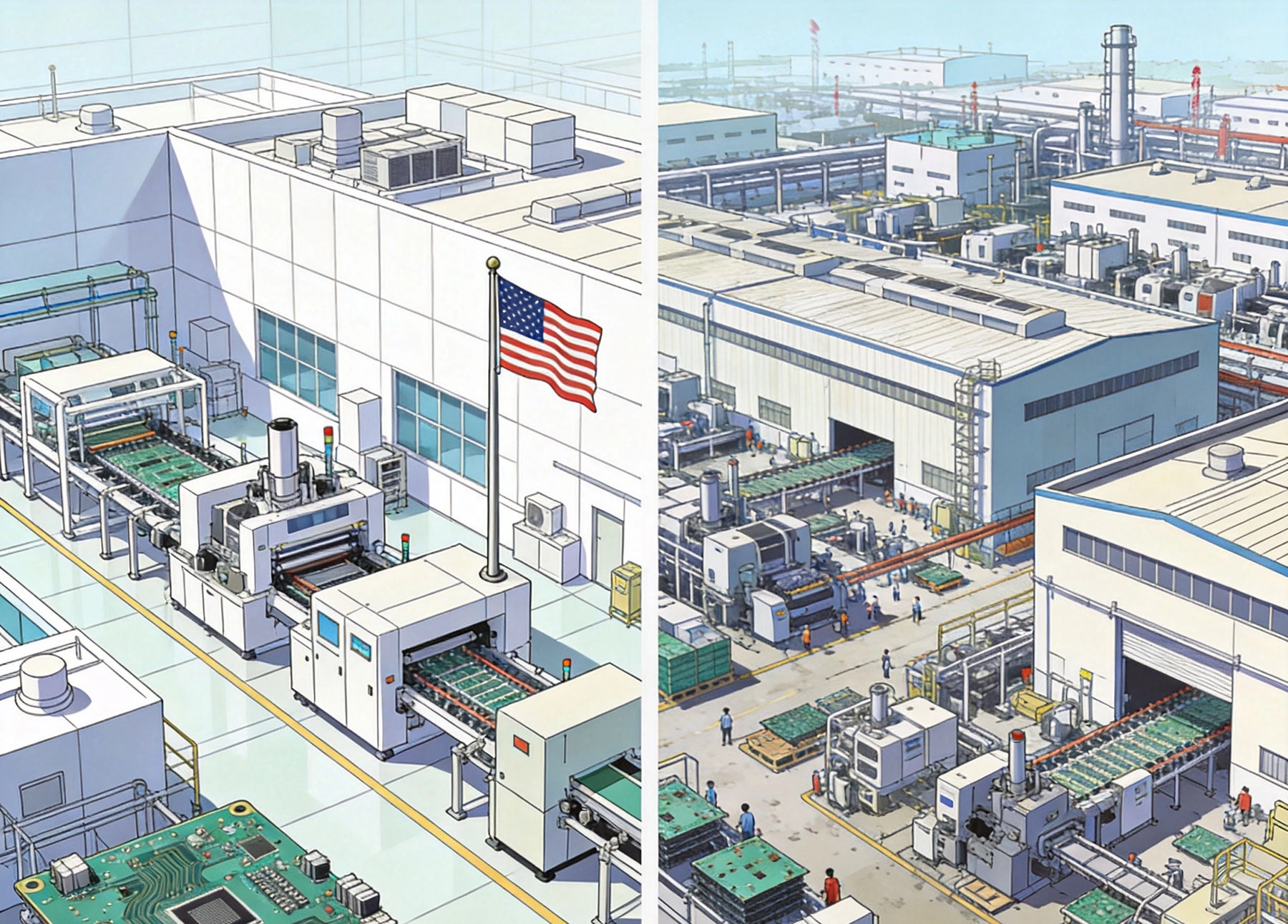
Cost represents the most frequently cited reason companies pursue offshore manufacturing. Labor cost differentials in countries like China, Vietnam, and Malaysia remain substantial compared to North American or European rates. However, focusing exclusively on unit costs overlooks many hidden expenses that can substantially erode anticipated savings.
Offshore assembly typically delivers 20-40% cost reductions on labor-intensive operations. Material costs often compare favorably as well, particularly for standard components sourced from established supply chains in Asia. However, these figures represent only part of the total cost picture.
Transportation expenses—including freight, customs duties, and insurance—consume meaningful portions of offshore savings. Port congestion, container shortages, and geopolitical disruptions can transform anticipated savings into unexpected expenses. Companies must also budget for quality verification upon arrival, rework costs for defects discovered after shipping, and inventory carrying costs for longer supply pipelines.
Sophisticated buyers evaluate total cost of ownership rather than quoted prices. Engineering change order costs often escalate significantly when manufacturing occurs overseas. Communication delays extend development timelines, and distance complicates problem-solving when issues arise. These factors add costs that don't appear on assembly quotes but impact bottom-line results just as directly.
Domestic manufacturing frequently delivers better total cost outcomes for complex or rapidly evolving products where design iteration occurs frequently. The ability to resolve issues quickly and communicate directly with production teams provides value that spreadsheet-based cost analyses struggle to quantify.
Quality represents a nuanced dimension where both offshore and domestic options can excel or struggle depending on specific partners and practices.
Leading offshore assembly facilities often operate equipment and processes identical to domestic operations. Many facilities serving international clients have earned ISO 9001, ISO 13485, or AS9100 certifications. Some specialize in specific sectors like automotive or medical devices and maintain corresponding quality management systems.
The challenge lies in verification and oversight. Physical distance makes continuous monitoring impractical. Third-party inspection services help but can't match the attention available from a local partner. Quality issues may progress further before discovery, increasing the scope of required corrections.
Geographic proximity enables regular facility visits, face-to-face quality reviews, and rapid response to emerging concerns. Domestic assemblers typically offer shorter feedback loops when questions arise about process parameters or component handling. This accessibility often translates to faster problem resolution and more proactive quality communication.
For products with stringent reliability requirements—medical devices, aerospace systems, automotive electronics—domestic assembly often provides stronger assurance mechanisms. The ability to establish direct relationships with quality personnel creates accountability that's difficult to replicate across time zones.
Time-to-market pressures increasingly influence manufacturing location decisions. The flexibility to scale production and respond quickly to demand changes carries significant strategic value.
Extended shipping times—typically 2-4 weeks for ocean freight from Asia—introduce substantial lead time into supply chains. This pipeline requires larger inventory commitments, increasing working capital requirements and storage costs. Companies must forecast demand further into the future, raising inventory risk when forecasts prove inaccurate.
However, many offshore facilities have invested heavily in rapid turnaround capabilities. Express shipping options compress delivery windows when necessary, though at premium costs. Some assemblers maintain domestic warehouses with common components to reduce effective lead times for standard products.
Domestic assembly typically delivers production within days rather than weeks. This responsiveness enables flexible production planning, rapid scaling, and quick reactions to market developments. Companies can pursue just-in-time inventory strategies that minimize carrying costs and reduce obsolescence risk.
Engineering changes and design iterations move faster when your assembly partner operates in the same time zone. Sample builds, prototype iterations, and production ramp-ups proceed on compressed timelines that matter in fast-moving markets.
Effective communication forms the foundation of successful manufacturing partnerships. Language barriers, time zone differences, and cultural variations influence collaboration quality.
Modern communication tools—video conferencing, instant messaging, shared project management platforms—mitigate many traditional communication challenges. English-speaking account managers at major offshore facilities address language concerns for many partnerships.
Nevertheless, complex technical discussions benefit from in-person interaction. Resolving subtle manufacturing issues often requires collaborative problem-solving that proceeds more naturally when participants share physical space. The 12-14 hour time zone differences between Asia and North America create limited overlap windows for real-time communication.
Proximity facilitates relationship building that strengthens over time. Engineers and quality specialists develop working relationships that streamline problem-solving. Manufacturing partners gain deeper product understanding that enables proactive suggestions and continuous improvement contributions.
These relationships prove particularly valuable during production challenges. When yield issues arise or new requirements emerge, established relationships facilitate candid discussions and collaborative resolution.
Protecting proprietary designs, manufacturing processes, and business information concerns many companies considering offshore manufacturing.
Legitimate offshore manufacturers recognize that IP protection serves their business interests—reputational damage from IP theft would destroy their ability to serve demanding customers. Many facilities implement robust security protocols including employee screening, access controls, and secure information handling procedures.
Legal frameworks vary significantly across jurisdictions. Some countries offer stronger IP enforcement than others. Companies can pursue various protective measures including component obfuscation, selective assembly location, and contractual provisions specifying IP handling requirements.
Domestic manufacturing eliminates cross-border IP concerns entirely. Legal protections apply more consistently, and enforcement mechanisms function more reliably. For highly proprietary products or cutting-edge designs, domestic assembly may provide the most appropriate risk profile.
The decision ultimately depends on product characteristics and risk tolerance. Commodity products with limited differentiation face different IP considerations than highly engineered proprietary designs.
Recent years have highlighted supply chain vulnerability as a critical business consideration. Geographic diversification, whether deliberate or forced by circumstances, shapes manufacturing strategy.
Heavy dependence on single-region supply sources creates exposure to geopolitical tensions, natural disasters, and policy changes. The semiconductor shortages of recent years demonstrated how supply chain disruptions can cascade through concentrated manufacturing regions.
Companies with all manufacturing in one location faced severe constraints when that region experienced lockdowns or export restrictions. Supply chain resilience requires geographic diversification, supplier redundancy, and strategic inventory positioning.
Many companies pursue hybrid strategies that combine offshore scale advantages with domestic flexibility. Critical or sensitive production may occur domestically while commodity volumes flow through offshore partners. This approach balances cost optimization against resilience and responsiveness requirements.
Others establish relationships with multiple offshore regions, positioning to shift volume between locations as circumstances warrant. These options provide optionality that single-source strategies cannot match.
No universal answer exists to the offshore versus domestic question. The right choice depends on product characteristics, market dynamics, company capabilities, and strategic priorities.
Offshore assembly typically delivers greatest value for high-volume products with stable designs, commodity-level differentiation, and tolerance for extended supply pipelines. Consumer electronics, standard industrial equipment, and mature products with established markets often suit offshore manufacturing well.
Cost sensitivity matters significantly here. Companies must have the operational sophistication to manage extended supply chains effectively, absorb transportation cost volatility, and maintain inventory buffers appropriate for longer lead times.
Domestic assembly suits complex products, rapidly evolving designs, and applications requiring tight quality control. Startups, medical device companies, and aerospace manufacturers frequently find domestic partners better aligned with their requirements.
Companies valuing supply chain flexibility, direct communication, and rapid response capabilities often recover domestic cost premiums through operational advantages that impact their competitive positioning.
The offshore versus domestic PCB assembly decision warrants thorough analysis rather than reflexive cost-cutting. Direct cost comparisons rarely capture the full picture—quality implications, flexibility value, relationship benefits, and risk exposure all influence outcomes substantially.
Companies should evaluate potential partners carefully regardless of geographic location. The best offshore assemblers often outperform mediocre domestic options, while excellent domestic partners may deliver better total outcomes than budget-focused offshore relationships.
Many successful strategies combine both approaches, matching manufacturing location to product characteristics and business requirements. This flexibility enables optimization across multiple dimensions rather than forcing single-dimension trade-offs.
Your specific circumstances—product complexity, volume requirements, quality needs, and strategic priorities—should guide decisions more than general industry trends. Take time to evaluate options thoroughly, pilot relationships carefully, and build partnerships that support your business objectives for the long term.
Streamlining Production with Integrated PCB Fabrication and AssemblyJuly/20/2026
The Step-by-Step Journey of an SMT PCB Assembly LineJuly/27/2026

IoT Device Manufacturing: Speed and Efficiency in PCBAAugust/03/2026
Designing for Testability (DFT): Ensuring Quality in Mass ProductionOctober/13/2026

Key Terminologies You Need to Know Before Ordering PCB Assembly ServicesSeptember/07/2026