Open Nav



When electronics manufacturers evaluate PCB assembly services, the temptation to chase the lowest price is understandable. What many don't realize is that the upfront savings from cheaper assembly often evaporate within months, replaced by a cascade of hidden costs that can dwarf any initial discount. The true cost of poor quality in PCB assembly extends far beyond defective boards—it encompasses rework, scrap, warranty claims, customer churn, and reputational damage that compounds over time.
This article breaks down exactly what poor quality costs electronics manufacturers, where those costs hide, and how investing in quality-first assembly services delivers superior long-term economics.
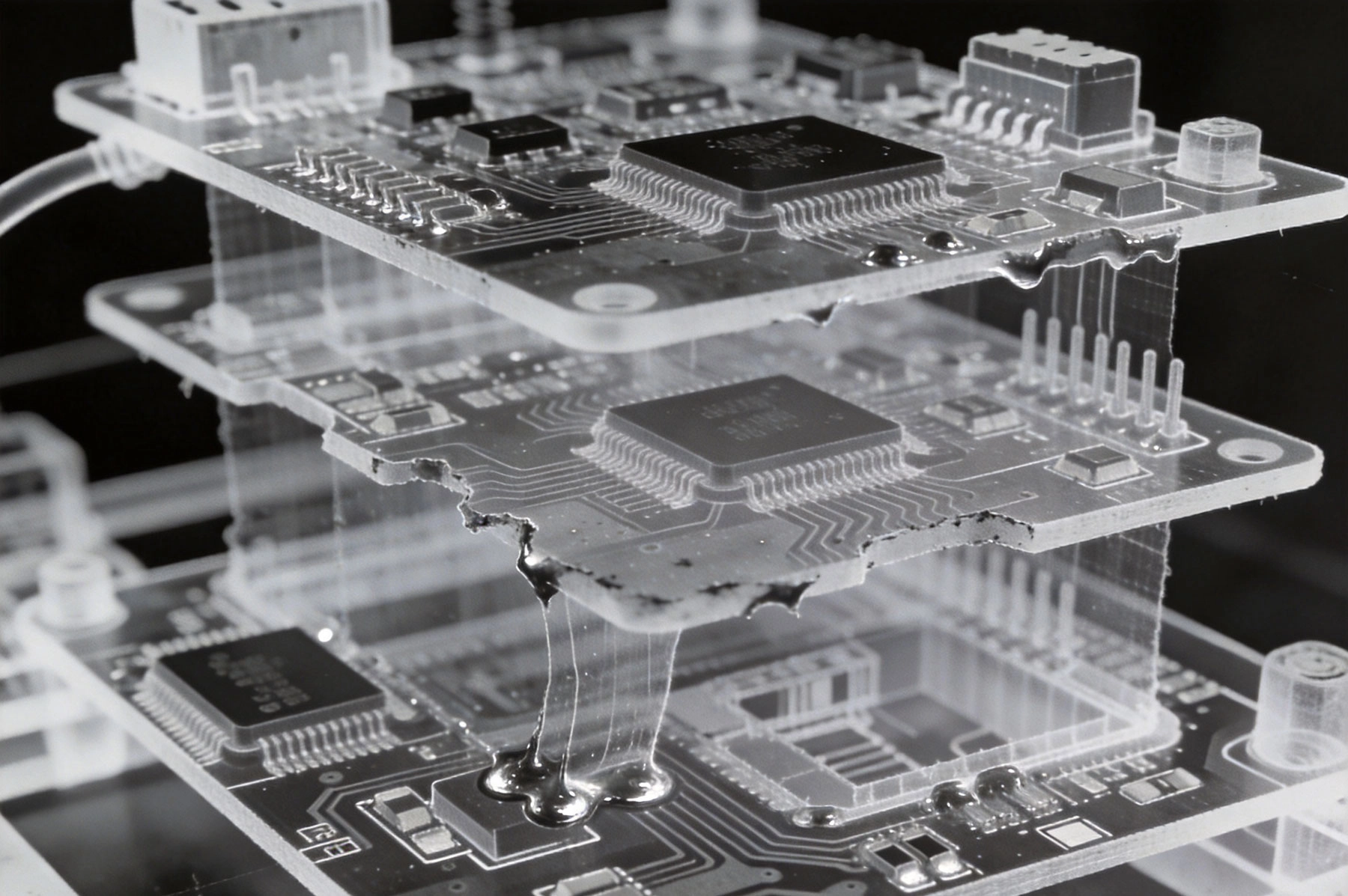
The Cost of Poor Quality (COPQ) is a framework that quantifies all expenses resulting from products or services that fail to meet quality standards. In PCB assembly, COPQ includes both visible costs—like scrap and rework—and hidden costs that many business owners never fully track.
Research consistently shows that the cost of poor quality typically ranges from 15% to 40% of total operating costs in manufacturing environments. For electronics assembly specifically, this figure can be even higher due to the complexity of components, the precision required for assembly, and the difficulty of detecting latent defects.
The challenge with COPQ is that it tends to hide in plain sight. While direct costs like scrap and rework appear on financial statements, indirect costs like expedited shipping, engineering time spent on failure analysis, and lost customer opportunities rarely get attributed to quality problems.
Rework is the most visible manifestation of poor quality in PCB assembly. When a board fails inspection or doesn't function properly, it must be reworked—solder joints reflowed, components replaced, traces repaired. Each rework cycle adds cost in several ways:
Industry data suggests that rework costs typically run 3 to 10 times the original assembly cost per board. A board that costs $50 to assemble initially might cost $200 or more to rework—and that's assuming the rework succeeds on the first attempt.
Some defective boards cannot be economically reworked and must be scrapped entirely. When a board with multiple failed components, delaminated layers, or damaged substrates reaches this point, the entire material investment is lost:
For complex multilayer PCBs with expensive components, scrap costs can reach hundreds of dollars per board. When scrap rates climb even by a few percentage points, the financial impact becomes severe.
When quality problems delay production, manufacturers often resort to expensive expediting measures to meet customer deadlines:
These expediting costs can easily exceed the original production cost by 50% to 200%, depending on urgency and logistics complexity.
The most dangerous quality costs are those that occur after the product reaches the customer. Field failures carry multiple cost dimensions:
For consumer electronics, warranty costs typically run 1% to 3% of revenue. For industrial or automotive applications, warranty claims can cost 5% to 15% of revenue when quality problems emerge. Some industries estimate that each field failure costs 4 to 7 times the cost of the defective component due to all associated expenses.
When customers receive defective products, the relationship damage extends far beyond the immediate transaction:
Research consistently shows that acquiring a new customer costs 5 to 7 times more than retaining an existing one. When poor quality drives customers away, the lifetime value of that relationship is permanently lost.
In the age of online reviews and social media, quality problems spread quickly:
Brand damage is perhaps the hardest COPQ component to quantify, but its impact is very real. Major recalls from quality failures have destroyed billion-dollar companies—the pharmaceutical, automotive, and food industries offer too many examples to count.
Quality problems consume management attention that could be spent on value-adding activities:
These "soft" costs rarely appear in financial reports but represent a significant drain on organizational capacity and capability.
Quality problems disrupt production flow in ways that create ripple effects throughout operations:
When quality problems become systemic, the entire operation becomes reactive—constantly firefighting instead of optimizing. This operational drag reduces capacity, increases costs, and demoralizes the workforce.
Poor quality drives inventory inefficiencies that tie up working capital:
These inventory excesses represent cash that could be invested in growth, R&D, or operational improvements.
Let's walk through a simple example that illustrates why the cheapest PCB assembly option often costs the most:
Imagine a manufacturer currently paying $45 per board for assembly but experiencing a 5% defect rate. They receive a quote for $38 per board from a lower-cost vendor. Sounds like a 15% savings, right?
Now let's add the real costs. With a 5% defect rate:
The true cost of the current "expensive" assembly is actually $45 + $11.25 + $0.45 + $0.60 = $57.30 per board.
If the cheaper vendor delivers a 12% defect rate (typical for budget assembly), the math changes dramatically. Even if they deliver 8% defects, the total cost climbs to $38 + $15.20 + $0.38 + $0.60 = $54.18 per board—a net increase from the original cost.
Before selecting a PCB assembly vendor, conduct thorough due diligence:
Catching design issues before production prevents expensive downstream problems:
Document quality requirements explicitly in contracts:
The true cost of poor quality in PCB assembly services extends far beyond the price on a quote. Direct costs of rework, scrap, and warranty claims combine with hidden costs of customer churn, reputational damage, and operational disruption to create a total cost picture that can dwarf any upfront savings from choosing cheaper assembly services.
Savvy electronics manufacturers understand that quality is an investment, not an expense. By selecting assembly partners with proven quality systems, investing in proper DFM processes, and establishing clear quality specifications, manufacturers can dramatically reduce their total cost of ownership and build products that customers trust.
When you evaluate PCB assembly services, remember to look beyond the unit price. Ask about defect rates, quality systems, warranty policies, and customer satisfaction. The few extra cents per board you might pay for quality-first assembly could save dollars per board in hidden quality costs—and protect the relationships and reputation that drive your business forward.
World-class PCB assembly operations target defect rates below 500 DPMO (Defects Per Million Opportunities), which translates to 0.05%. Most quality-conscious assembly shops target 1,000 DPMO (0.1%) or better. For consumer electronics, rates up to 3% might be tolerable, but industrial and automotive applications require much tighter quality levels.
Start by tracking all direct costs: rework labor, replacement components, scrap, and expediting. Then estimate indirect costs using industry benchmarks: warranty claims typically cost 3-7x the component value, and each lost customer costs 5-7x the value of that single order. Sum these to get your COPQ, then divide by total units to find cost per board.
Key certifications include ISO 9001 (general quality management), IATF 16949 (automotive quality), AS9100 (aerospace quality), and IPC-A-610 (acceptance criteria for electronic assemblies). ISO 13485 is important for medical device applications. These certifications indicate systematic approaches to quality control.
Low prices typically reflect cost-cutting in areas that affect quality: less experienced operators, minimal inspection, older equipment, cheaper materials, reduced testing, or minimal documentation. Some shops also use low initial pricing to gain business, then add charges for services that should be included. Always understand what's included in the quoted price.
The most effective approaches include: optimizing designs for manufacturing efficiency, standardizing component selections, providing clear documentation, establishing long-term partnerships with quality-focused vendors, and investing in upfront DFM reviews. Designing for testability and using components from approved vendor lists also reduces costs significantly.

The Future of Flexible Hybrid Electronics (FHE) in AssemblyAugust/06/2026
Industrial Control Boards: Heavy Copper and Robust Assembly TechniquesSeptember/29/2026
The Growing Demand for Low Volume, High-Mix Assembly ServicesSeptember/30/2026
Top 10 DFM (Design for Manufacturability) Tips for SMT PCB AssemblyJune/08/2026
Key Terminologies You Need to Know Before Ordering PCB Assembly ServicesSeptember/07/2026