Open Nav



Every electronics product begins as a concept, becomes a prototype, and eventually reaches the point where it must transition from a one-off engineering build into a reproducible, high-volume manufactured product. This transition, known as New Product Introduction or NPI, is the most consequential and most frequently underestimated phase in the lifecycle of an electronic product. The decisions made during NPI, the processes followed, and the quality of the collaboration between the design team and the manufacturing partner during this phase determine whether the product launches on time, at the target cost, and with the quality that the market demands. Products that skip or shortcut the NPI phase in the rush to reach production frequently discover the consequences during the production ramp, when design problems that should have been caught and corrected become expensive manufacturing headaches, schedule delays, and in the worst cases, field failures that damage the brand and the customer relationship. Understanding why NPI matters, what a good NPI process looks like, and how to structure the NPI engagement with a manufacturing partner is essential knowledge for any company that develops and manufactures electronic products.
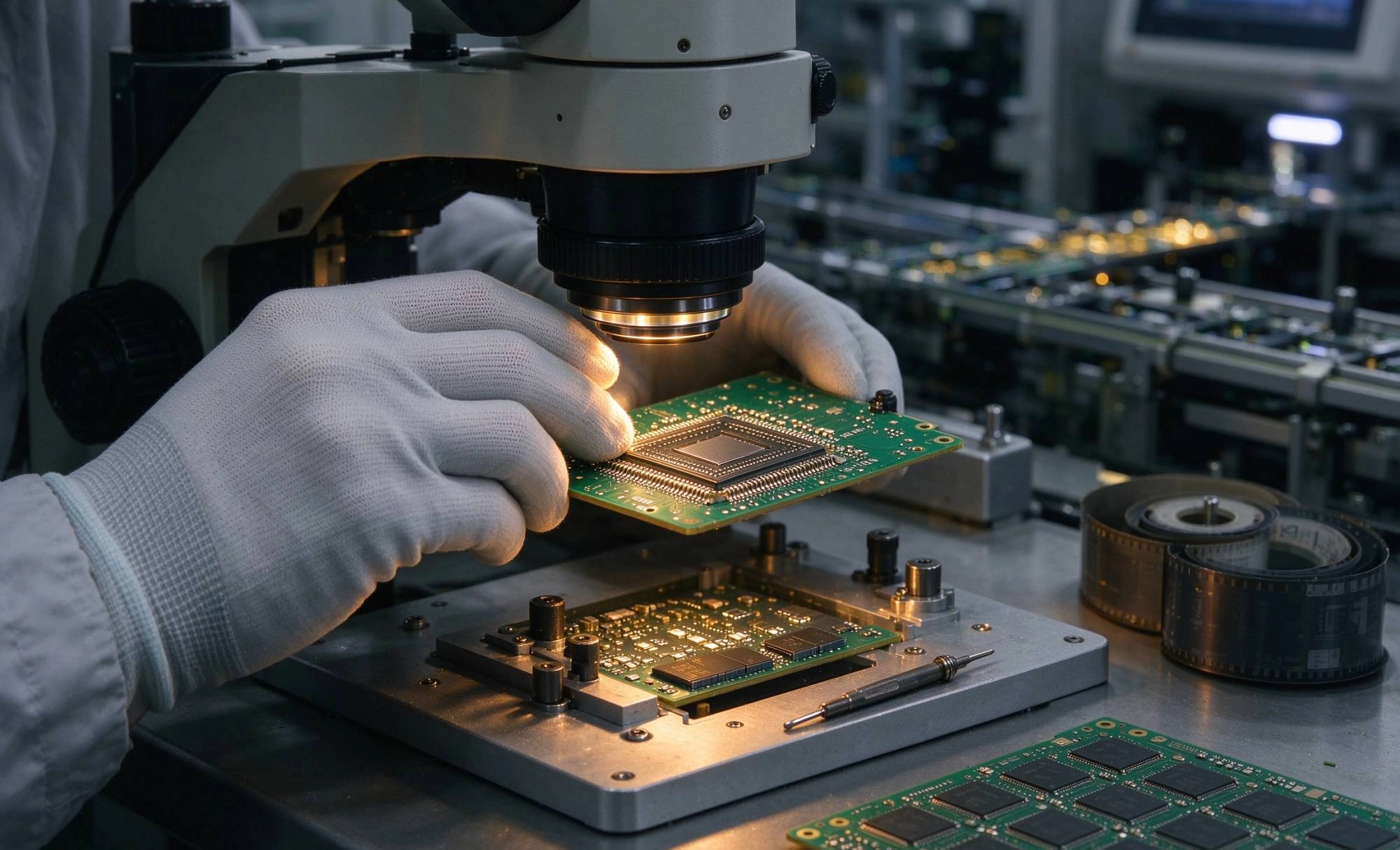
New Product Introduction in electronics assembly is the structured process of taking a product design from the prototype stage to a validated, production-ready manufacturing process. The NPI phase covers everything that happens between the first manufactured prototype and the start of volume production: the DFM analysis, the tooling development, the process qualification, the first article inspection, the test development, and the production readiness review. The scope of NPI is sometimes confused with the scope of new product development, which is the broader activity of designing the product from the initial concept through the completed engineering validation. NPI is specifically the manufacturing bridge between the completed design and the production system, and it focuses on the manufacturing aspects of the transition rather than the electrical or mechanical design aspects.
The NPI phase typically begins when the design has been electrically validated through prototype testing and has been released for manufacturing release, which means that the design changes are frozen and the BOM is locked. The NPI phase ends when the production system has been qualified to manufacture the product consistently at the target volume and quality level, which is typically confirmed through a production readiness review that approves the first production builds. The duration of the NPI phase varies from a few weeks for simple products with well-understood manufacturing requirements to several months for complex products with demanding performance, quality, or regulatory requirements.
The stakeholder map for NPI includes the product design team, the supply chain team, the quality team, the manufacturing engineering team, and the manufacturing partner's engineering and operations teams. The coordination of these stakeholders around a shared NPI plan and a set of milestone deliverables is the primary coordination challenge of the NPI phase. Each stakeholder has a different perspective on the product and different success criteria for the NPI phase, and the NPI process must create a common framework that aligns these perspectives and integrates the activities of all the stakeholders into a coherent plan.
The pressure to reach production quickly leads many companies to treat the NPI phase as a formality that can be compressed or skipped when the schedule is tight. This approach is understandable in the context of competitive pressures and time-to-market imperatives, but it is almost always a false economy that trades a short-term schedule gain for a long-term cost that is significantly larger. The failure costs that are avoided during the compressed NPI phase reappear later in the product lifecycle, typically at the worst possible moment.
The most common consequence of an inadequate NPI phase is the production ramp delay, where the manufacturing process is not ready to support the target production volume and the product launch is pushed back by weeks or months while the process is stabilized. The cost of a launch delay in a competitive market can be measured in lost revenue, lost market share, and damage to customer relationships that were built on a delivery commitment that the company could not keep. The cost of a 4-week launch delay for a product with $1 million in monthly revenue is $4 million in deferred revenue, plus the customer trust that is lost when the delivery promise is broken. This cost dwarfs the cost of a thorough NPI phase that might have required an additional 6 weeks of preparation.
The second most common consequence of an inadequate NPI phase is the yield crisis in early production, where the manufacturing process produces boards at a significantly lower yield than expected and the cost per good board is much higher than the target cost. The yield crisis may be caused by a design that is difficult to manufacture consistently, by a manufacturing process that was not properly qualified, or by components that are not compatible with the manufacturing process. The discovery of these problems during the production ramp rather than during the NPI phase means that the production line must be stopped, the problems must be diagnosed, and the process must be fixed while the production schedule continues to slip. The cost of a yield crisis includes the scrap cost of the failed boards, the labor cost of the rework and repair operations, the engineering time spent troubleshooting and fixing the problems, and the opportunity cost of the manufacturing capacity that is devoted to the troubleshooting instead of the production.
The field failure problem, which is the most serious consequence of an inadequate NPI phase, occurs when a design or manufacturing defect escapes the production process and reaches the customer in the form of a product that fails prematurely or performs below the specification. The field failure creates direct costs including the warranty repair, the replacement unit, and the customer support, and it creates indirect costs including the customer dissatisfaction, the brand damage, and the potential regulatory liability. The field failure may also trigger a recall that requires the company to retrieve and replace all the affected products, which can be a multi-million dollar event for a product with significant production volume. The NPI phase is the last opportunity to catch and correct the design and manufacturing defects that cause field failures, and the investment in a thorough NPI phase is the most cost-effective way to prevent these expensive and reputation-damaging failures.
Design for Manufacturability analysis is the core activity of the NPI phase, and it is the process that most directly prevents the manufacturing problems that would otherwise appear during production. The DFM analysis examines the product design from the perspective of the manufacturing process and identifies the design features that are difficult, expensive, or unreliable to manufacture. The goal of the DFM analysis is to find and fix these problems before the manufacturing process is locked, when the design changes are still relatively inexpensive to make.
The DFM analysis should be performed by engineers who have direct experience with the specific manufacturing processes that will be used for the product, because the manufacturability of a design feature depends on the specific capabilities and limitations of the available equipment and processes. A DFM analysis performed by a generalist engineer who is not familiar with the specific manufacturing environment may miss the problems that are specific to that environment and may flag as problems the features that are actually routine for that manufacturer. The best DFM analysis is performed by the manufacturing partner's engineers, who know the process capabilities intimately and can provide actionable recommendations that are grounded in the specific production environment.
The scope of the DFM analysis covers all the manufacturing aspects of the product, including the PCB Fabrication requirements, the SMT assembly requirements, the through-hole assembly requirements if applicable, the test requirements, and the box-build requirements if applicable. The PCB Fabrication DFM covers the layer count, the material selection, the minimum trace width and spacing, the drill sizes and via types, the controlled impedance requirements if applicable, and the surface finish selection. The assembly DFM covers the component placement, the solder paste requirements, the reflow profile constraints, the inspection and test accessibility, and the rework accessibility. The test DFM covers the test point placement, the test coverage, the test fixture requirements, and the test programming requirements.
The output of the DFM analysis is a report that documents each identified issue, assesses its severity and its impact on the manufacturing cost and quality, and recommends a specific design change or process adjustment to address the issue. The severity assessment should distinguish between the issues that are blockers and must be resolved before production, the issues that are significant but can be managed through process controls in production, and the issues that are minor and do not require any action. The manufacturer should work with the design team to prioritize the resolution of the identified issues and to track the resolution to completion before the production readiness review.
The tooling development phase of NPI creates the manufacturing infrastructure that is needed to produce the product at volume, including the stencils, the test fixtures, the assembly aids, and the process programs. The tooling development must be completed before the production ramp can begin, and the quality of the tooling directly affects the quality of the production output and the time required to stabilize the production process.
The stencil design for SMT assembly is one of the most important tooling decisions in the NPI phase, because the stencil determines the solder paste volume that is deposited on each pad and the solder paste volume directly affects the solder joint quality. The stencil aperture design should be optimized for each component based on the pad size, the component lead type, the board surface finish, and the expected reflow profile. The stencil thickness should be selected to provide the correct paste volume for the components with the tightest tolerances, and the aperture wall finish should be optimized for the release of the solder paste. The stencil should be fabricated from stainless steel with a thickness tolerance of plus or minus 0.0005 inches or better, and the aperture geometry should be verified against the pad geometry on the production board.
The ICT fixture design for in-circuit testing must be completed early in the NPI phase because the fixture lead time can be 3 to 6 weeks and the fixture cost is significant enough that the fixture should be designed carefully to minimize the need for modifications. The fixture design should be based on the test point list from the DFM analysis, and the test point locations should be verified against the actual component placement on the board to ensure that the test probes can access all the required points. The fixture should be designed for durability and ease of maintenance, because the fixture will be used for every production board and any downtime due to fixture problems will directly affect the production throughput.
The process qualification for the NPI phase includes the optimization of the reflow profile, the verification of the paste printing parameters, the optimization of the placement programs, and the verification of the selective soldering parameters if applicable. The process qualification should be performed on a representative sample of boards from the first production lot, and the qualification results should be documented and compared against the process specification. The process specification should include the acceptable ranges for all the critical process parameters, and the qualification should verify that the process can operate within these ranges consistently. Any process parameter that is at the edge of its acceptable range should be reviewed to determine whether a design change or a process adjustment would move the parameter toward the center of its range.
The first article inspection is the structured verification that the first manufactured boards conform to the design specification and that the manufacturing process is capable of producing the product to the required quality level. The first article inspection is the gate that determines whether the NPI phase is complete and whether the production ramp can begin, and it must be performed thoroughly enough to catch any problems that would affect the product quality or the manufacturing cost.
The first article inspection should cover all the critical characteristics of the manufactured board, including the PCB fabrication quality, the solder joint quality, the component placement accuracy, the test coverage, and the functional performance. The PCB fabrication quality verification includes the visual inspection of the board for defects like scratches, dents, delamination, and plating issues, and the dimensional verification of the critical features like the hole sizes, the trace widths, and the layer registration. The solder joint quality verification includes the visual inspection of a sample of joints for each component type, the X-ray inspection of the hidden joints under area-array packages, and the cross-section analysis of representative joints to verify the internal structure of the solder joint.
The functional test of the first article boards should verify that the board performs the intended electrical functions and meets the performance specifications that were defined in the product requirements. The functional test may be performed with a custom test system that is specific to the product, with a commercial test platform that is adapted to the product, or with a combination of both. The test coverage should be defined in the DFM phase and should be verified during the first article inspection to confirm that the test system can detect the defects that are most likely to occur in production. Any gap between the test coverage and the defects that actually occur in production represents a risk that defective boards will reach the customer.
The first article report that documents the results of the first article inspection should include the summary of the findings, the disposition of any non-conforming boards, the corrective actions for any identified issues, and the recommendation for the production readiness. The report should be reviewed by both the design team and the manufacturing team, and the production readiness decision should be made jointly based on the evidence in the report. A production readiness decision that is made without a thorough first article report is a gamble that the manufacturing process is ready, and the odds of that gamble depend on the thoroughness of the first article inspection.
The tension between the thoroughness of the NPI process and the time-to-market pressure is real, but it is largely a tension between an inefficient NPI process and an efficient one. An inefficient NPI process creates delays through poor planning, unclear communication, and reactive problem-solving that could have been prevented with better upfront preparation. An efficient NPI process achieves the same thoroughness in less time by applying better methods and better collaboration.
The parallelization of NPI activities is one of the most effective ways to reduce the NPI timeline without compromising the thoroughness of the process. Many NPI activities can be performed simultaneously rather than sequentially if the planning and the coordination are done well. The tooling development can begin as soon as the BOM is finalized rather than waiting for the first article results. The test program development can proceed in parallel with the process qualification. The component qualification can be performed while the manufacturing process is being optimized. The key to successful parallelization is clear communication among the stakeholders about the dependencies between activities and the criteria for when each activity can begin.
The early engagement of the manufacturing partner is the most important factor in reducing the NPI timeline, because the manufacturing partner's engineering team can begin the DFM analysis, the tooling design, and the process development as soon as the design files are available. The manufacturing partner should be engaged at the prototype stage, before the NPI phase officially begins, so that the relationship and the communication channels are established before the pressure of the production timeline kicks in. A manufacturing partner who is engaged early can identify the potential problems that would otherwise surface during the NPI phase and can work with the design team to resolve them before they become schedule risks.
The use of a structured NPI methodology, with defined phases, milestones, and deliverables, reduces the time spent on coordination and communication and increases the time spent on productive engineering work. The structured methodology creates a shared framework that all the stakeholders understand, which reduces the misunderstandings and the rework that arise from misaligned expectations. The milestone-based structure creates natural checkpoints where the team can assess the progress and make go/no-go decisions about the next phase, which prevents the project from proceeding too far before a significant problem is discovered.
The NPI approach for low-volume, high-mix assembly environments, where each product has relatively low volume but there are many different products in the production mix, requires a different emphasis than the NPI approach for high-volume, low-mix environments. The challenge in low-volume, high-mix environments is to achieve the thoroughness of NPI without the per-product cost and timeline that is appropriate for high-volume products.
The standardization of the NPI process for low-volume, high-mix environments can reduce the per-product NPI cost by reusing the process templates, the documentation formats, and the qualification procedures across multiple products. The standard NPI template should include the standard milestone structure, the standard deliverable list, the standard DFM checklist, and the standard first article inspection protocol. The manufacturing partner should develop and maintain the standard template, and the product team should use the template for each new product introduction, adapting it to the specific requirements of each product as needed.
The risk-based allocation of NPI resources in low-volume, high-mix environments means that the NPI effort is scaled to the risk profile of each product rather than applied uniformly to all products. A product with demanding performance requirements, a new technology platform, or a tight quality specification receives more NPI attention than a product that is a derivative of an existing product with a proven manufacturing process. The risk assessment should be performed at the beginning of the NPI phase and should be updated as the NPI progresses and the understanding of the product and the manufacturing challenges evolves.
A scalable NPI framework is one that can be applied to products of different complexity, different volume, and different technology level without requiring a complete reinvention of the process for each product. The scalable framework uses the same basic structure and the same milestone gates for all products, but adjusts the depth of the analysis and the rigor of the qualification based on the product requirements.
The NPI framework should include three levels of rigor: a basic level for straightforward products with well-understood manufacturing requirements and low quality risk, an intermediate level for products with moderate complexity or moderate quality requirements, and an advanced level for products with high complexity, demanding performance requirements, or high quality or regulatory risk. The level assignment should be made at the beginning of the NPI phase based on the product characteristics and the business requirements, and the NPI activities should be scaled to the assigned level. The level assignment can be changed during the NPI phase if the product complexity or the quality risk is higher or lower than initially assessed.
The documentation of the NPI process and its outputs is essential for knowledge retention and for the continuous improvement of the NPI process over time. Each NPI project should produce a complete documentation package that includes the design files, the BOM, the DFM report, the tooling specifications, the process parameters, the first article report, and the production readiness approval. This documentation package should be stored in a searchable archive that is accessible to the teams that will be working on future NPI projects, and the lessons learned from each NPI project should be captured and incorporated into the NPI framework for future projects.
The manufacturing partner's role in NPI is fundamentally different from their role in production, and the selection and management of the manufacturing partner must account for this difference. The production role requires process consistency, cost efficiency, and quality system compliance, while the NPI role requires engineering expertise, problem-solving capability, and collaborative engagement with the design team. A manufacturing partner who is excellent at production may not be excellent at NPI, and vice versa, because the required capabilities and the organizational behaviors are different.
The ideal manufacturing partner for NPI has engineers who are experienced in DFM analysis, who understand the tradeoffs between design choices and manufacturing outcomes, and who are comfortable communicating these tradeoffs to the design team. The ideal partner has process development capabilities that enable them to optimize the manufacturing process for products that may not fit neatly into their standard production templates. The ideal partner has test development capabilities that enable them to create custom test solutions for products with non-standard test requirements. And the ideal partner has a collaborative culture that treats the NPI phase as a partnership rather than a transaction.
The governance of the manufacturing partner relationship during NPI should include regular progress reviews, issue escalation procedures, and milestone acceptance criteria. The progress reviews should be held at each milestone gate and should include the review of the milestone deliverables, the assessment of the open issues, and the planning for the next phase. The issue escalation procedure should define the criteria for escalating issues to the management level and the timeline for the escalation response. The milestone acceptance criteria should be defined at the beginning of the NPI phase and should be the basis for the go/no-go decision at each milestone gate.
New Product Introduction is not a bureaucratic milestone in the product development cycle but the critical manufacturing bridge that determines whether a product design can be translated into a reliable, cost-effective manufactured product. The investment in a thorough NPI process pays returns through a smoother production ramp, a higher production yield, fewer field failures, and a shorter time-to-market compared to the alternative of rushing to production without adequate preparation. The NPI process transforms the product design from a set of engineering drawings and specifications into a validated manufacturing system that can produce the product consistently at the target volume and quality level.
The quality of the NPI phase depends on the quality of the collaboration between the design team and the manufacturing partner, on the thoroughness of the DFM analysis and the first article inspection, and on the commitment of both parties to resolve the identified issues before the production ramp begins. A manufacturing partner who brings engineering expertise, process capability, and collaborative engagement to the NPI phase adds value that extends far beyond the NPI timeline, because the relationship that is built during NPI continues through the production lifecycle and becomes the foundation for the long-term manufacturing success of the product.
Contact us to discuss your new product introduction requirements and to explore how our NPI services and manufacturing capabilities can support the successful launch of your electronic products.
X-Ray Inspection: Detecting Hidden Defects in BGA and QFN PackagesAugust/10/2026
Understanding IPC Standards in PCB Assembly ServicesAugust/06/2026
The Importance of Fiducial Marks and Tooling Holes in PCBAAugust/12/2026
Panelization Strategies: Saving Money on Your PCB Assembly OrderOctober/27/2026
From Gerber Files to Finished Product: The Turnkey AdvantageSeptember/14/2026