Open Nav



Submitting Gerber files to a PCB fabrication shop is just the first step in a complex journey toward a working electronic product. Between those design files and a tested, packaged assembly ready for integration, there are dozens of handoffs, suppliers, and quality checks that can introduce delays, miscommunication, and cost overruns. Turnkey PCB services eliminate these friction points by managing the entire process under one roof. This article explains how the turnkey model works and why it matters for your project.
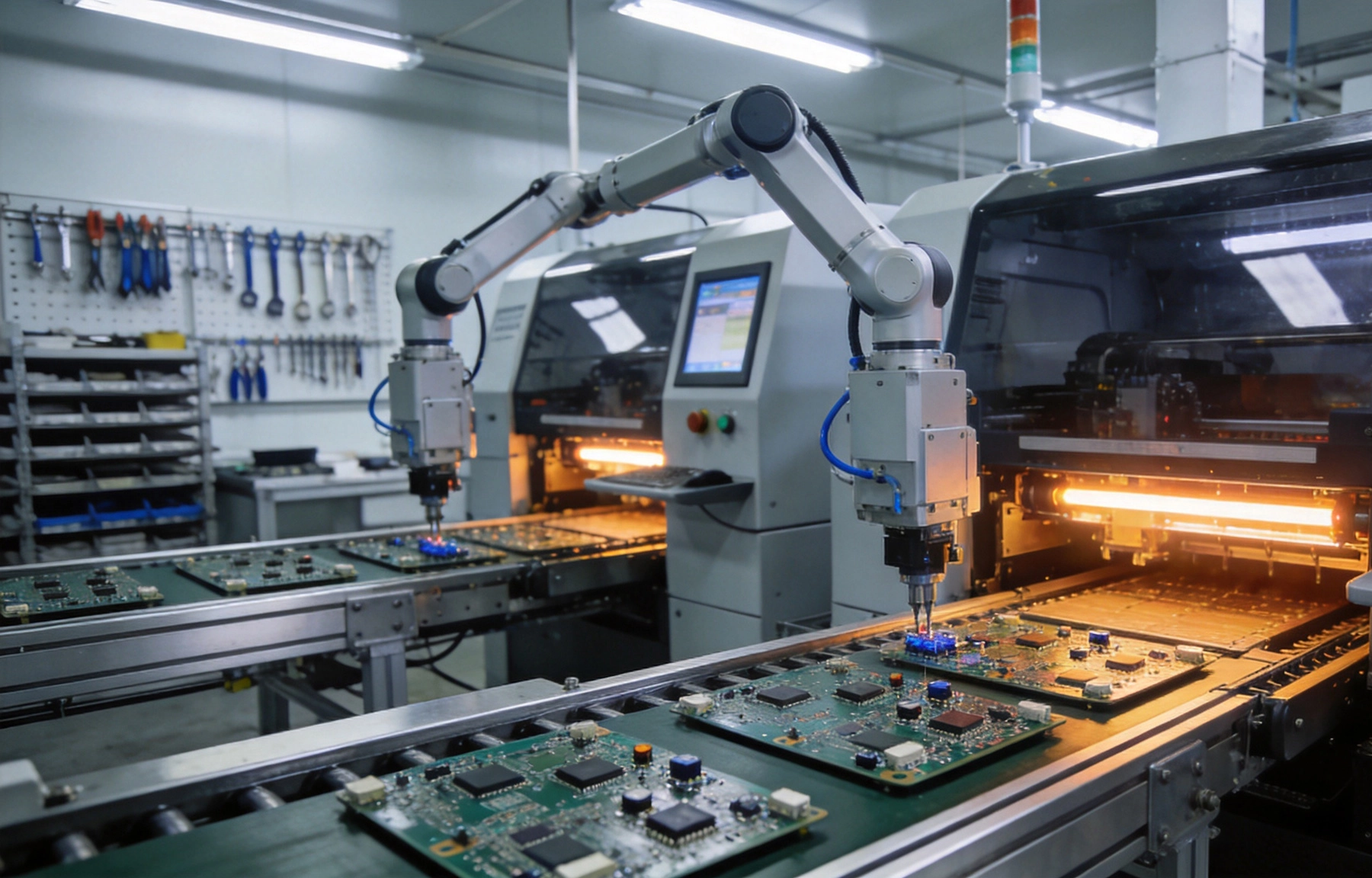
A turnkey PCB service handles the complete manufacturing lifecycle: PCB fabrication, component procurement, SMT assembly, through-hole assembly if needed, testing, and often final packaging and shipment. You provide the design files—Gerbers, BOM, pick-and-place data—and the provider delivers finished boards ready for your test bench or production line.
The alternative is managing each stage separately. You might order bare boards from one vendor, purchase components from distributors, ship boards to an assembly house, and then handle testing yourself or contract with a third-party test facility. Each handoff adds lead time, communication overhead, and risk of misalignment between specifications.
The process begins when you submit Gerber files and supporting documentation. A quality turnkey provider reviews these files before accepting the order. This DFM review checks for trace and space clearance, drill hit accuracy, solder mask alignment, and other fabrication feasibility issues. Catching these problems early prevents costly re-spins after the first board run.
In a fragmented supply chain, this file review might not happen until the fabrication house starts production, or worse, not until assemblies arrive and components do not fit properly. Turnkey providers with in-house fabrication and assembly expertise can perform this review holistically, considering both PCB manufacturability and assembly compatibility.
One of the most time-consuming aspects of electronics manufacturing is sourcing components. The BOM may include dozens to hundreds of part numbers, each with specific packaging, temperature range, and tolerance requirements. Distributor availability fluctuates daily. Lead times for certain components can stretch to months.
Turnkey providers maintain relationships with major distributors and often stock common components. They can procure the full BOM in a single transaction rather than you coordinating orders across multiple sources. Many turnkey services also offer partial kitting—procuring the full BOM upfront and warehousing components for future production runs—which eliminates procurement delays on repeat orders.
For long-term production, component obsolescence management becomes critical. A turnkey partner monitors lifecycle status and flags parts at risk, recommending alternatives before your production line grinds to a halt.
When you manage multiple vendors, every question or issue requires coordinating between parties. A dimensional tolerance question goes to the fabrication house. A component substitution goes to the assembly vendor. A test specification goes to the test provider. Multiply this by the number of issues that arise during a typical project, and the communication overhead becomes substantial.
With a turnkey service, there is a single point of contact. One engineering team understands your design intent, your quality requirements, and your schedule constraints. When an issue arises—say, a fab-out tolerance conflict with a via placement—they resolve it internally rather than bouncing emails between three companies on your behalf.
Fragmented supply chains create quality gaps. The fabrication house passes boards that meet their tolerances. The assembly house assembles to their standards. But when the assembled board fails at final test, determining responsibility takes time and argument. Did the fab have marginal tolerances that the assembly process exposed? Did the assembler use incorrect reflow profiles?
Turnkey providers own the entire process. They can trace every defect back to its root cause within their own operations. More importantly, they have incentives to catch defects early because each rework cycle costs them time and materials. This end-to-end visibility also enables continuous improvement across fabrication and assembly together, something that is impossible when two separate companies handle each stage.
Every handoff in a multi-vendor supply chain adds lead time. The time to ship boards to the assembly house, the time to confirm component availability, the time to coordinate testing schedules—these gaps accumulate. In fast-moving markets, weeks of unnecessary lead time can mean the difference between launching first and losing market share.
Turnkey services reduce these gaps to zero. Fabrication flows directly into assembly without shipping delays. Component kitting happens in parallel with board fabrication. Testing follows assembly on the same production floor. The result is a compressed schedule that can cut 30–50% off total production lead time compared to managing separate vendors.
Managing multiple vendors means managing multiple purchase orders, invoices, and supplier relationships. Each vendor adds administrative overhead in procurement, accounting, and quality documentation. Turnkey consolidation reduces this to a single relationship, one invoice, and one quality record.
There are also pricing advantages. Turnkey providers who source high volumes of components negotiate better distributor pricing. The savings typically pass partially through to customers. Combined with reduced shipping costs from single-source fulfillment, the economics of turnkey often beat the combined cost of separate vendors, even before accounting for the hidden costs of coordination overhead.
A turnkey provider with deep fabrication and assembly expertise becomes a design partner. During the DFM review, they identify opportunities to reduce cost without sacrificing quality. Perhaps a via can be moved to free up routing space. Perhaps a component can be substituted with a more readily available alternative. Perhaps a panelization change could reduce the bare board cost by 15%.
These insights come from seeing the full picture—from the designer's intent through fabrication to assembly. Fragmented vendors only see their segment and rarely volunteer suggestions that would reduce cost in another domain.
Turnkey services are most valuable for projects where design complexity, component count, or production volume creates coordination overhead. They shine for mid-volume production runs where repeatability and cost optimization matter. They are also ideal for prototypes that will transition to production, because the same provider handles both, eliminating the learning curve of a new vendor for the production run.
For very simple single-board assemblies with abundant readily available components, the turnkey advantage is smaller. But even in these cases, the reduced coordination burden and single-source accountability often justify the slightly higher per-unit cost.
Not all turnkey providers offer the same capabilities. Evaluate their fabrication tolerances, assembly technology, testing equipment, and quality certifications. Ask about their component sourcing network and how they handle shortages. Review their DFM process to understand how they catch issues before production starts. A reliable turnkey partner should be able to provide a detailed production summary within your first few orders that confirms they are meeting your quality and schedule expectations.
The turnkey model represents a fundamental shift in how electronics manufacturing works for the customer. Instead of managing a supply chain, you manage a partnership. That shift frees your engineering team to focus on product development rather than procurement logistics, ultimately delivering better products faster and at lower total cost.
The Hidden Costs of DIY PCB Assembly vs. Professional ServicesAugust/11/2026

High-Reliability PCB Assembly Services for Automotive ElectronicsJuly/08/2026

IoT Device Manufacturing: Speed and Efficiency in PCBAAugust/03/2026
The Importance of Fiducial Marks and Tooling Holes in PCBAAugust/12/2026
Offshore vs. Domestic PCB Assembly Services: Analyzing the Trade-offsJuly/16/2026