Open Nav



The decision to outsource PCB assembly is often framed as a simple labor cost comparison: if the internal labor rate is higher than the outsourced labor rate, outsourcing wins. This framing is not just incomplete; it is misleading. The real economics of outsourcing are driven by a complex interplay of fixed and variable costs, capacity utilization, inventory management, risk transfer, and the efficiency gains that come from a manufacturer who handles the entire process from component procurement through final test under a single contract. Turnkey outsourcing, where the manufacturing partner takes responsibility for the complete assembly including all material sourcing, process management, and quality control, offers economic advantages that go far beyond labor arbitrage. Understanding these advantages in detail is essential for engineering managers and procurement professionals who are evaluating whether to build in-house, outsource partially, or commit to a turnkey manufacturing relationship.
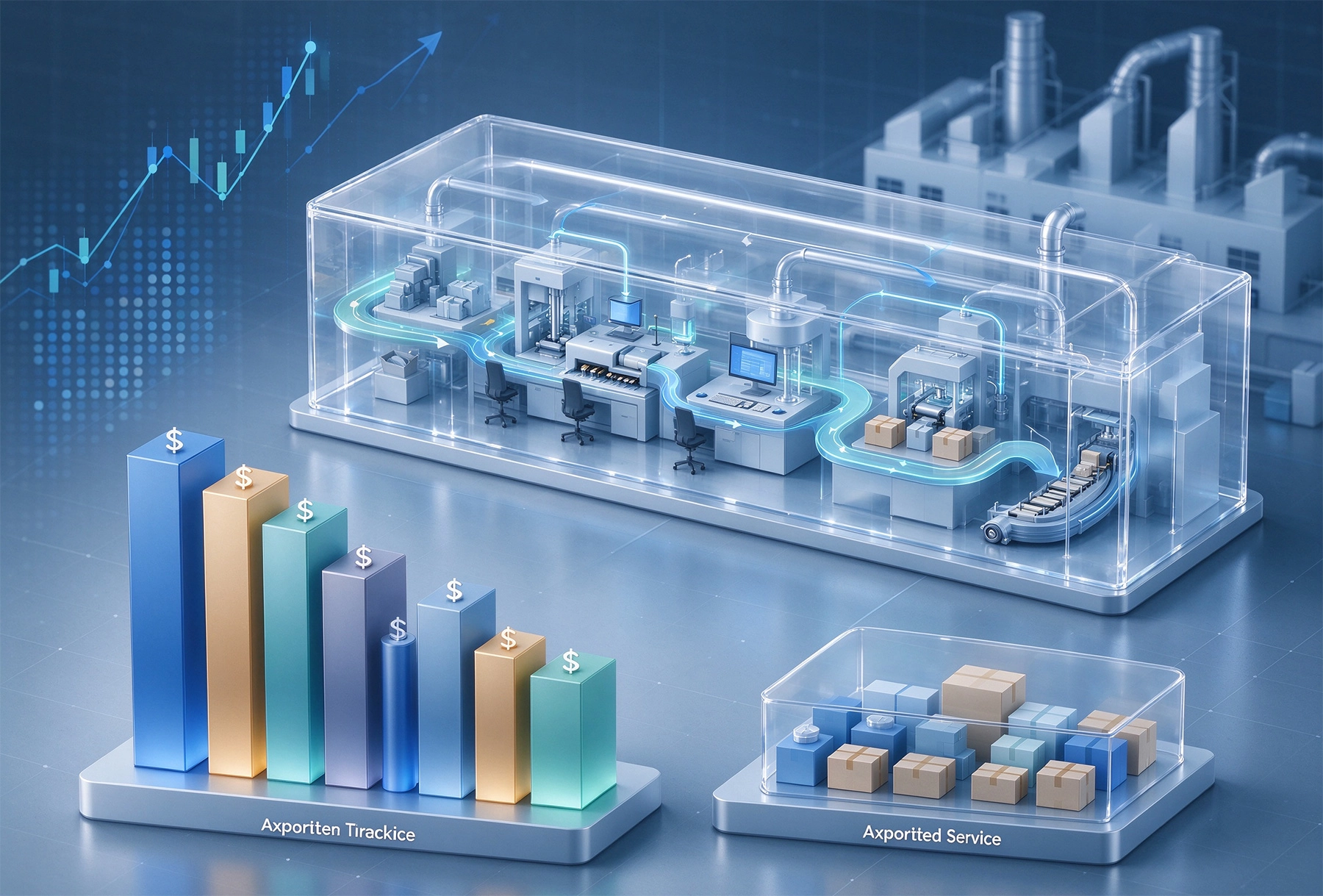
The perceived cost of in-house PCB assembly is typically calculated as the direct labor and material cost of producing the boards. The actual cost includes a long list of overhead items that are difficult to allocate accurately to a specific product but that the business must pay regardless. These hidden costs of in-house manufacturing often make the true internal cost significantly higher than the perceived cost, and comparing the perceived internal cost to the outsourced price leads to incorrect sourcing decisions.
Facility costs for an in-house SMT line include the floor space occupied by the placement machines, reflow oven, stencil printer, AOI system, and all the supporting infrastructure like compressed air, nitrogen generation, and waste treatment. A complete SMT line with associated storage and staging areas occupies 200 to 500 square meters of manufacturing floor space, which at typical industrial lease rates represents a significant fixed cost that must be covered regardless of how many boards the line produces. If the line is idle 40% of the time due to demand variability, the effective per-board facility cost is 67% higher than it would be at full utilization.
Equipment depreciation is another fixed cost that many companies underestimate. A high-speed SMT placement machine costs $200,000 to $500,000 and has a useful life of 5 to 10 years. The annual depreciation charge of $20,000 to $100,000 must be covered regardless of utilization. Additional equipment like selective soldering systems, X-ray inspection machines, and ICT fixtures each carry their own depreciation and maintenance costs. The total equipment investment for a capable in-house assembly operation can exceed $1 million, and this capital must be recovered through production margins over the equipment's useful life.
Engineering and technical support staff who maintain the equipment, develop the processes, create the test programs, and troubleshoot the quality issues represent a significant ongoing labor cost that is not proportional to production volume. A manufacturing engineer, a quality engineer, and a test engineer collectively represent $200,000 to $400,000 in annual compensation costs, and these professionals are needed whether the line produces 100 boards per month or 10,000. At low to medium volumes, the engineering overhead per board can exceed the direct labor cost per board, fundamentally changing the economics of in-house manufacturing.
Turnkey PCBA service is more than just PCB Fabrication plus assembly. It is an integrated manufacturing solution that consolidates all of the activities required to transform a design from electronic data into a physical, tested, and inspected circuit board assembly. Understanding the full scope of what a turnkey service includes, and what costs it eliminates for the customer, reveals the true economic value of the turnkey model.
Component procurement is one of the most time-consuming and risk-laden activities in PCBA production. A turnkey provider sources every component on the BOM from qualified suppliers, negotiates pricing, manages lead times, coordinates deliveries to align with the production schedule, inspects incoming material, and assumes the risk of component quality and availability problems. For a board with 200 unique parts, this procurement activity represents dozens of supplier interactions, purchase orders, receiving inspections, and inventory movements that the customer does not have to perform. The labor time saved by offloading procurement to the turnkey partner is substantial, and the risk transfer of having the partner guarantee component authenticity and availability is even more valuable.
Process engineering for SMT assembly includes developing the solder paste printing parameters, the placement programs, the reflow profile, and the inspection criteria for each board design. A turnkey provider with experience across thousands of board designs has process engineering expertise that allows them to develop robust process parameters more quickly and more reliably than an internal team that sees only a few new designs per year. This experience advantage translates directly into faster NPI cycle times, higher first-pass yields, and fewer process-related defects that require rework.
Quality management, including incoming inspection, in-process monitoring, final inspection, and the documentation and corrective action systems that support continuous improvement, is another activity that the turnkey provider handles. Maintaining a quality management system that meets ISO 9001 or industry-specific standards like ISO 13485 requires dedicated quality staff, calibration programs, and audit preparation activities that represent overhead costs the customer does not bear when these functions are performed by the turnkey partner.
The component procurement capability of an established turnkey provider is fundamentally different from what an individual customer can achieve on their own. The turnkey provider aggregates demand across many customers, negotiates volume pricing with distributors and manufacturers, maintains strategic inventory of commonly used parts, and has supply chain relationships that provide priority allocation during periods of component shortage. These advantages translate into lower component costs and more reliable supply that directly reduce the total cost of the PCBA.
Volume pricing aggregation is the most direct procurement advantage. A turnkey provider who purchases 10,000 units of a specific microcontroller per month across multiple customers receives a volume price that is typically 15 to 30 percent lower than the price an individual customer would pay for 500 units. This price differential applies to every component on the BOM that the turnkey provider sources regularly, and the cumulative savings across a 200-part BOM can reduce the total component cost by 10 to 20 percent compared to customer-sourced components at individual customer volumes.
Distribution relationship leverage provides additional procurement advantages that go beyond volume pricing. Established turnkey providers have dedicated account managers at major distributors who provide priority service, advance notice of allocation situations, access to hard-to-find components through broker networks, and favorable payment terms that improve cash flow. When a critical component goes on allocation, the turnkey provider's distribution relationships may secure allocation that would be unavailable to a small customer purchasing independently. This supply security has tangible economic value that is difficult to quantify but is acutely felt when a component shortage halts production.
Inventory carrying costs for components represent a significant expense that is invisible in most cost models. Components that are purchased in advance of production must be stored, insured, and managed, and they carry the risk of obsolescence if the design changes before they are consumed. A turnkey provider who maintains buffer stock of commonly used components absorbs this carrying cost across their customer base, reducing the per-board inventory cost that each customer would otherwise bear independently. For components with long lead times, the turnkey provider's buffer stock can eliminate the lead time delay that would otherwise extend the production cycle and delay time to market.
The yield of the assembly process, the percentage of boards that pass all tests without requiring rework, is the single most important determinant of the true per-board cost. A 95% first-pass yield means that 100 boards must be started to produce 95 good boards, and the 5 boards that require rework consume additional labor, material, and test time that adds to the effective cost of the 95 good boards. A 90% yield is dramatically worse: the cost of rework, retest, and scrap for the 10 failed boards inflates the effective per-board cost by 15 to 25 percent compared to the cost at 95% yield.
Turnkey providers who specialize in PCBA achieve higher first-pass yields than occasional assemblers because they have more process experience, better-maintained equipment, and more consistent process control. The yield advantage of a specialized turnkey provider over an in-house operation that runs the SMT line intermittently is typically 2 to 5 percentage points, which translates to a 5 to 15 percent reduction in the effective per-board cost after accounting for rework. This yield advantage alone may justify the turnkey price premium over in-house assembly, before any other economic advantages are considered.
Rework cost is not just the direct labor and material cost of the repair. It includes the cost of diagnosing the failure, the cost of re-inspecting the repaired board, the risk that the repair creates a new defect that escapes detection, and the administrative cost of tracking the rework through the quality system. A single rework event on a board with a fine-pitch BGA may require 30 to 60 minutes of skilled technician time, X-ray inspection before and after the repair, and documentation that adds another 15 to 30 minutes of administrative overhead. At fully burdened labor rates, a single rework event can cost $100 to $300, which on a board with a $50 assembly cost represents a 200 to 600 percent cost premium for that board.
Beyond the direct manufacturing costs, in-house PCB assembly requires a support infrastructure of overhead functions that add cost without directly contributing to board output. Turnkey outsourcing eliminates or substantially reduces these overhead requirements, transferring the cost and responsibility to the manufacturing partner.
Receiving and warehouse operations for component inventory management include the labor to receive, inspect, label, and store incoming components, the warehouse space to store them, the inventory management system to track them, and the cycle counting and audit processes to verify inventory accuracy. For a company that builds multiple board types with hundreds of unique parts, the component inventory management overhead can represent one or more full-time employees and significant warehouse infrastructure. Turnkey outsourcing eliminates this overhead entirely for the components that the turnkey partner procures.
Equipment maintenance and calibration for SMT placement machines, reflow ovens, AOI systems, and test equipment requires preventive maintenance schedules, calibration procedures, spare parts inventory, and technician time. A single placement machine may require 4 to 8 hours of preventive maintenance per month, plus calibration of the vision system, the placement heads, and the conveyor mechanisms. Across a complete SMT line, the annual maintenance labor and material cost can reach $20,000 to $50,000, which is a fixed cost that must be covered regardless of production volume.
Training and certification for SMT operators, soldering technicians, and quality inspectors represents an ongoing investment that is difficult to maintain at the same level as a specialized manufacturer. IPC certification for soldering operators, equipment-specific training for placement machine operation, and ongoing skill development for new component packages and process techniques all require time and money that the turnkey provider invests as a core business activity. For a company that performs assembly as a support function rather than a core competency, maintaining the same training investment per operator as a specialized manufacturer is rarely justified by the production volume.
One of the most valuable but least quantified economic advantages of turnkey outsourcing is the transfer of manufacturing risk from the customer to the provider. Risk has economic value because uncertain outcomes require contingency reserves, management attention, and organizational flexibility that all carry costs. When risk is transferred to a turnkey partner who contractually guarantees delivery of conforming boards at a fixed price, the customer can eliminate contingency reserves and redirect management attention from manufacturing troubleshooting to product development and market execution.
Delivery risk, the possibility that boards will not be available when needed due to component shortages, equipment failures, or quality problems, is transferred to the turnkey partner under a fixed-price, fixed-delivery contract. The economic value of this risk transfer depends on the cost of a board shortage, which for a production line can be thousands of dollars per day in lost output, expediting fees, and customer penalty costs. A turnkey partner who absorbs the cost of expediting components or overtime production to meet a committed delivery date provides insurance that the customer would otherwise have to fund through safety stock or production buffers.
Quality risk, the possibility that boards will be delivered with latent defects that cause field failures, is partially transferred to the turnkey partner through warranty provisions and quality guarantees. A turnkey provider who warranties their workmanship for a defined period provides financial recourse if quality problems are discovered after delivery, shifting the cost of warranty repairs from the customer to the provider. The economic value of this quality risk transfer depends on the cost of field failures, which for industrial or medical applications can be substantial in both direct repair costs and indirect reputation damage.
Technology risk, the possibility that the design cannot be manufactured as specified due to DFM issues, material incompatibilities, or process capability limits, is mitigated by the turnkey provider's DFM review process. A turnkey partner who reviews the design for manufacturability before committing to production identifies potential problems early when they can be corrected by design changes, rather than discovering them during production when the correction requires scrapping work in progress and starting over. The economic value of this early risk identification is the avoidance of NRE charges, scrap costs, and schedule delays that result from discovering manufacturing problems after production has started.
The cash flow implications of turnkey outsourcing are significant but often overlooked in cost comparisons that focus exclusively on unit pricing. Turnkey outsourcing improves cash flow by reducing the working capital that must be tied up in component inventory, work in process, and equipment investment, and by shifting the payment timing from upfront material purchases to post-delivery payment for finished assemblies.
Component inventory working capital represents the cost of all components that have been purchased but not yet consumed in production. For a board with $30 in components and a 4-week production pipeline from component order to finished assembly, the customer must finance $30 per board for 4 weeks at their cost of capital. At a 10% annual cost of capital, this financing cost adds approximately $0.23 per board to the true cost. For a company producing 10,000 boards per year, the annual inventory financing cost is $2,300, which is a real cash flow cost that is eliminated when the turnkey partner finances the component inventory.
Payment timing under turnkey arrangements typically follows delivery of the finished assemblies, with payment due 30 days after receipt. This means the customer pays for the finished product after it has been received and inspected, not before. In contrast, consignment assembly, where the customer provides all components, requires the customer to purchase components weeks or months before the finished boards are delivered, extending the cash outlay period and increasing the working capital requirement. The cash flow advantage of turnkey over consignment is proportional to the component cost and the lead time between component purchase and board delivery, and it is most significant for boards with high component costs or long supply chain lead times.
One of the most compelling economic arguments for turnkey outsourcing is the ability to scale production volume up and down without the capital investment and lead time required to expand in-house capacity. For growing companies, the ability to increase production volume by simply increasing the purchase order quantity with the turnkey partner, rather than by purchasing and installing additional SMT lines, is a significant advantage in terms of both capital efficiency and speed of response to market demand.
Capital avoidance is the direct economic benefit of not investing in additional manufacturing equipment. A second SMT line capable of producing 50,000 placements per hour costs $500,000 to $1,000,000 installed, and requires 3 to 6 months of procurement, installation, and qualification time before it is production-ready. By outsourcing the incremental volume to a turnkey partner, the company avoids this capital outlay and the associated depreciation, maintenance, and staffing costs. The capital that would have been invested in manufacturing equipment can instead be invested in product development, market development, or other activities that generate higher returns than manufacturing capital.
Volume flexibility allows the customer to respond to demand variability without the cost of maintaining excess capacity. A company whose demand varies seasonally between 1,000 and 5,000 boards per month would need capacity sized to the peak demand if they manufacture in-house, leaving the excess capacity idle during low-demand periods. With turnkey outsourcing, the company purchases exactly the quantity needed each month, paying only for the boards produced and avoiding the fixed cost of idle capacity during slow periods.
New product introduction scalability is particularly valuable for companies that are ramping new products from prototype through pilot production to full volume. The production requirements change dramatically at each stage: prototypes need fast turnaround of small quantities, pilot production needs moderate volumes with engineering change flexibility, and full production needs consistent high volumes with tight cost control. A turnkey partner with the range of capabilities to support all three stages provides a single manufacturing path from prototype to production, eliminating the cost and delay of transitioning between multiple manufacturing providers as the product matures.
Turnkey outsourcing is not universally the lowest-cost option, and understanding the situations where it is not the economic optimum prevents companies from outsourcing into cost disadvantage. The specific conditions where in-house or partially outsourced assembly may be more cost-effective are important to recognize.
Very high-volume production, where the annual board volume exceeds the capacity of a single SMT line and approaches the scale where the company would have multiple lines running continuously, may be more cost-effective in-house because the fixed costs of equipment and engineering are fully amortized across very high volumes. At volumes above 500,000 boards per year with a stable design, the per-board overhead cost of in-house manufacturing becomes small enough that the labor cost difference between in-house and outsourced is the primary cost driver, and in-house manufacturing in a low-cost region may be competitive with outsourced turnkey.
Designs with proprietary or classified components that cannot be shared with external manufacturers may require in-house assembly regardless of the cost comparison, because the intellectual property or security requirements override the economic considerations. In these cases, partial outsourcing, where the non-classified portions of the board are assembled by a turnkey partner and the classified portions are added in-house, may provide some of the economic benefits of outsourcing while satisfying the security requirements.
Extremely low-cost boards with minimal component counts and simple assembly requirements may not generate enough cost savings from turnkey outsourcing to justify the management overhead of the supplier relationship. A board with 10 components and a $5 assembly cost may cost more to manage through a turnkey contract, with the quotation, purchase order, receiving, and payment processing activities, than the cost savings from outsourcing would justify. For these simple boards, the administrative overhead of outsourcing may exceed the manufacturing cost advantage.
A rigorous cost comparison between in-house assembly and turnkey outsourcing must account for all cost categories, not just the direct labor and material costs that are most visible. The following framework provides a comprehensive checklist of cost elements that should be included in the comparison.
Direct costs include component material, SMT placement labor, through-hole assembly labor, test labor, and rework labor. These are the costs that appear on the production cost report and are the typical basis for cost comparisons. Indirect costs include equipment depreciation, facility allocation, engineering support, quality management, training, and inventory management. These costs are allocated to production through overhead rates that may or may not accurately reflect the true cost of each board design. Risk costs include the expected cost of delivery delays, quality escapes, and technology problems, calculated as the probability of each event multiplied by its cost. Cash flow costs include the financing cost of component inventory, work in process, and equipment investment, calculated at the company's cost of capital.
When all cost categories are included, the total cost of in-house assembly is typically 20 to 40 percent higher than the direct cost alone, and the total cost of turnkey outsourcing is typically 5 to 15 percent higher than the quoted unit price due to supplier management overhead. The comparison between the total in-house cost and the total outsourced cost, including all categories, reveals the true economic advantage of each approach and enables a fact-based sourcing decision.
The economics of turnkey outsourcing are compelling for most companies that perform PCB assembly as a support function rather than a core competency. The savings come not primarily from labor cost differences, but from the elimination of fixed overhead, the procurement efficiency of a specialized manufacturer, the yield advantage of experienced process engineering, the risk transfer of guaranteed delivery and quality, and the cash flow improvement of post-delivery payment terms. When all of these economic factors are accounted for, turnkey outsourcing typically saves 15 to 30 percent compared to the true total cost of in-house assembly for low to medium volume production.
The key to realizing these savings is selecting a turnkey partner who has the technical capability, the quality systems, and the supply chain infrastructure to deliver the economic advantages that the turnkey model promises. Not every assembly provider offers true turnkey service with integrated procurement, process engineering, and quality management. The partner selection process should verify that the provider can deliver the full scope of turnkey services and has the financial stability and manufacturing depth to support a long-term relationship. With the right partner, turnkey outsourcing transforms PCB assembly from a cost center that requires constant management attention into a predictable, efficient supply chain that supports the company's core business of developing and selling products.
Contact us to discuss your requirements and explore how our turnkey PCBA services can reduce your total manufacturing cost while improving quality and delivery performance.
Prototype PCB Assembly Explained: Why It's Crucial for R&DJuly/14/2026
What is PCB Assembly?May/19/2026

Wave Soldering vs. Selective Soldering for Through-Hole Components: Which Process Wins?July/15/2026
Understanding PCBA: The Core of Modern Electronics ManufacturingAugust/08/2026
How Long Does Prototype PCB Assembly Usually Take?July/09/2026