Open Nav



Bringing your hardware startup from concept to market-ready product demands precision, speed, and strategic decision-making—especially when it comes to electronics manufacturing. For early-stage companies, low volume PCB assembly represents the critical bridge between prototype validation and full-scale production. This comprehensive guide walks you through everything you need to know about producing professional-quality circuit boards in quantities ranging from 5 to 500 units without breaking your development budget.
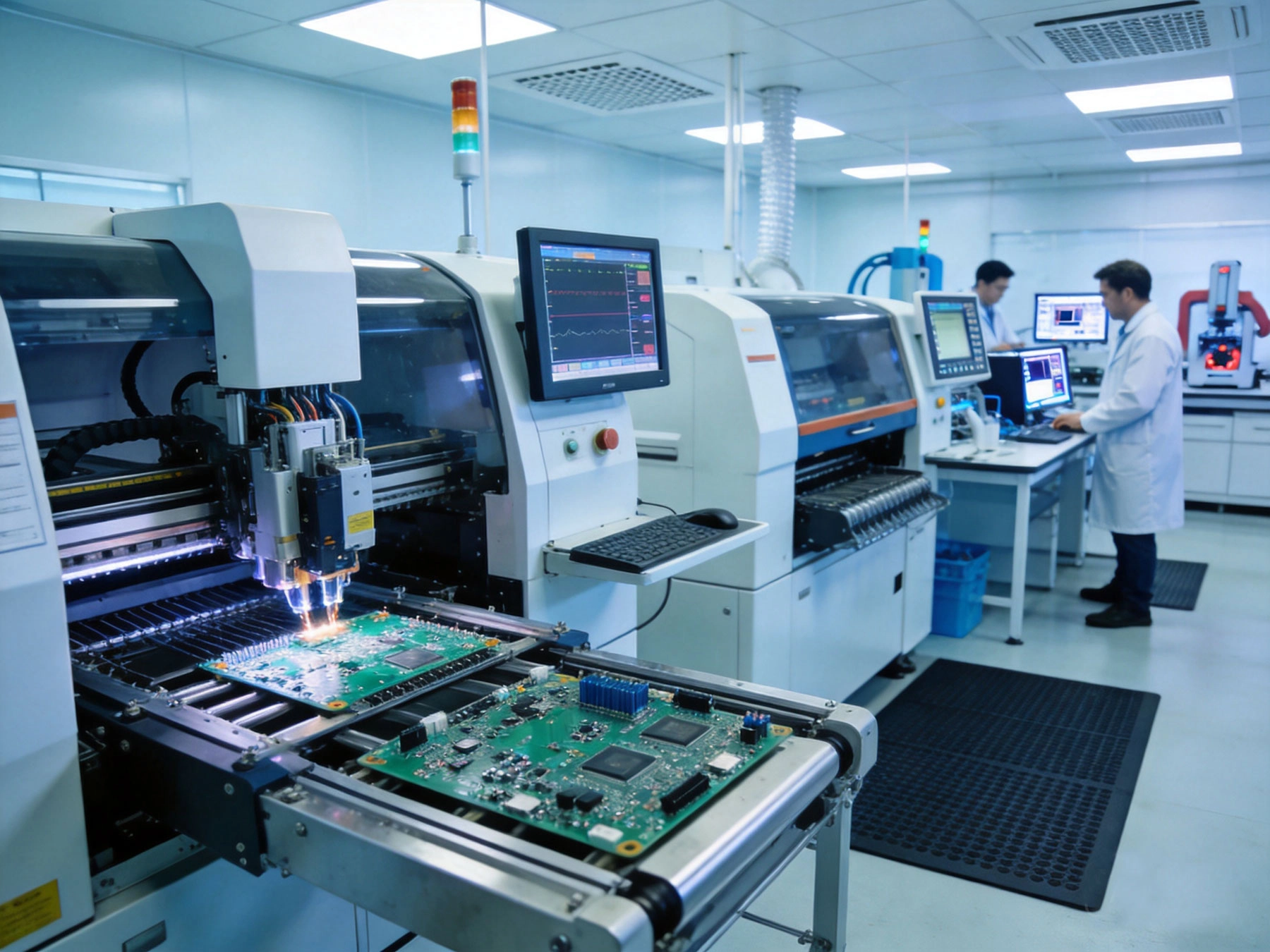
Low volume PCB assembly refers to the professional manufacturing of printed circuit board assemblies in quantities typically ranging from 5 to 500 units. Unlike high-volume production designed for thousands or millions of units, low volume assembly focuses on flexibility, rapid turnaround, and accommodating design iterations that startups and hardware developers desperately need during their product development lifecycle.
The distinction matters because traditional contract manufacturers often require minimum order quantities (MOQ) of 1,000 units or more, making them impractical for startups in prototype validation, beta testing, or early market entry stages. Low volume PCB assembly services bridge this gap, enabling hardware innovators to produce market-ready products in quantities that match their actual demand.
Hardware startups face unique challenges that mass production facilities simply cannot address efficiently. Here's why low volume assembly has become essential for the startup ecosystem:
Your first PCB design will rarely be your final product. Engineering teams typically go through 3-7 design iterations before achieving production-ready specifications. Each iteration requires board spins that demand quick turnaround—often within 72 hours. Traditional manufacturers with their production queues and setup requirements simply cannot accommodate this pace.
Committing to 10,000-unit minimum orders requires significant capital for inventory that may become obsolete if market feedback suggests design changes. Low volume PCB assembly lets you produce exactly what you need, when you need it, preserving precious runway for other critical business functions like marketing and sales.
Producing 50-100 units for beta testing provides invaluable real-world feedback before scaling production. You can identify design flaws, manufacturing defects, and user experience issues without the financial devastation of defective mass-produced inventory.
Startup products often serve niche markets requiring customized configurations. Low volume assembly services readily accommodate variant builds, regional certifications, and configuration-specific requirements that mass production cannot efficiently handle.
Successful PCB assembly starts with comprehensive documentation. Your manufacturer requires:
Pro tip: Always include LCSC or equivalent vendor part numbers in your BOM. This eliminates ambiguity in component selection and dramatically reduces assembly errors.
Component procurement often determines your production timeline and cost. Consider these approaches:
Many low volume PCB assembly services maintain extensive component libraries. JLCPCB, for instance, offers over 300,000 components with prices starting as low as $0.001 per joint. Using in-stock components significantly reduces lead times and eliminates the need for separate procurement.
If your design requires specialized components unavailable through the assembler, you can ship components directly. However, this introduces risk—components must arrive on time, in correct quantities, and with proper packaging for automated handling.
Reducing unique component types lowers costs and simplifies assembly. Where possible, use components already in your manufacturer's library. Each unique extended component typically adds a $3 loading fee.
Low volume PCB assembly costs typically break down into several components:
For a typical 5-board ESP32 sensor module with 400 joints, expect to pay approximately $30-50 in assembly fees plus component costs.
Low volume doesn't mean low quality. Professional assembly services implement:
Always clarify inspection requirements with your manufacturer before ordering. Some services include basic AOI in their pricing while others charge extra for comprehensive inspection packages.
Not all assembly services are created equal. Assess potential partners based on:
Be cautious of assembly services that:
Several manufacturers specialize in serving startups and individual developers:
Strategic design choices dramatically reduce assembly costs:
Timing and quantity decisions affect pricing significantly:
Component expenses often exceed assembly costs. Reduce spending by:
Before ordering, thoroughly test your design through simulation and prototype assembly. Use breadboards or hand-soldered prototypes to verify circuit functionality. Nothing wastes money faster than 100 units of a flawed design.
Generate complete manufacturing files from your EDA software. Double-check:
Upload files to your chosen manufacturer's website. Review their component library for alternatives if your selected parts aren't available. Compare quotes, turnaround times, and included services.
Most services provide automated component matching. Review suggested alternatives carefully—sometimes cheaper parts have different specifications. Confirm all components are in stock before proceeding.
Once confirmed, manufacturing begins. Professional services perform:
Upon receiving your boards, immediately inspect for:
Many assembly problems stem from design issues:
Poor documentation leads to manufacturing delays:
Component-related problems are among the most common:
Knowing when to transition from low volume to high-volume manufacturing is crucial:
When scaling, consider engaging a design-for-manufacturing (DFM) consultant to optimize your design for automated mass production. Low volume PCB assembly techniques may not translate efficiently to high-volume environments.
Many services offer assembly starting at just 5 units. Some manufacturers like JLCPCB can assemble single boards, though pricing becomes less economical. For most startups, 10-50 units provides the best balance between cost and market testing quantity.
Typical turnaround ranges from 3-7 business days for standard service, with expedited options available in 24-48 hours. Component availability significantly impacts timelines—parts not in stock can add weeks to your delivery.
Yes, most services accept customer-supplied components. However, this requires precise timing to ensure components arrive with your PCB panels, proper packaging for automated handling, and acceptance of risk if parts are defective or insufficient.
Reputable manufacturers typically offer rework services for their assembly errors. Always clarify warranty policies before ordering. Document issues thoroughly with photos to support any claims.
Yes, significantly. Low volume PCB assembly incurs setup costs spread across fewer units. A single PCB might cost $15-30 assembled versus $0.50-2 in mass production. However, low volume eliminates inventory risk and enables rapid iteration.
Low volume PCB assembly has democratized hardware development, enabling startups and individual innovators to bring electronic products to market without massive capital commitments. By understanding the process, choosing the right manufacturing partners, and implementing cost optimization strategies, you can efficiently navigate from prototype to market-ready product.
The key takeaways for successful low volume PCB assembly:
Your hardware journey doesn't have to be prohibitively expensive. With the right approach to low volume PCB assembly, you can validate your ideas, iterate rapidly, and scale confidently when the market validates your innovation.
Ready to start your PCB assembly project? Gather your Gerber files, prepare your BOM, and upload them to a reputable low volume assembly service today. The barrier to hardware entrepreneurship has never been lower.

The Future of Flexible Hybrid Electronics (FHE) in AssemblyAugust/06/2026
The Shift Towards Miniaturization in Electronics AssemblyJune/26/2026
Understanding IPC Standards in PCB Assembly ServicesAugust/06/2026
Streamlining Production with Integrated PCB Fabrication and AssemblyJuly/20/2026
SMT vs. THT: Understanding the Differences in PCB Assembly TechnologiesMay/19/2026