Open Nav



Medical device manufacturers demand the highest levels of quality and reliability from printed circuit board assembly (PCBA) partners. Unlike consumer electronics, medical PCBA must comply with rigorous regulatory frameworks including ISO 13485, FDA 21 CFR Part 820, and EU MDR requirements. This article examines the critical assembly processes, quality control measures, and documentation standards that define medical electronics manufacturing.
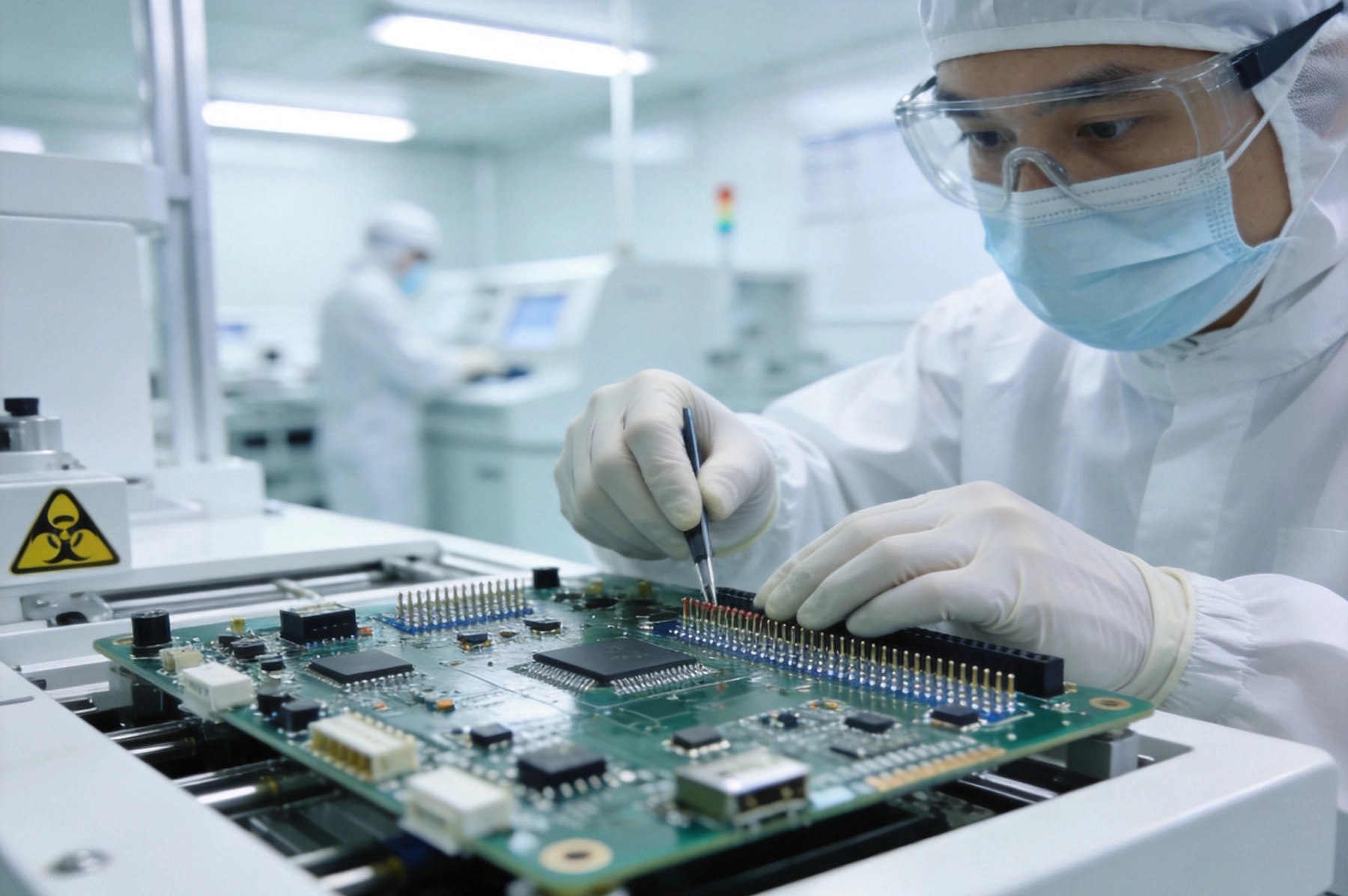
Medical devices are classified based on risk (Class I, II, or III), with increasingly stringent requirements for higher-risk categories. All medical PCBA facilities must maintain ISO 13485 certification—the gold standard for medical device quality management systems. For US market access, FDA 21 CFR Part 820 establishes quality system requirements, while European manufacturers comply with EU MDR 2017/745 regulations.
These regulations mandate complete traceability from individual components to finished assemblies. Every resistor, capacitor, and IC must have documented lot numbers, dates of manufacture, and supplier certifications. This traceability enables rapid response to field failures and supports regulatory audits that can occur with minimal notice.
Medical PCBA production typically requires ISO Class 7 or Class 8 cleanroom environments depending on device classification. Cleanrooms maintain strict particle counts (<100,000 particles per cubic meter for ISO 7) through HEPA filtration, positive air pressure, and rigorous gowning protocols. Personnel wear full-body coveralls, hairnets, face masks, and gloves to prevent contamination.
Cleanroom protocols extend beyond air quality. Electrostatic discharge (ESD) protection is critical, with grounded workstations, wrist straps, and ionizing air blowers preventing damage to sensitive medical-grade components. Temperature (20-25°C) and humidity (40-60% RH) remain strictly controlled to ensure consistent solder joint formation and prevent moisture-induced failures.
Medical PCBA begins with carefully qualified components meeting automotive or medical-grade specifications. Unlike commercial-grade parts, medical components undergo extended qualification testing including accelerated life testing, humidity bias testing, and thermal cycling. Component distributors must provide certificates of conformance (CoC) documenting testing data and compliance with relevant specifications.
Active components like microprocessors and memory chips require screening for radiation hardness in implantable devices and extended operational temperature ranges for portable equipment. Passive components such as capacitors must meet AEC-Q200 stress test qualification for high-reliability applications. Bill of materials (BOM) management includes approved vendor lists (AVL) with validated secondary sources to prevent supply chain disruptions.
Medical-grade PCBs follow IPC-6012 Class 3 or IPC-6013 specifications for rigid and flexible boards respectively. These standards require tighter tolerances on trace widths, spacing, and plating thickness compared to Class 2 commercial boards. Minimum annular ring dimensions exceed 2 mils to ensure reliable via connections after thermal cycling.
High-reliability laminates such as high-Tg FR4, polyimide, or ceramic-filled materials provide enhanced thermal stability and moisture resistance. Solder mask selection considers biocompatibility for implantable devices and chemical resistance for sterilization compatibility. PCB manufacturers document all material certifications, including UL flammability ratings and IPC 4101 laminate specifications.
Surface mount technology (SMT) assembly for medical devices emphasizes precision and repeatability. Automated solder paste printing with closed-loop vision systems maintains ±12.5µm stencil registration accuracy. Solder paste selection considers no-clean formulations for easier cleaning or water-soluble pastes where complete residue removal is required.
Reflow profiling follows J-STD-020 guidelines with pre-soak temperatures between 150-180°C and peak temperatures within component manufacturer specifications. Thermal profiling equipment monitors real-time oven temperatures to ensure consistent profiles across all panels. Nitrogen atmospheres with oxygen levels below 50 ppm reduce oxidation and improve solder joint quality for fine-pitch components.
Placement machines achieve ±0.025mm accuracy for 0201 and 01005 components common in portable medical devices. Vision systems inspect component orientation, polarity, and placement position before soldering. For ball grid array (BGA) packages, X-ray inspection verifies complete solder joint formation and detects voids or misalignments invisible to optical inspection.
Medical PCBA quality control begins with first article inspection (FAI) documenting measurement data for critical dimensions and electrical characteristics. Automated optical inspection (AOI) systems examine every solder joint for defects including bridging, insufficient solder, tombstoning, and component misalignment. AOI defect detection rates exceed 99.5% for 0402 and larger components.
Functional testing validates electrical performance against design specifications. Test fixtures probe all critical nodes measuring continuity, resistance, capacitance, and signal integrity. In-circuit testing (ICT) catches manufacturing defects before final assembly, while flying probe testing validates designs without dedicated test fixtures. Battery-powered devices undergo extended life cycle testing measuring performance after hundreds of charge/discharge cycles.
Environmental stress screening (ESS) exposes assemblies to temperature cycling (-40°C to +85°C), vibration (20-2000Hz, 10G), and humidity (85% RH, 85°C) to eliminate infant mortality failures. Burn-in testing operates assemblies at elevated temperatures for 48-168 hours depending on device classification. All test data becomes part of the device history record (DHR) maintained for regulatory compliance.
Medical PCBA documentation requirements exceed those of any other industry. Device master records (DMR) document manufacturing processes, inspection procedures, and acceptance criteria. Device history records (DHR) track each assembly through production including lot numbers for all components, inspection results, and operator signatures.
Change control procedures manage any modifications to processes or materials. Engineering change orders (ECOs) require impact assessments, validation testing, and regulatory approval before implementation. Corrective and preventive actions (CAPA) document root cause analysis for nonconformities and implement preventive measures.
Statistical process control (SPC) monitors critical process parameters tracking trends and identifying potential issues before they become defects. Process capability indices (Cpk) above 1.33 demonstrate statistical control of critical dimensions like solder paste volume and component placement accuracy.
Medical PCBA facilities undergo regular audits from regulatory bodies including FDA, notified bodies for CE marking, and internal quality audits. Auditors examine quality system documentation, training records, production records, and nonconformance reports. Unannounced audits require maintained readiness with up-to-date records and trained personnel available for inspection.
Preliminary inspections occur before first production runs validating equipment calibration, operator training, and process documentation. Routine surveillance audits verify ongoing compliance with quality system requirements. For Class III devices, FDA may conduct pre-approval inspections before granting 510(k) clearance or premarket approval.
Selecting the right assembly partner requires verifying certifications beyond ISO 13485. Look for facilities with IPC-A-610 Class 3 acceptance standards, J-STD-001 soldering certification, and experienced quality management teams. Request audit reports and customer references focusing on medical device experience.
Technical capabilities should include fine-pitch BGA placement, microvia HDI assembly, and cleanroom manufacturing for implantable devices. In-house testing capabilities including AOI, X-ray, and functional testing reduce lead times compared to outsourcing testing services. Geographic proximity enables closer collaboration and faster response to design changes or field issues.
Communication and transparency prove critical during medical device development. Partners willing to share process data, validation protocols, and nonconformance statistics demonstrate confidence in their quality systems. Early engagement in design reviews prevents manufacturability issues and ensures regulatory considerations are addressed from initial concept through mass production.
Medical PCBA represents the pinnacle of electronics manufacturing quality and reliability. Regulatory frameworks, cleanroom environments, qualified components, and rigorous testing combine to produce assemblies trusted with patient health and safety. Success requires investment in quality systems, certified personnel, and validated processes exceeding standard commercial requirements.
For medical device OEMs, partnering with experienced medical PCBA manufacturers ensures compliance with complex regulatory requirements while delivering assemblies meeting the highest reliability standards. As medical devices continue advancing with increased electronic content and connectivity, the role of qualified medical PCBA partners becomes increasingly critical to bringing innovative healthcare technologies to market safely and efficiently.
Reducing Risk in Electronics Manufacturing with Full Turnkey ServicesAugust/15/2026

The Science of Solder Paste Printing Keys to Perfect SMT AssemblyJune/04/2026

Streamlining Production with Integrated PCB Fabrication and AssemblyJuly/20/2026

Offshore vs. Domestic PCB Assembly Services: Analyzing the Trade-offsJuly/16/2026
The Shift Towards Miniaturization in Electronics AssemblyJune/26/2026