Open Nav



Every PCBA project eventually encounters the component sourcing challenge. The microcontroller specified in your design has a 52-week lead time. The precision analog-to-digital converter you selected has been discontinued by the manufacturer. The connector that perfectly fits your enclosure is suddenly unavailable due to a factory fire halfway around the world. These aren't exotic scenarios—they're routine realities in electronics manufacturing that separate projects that ship on schedule from those that stall indefinitely.
Hard-to-find components fall into several categories, each requiring different sourcing strategies. Understanding these categories and the approaches that work for each transforms component sourcing from a crisis-response activity into a systematic capability that protects project schedules and product viability. This article explains how professional PCBA sourcing operations locate and secure components when standard distribution channels fail.
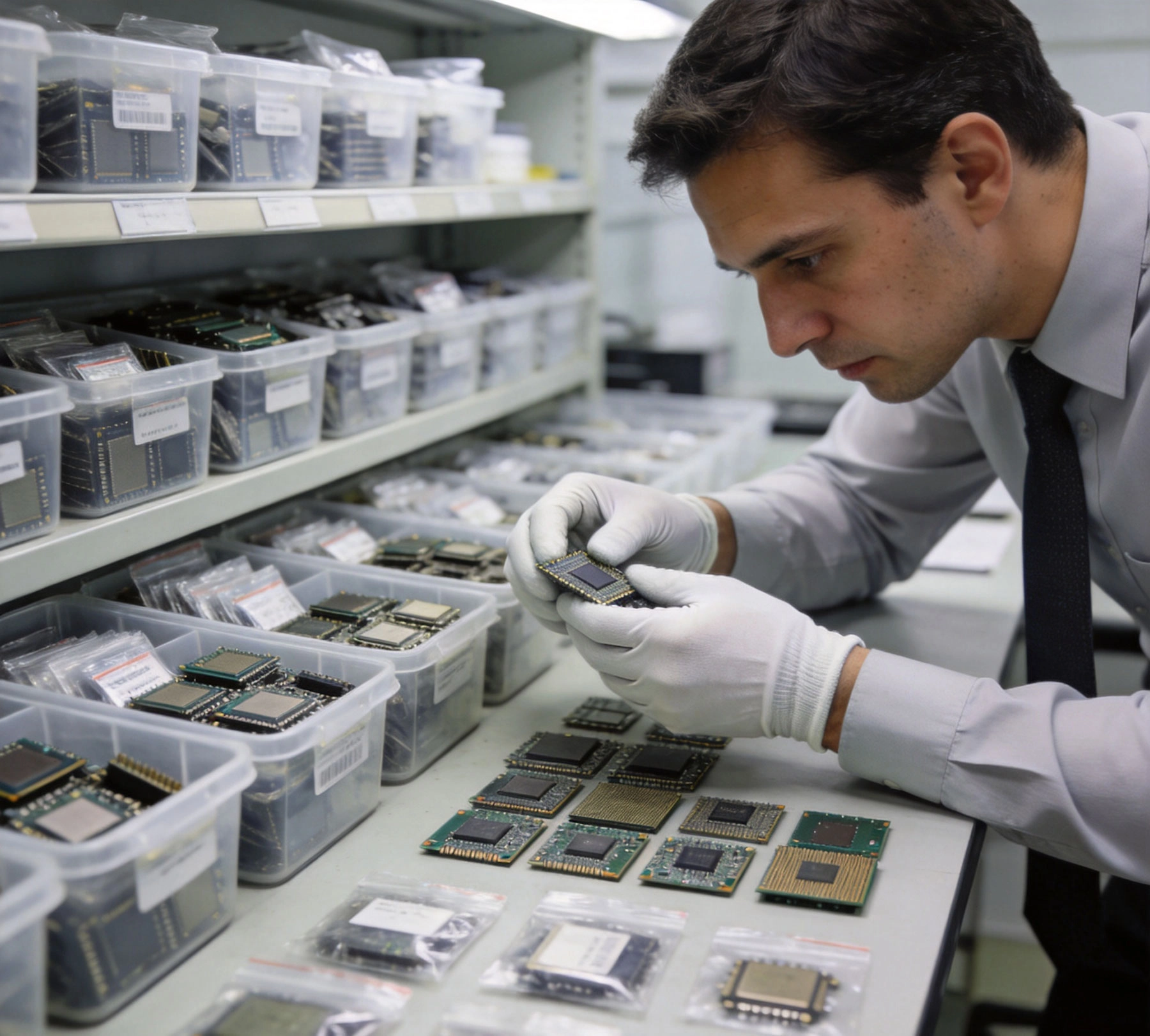
Not all component shortages are created equal. Understanding the specific type of shortage you're facing guides the appropriate sourcing strategy.
Allocation Components
Allocation occurs when demand temporarily exceeds supply, but production continues. Manufacturers ration available supply among customers based on purchase history, strategic importance, or other criteria. The component isn't gone—it's just not readily available to everyone who wants it.
During allocation periods, standard distribution channels may show zero inventory or extended lead times. However, parts are being manufactured and entering the supply chain. The sourcing challenge becomes gaining access to allocated supply rather than finding alternatives.
End-of-Life Components
Manufacturers discontinue components for various reasons—technology obsolescence, low sales volume, manufacturing process changes, or strategic product line consolidation. When a component reaches end-of-life (EOL), the manufacturer announces a last-time-buy date after which no new production will occur.
After EOL announcement, a window exists for last-time-buy procurement. Once that window closes, remaining supply consists of distributor inventory, original equipment manufacturer (OEM) excess, and broker stock. Sourcing strategy shifts from manufacturer procurement to secondary market acquisition.
Obsolete Components
Obsolete components are those no longer manufactured with no remaining authorized distribution. The manufacturer has exited the business, the product line has been discontinued for an extended period, or the technology has been superseded. No new supply exists, and availability depends entirely on secondary market inventory.
Obsolete component sourcing requires specialized channels and carries risks that newer components don't present—counterfeit parts, deteriorated storage conditions, and limited or no manufacturer support.
Specialized and Custom Components
Some components are hard to find not because of supply constraints but because of limited production. Custom-programmed devices, specialized sensors, or components with unusual specifications may be manufactured only for specific customers or in limited volumes. These components never had broad distribution and require direct manufacturer relationships or specialized sourcing.
Before exploring alternative sourcing channels, the authorized distribution network deserves thorough exploration. Authorized distributors maintain relationships with component manufacturers and receive preferential allocation during shortages.
Major Global Distributors
Companies like Arrow Electronics, Avnet, Digi-Key, Mouser Electronics, and TTI maintain extensive inventory and strong manufacturer relationships. During allocation periods, their allocation from manufacturers may exceed what smaller distributors receive. Establishing relationships with major distributors and maintaining regular purchasing history improves allocation priority.
Global distributors also maintain inventory across multiple warehouses worldwide. A component unavailable from your local distributor may be in stock at another regional warehouse. Checking inventory across the distributor's entire network, not just local stock, reveals availability that might otherwise be missed.
Regional and Specialized Distributors
Beyond the major global distributors, regional distributors often serve specific markets or component categories. These distributors may have different inventory positions and manufacturer relationships than the global players. A regional industrial distributor might have different allocation for industrial-grade components than a global consumer electronics distributor.
Specialized distributors focus on specific component categories—memory, connectors, passives, or semiconductors. Their deep focus often provides better access to constrained components within their specialty than generalist distributors can offer.
Manufacturer Direct Relationships
For high-volume or strategic applications, direct relationships with component manufacturers provide the best access to allocated components. Manufacturers prioritize direct customers and large distributors over smaller channel partners during supply constraints.
Building manufacturer relationships requires commitment—regular communication, volume commitments, and collaborative engagement. The investment pays dividends during allocation periods when manufacturer support becomes essential for securing supply.
When authorized channels cannot provide required components, independent distributors and brokers become essential sourcing resources. These channels carry risks that authorized distribution doesn't, but they also provide access to inventory that authorized channels cannot match.
Independent Distributors
Independent distributors maintain inventory without manufacturer authorization, sourcing components through various channels including excess inventory purchases, OEM surplus, and broker networks. They offer immediate availability for components that authorized distributors cannot supply.
Quality risks increase with independent distribution. Components may have changed hands multiple times, with storage conditions and handling history unknown. Counterfeit components are a significant concern, particularly for high-value semiconductors. Reputable independent distributors implement inspection and authentication procedures, but due diligence remains essential.
Component Brokers
Brokers don't maintain inventory but facilitate transactions between buyers and sellers. They locate components through their network of contacts and arrange purchase transactions. Brokers excel at finding small quantities of specific components that aren't available through standard channels.
Broker relationships are transactional—success fees for locating components. While this creates cost premiums, the value of securing components that enable production schedules often justifies the expense. Established broker relationships with proven track records reduce the risks of dealing with unknown parties.
Excess Inventory Markets
OEMs and contract manufacturers frequently have excess component inventory from completed projects, order cancellations, or forecast changes. This excess inventory enters secondary markets through various channels. Locating excess inventory that matches your requirements can provide authorized-quality components at favorable pricing.
Excess inventory databases and marketplaces connect buyers with sellers of surplus components. These platforms require careful verification of component authenticity and condition, but they provide access to inventory that would otherwise be unavailable.
Sourcing from secondary markets requires enhanced quality assurance procedures to mitigate the risks of counterfeit, damaged, or improperly stored components.
Supplier Qualification
Before purchasing from independent distributors or brokers, qualify the supplier's quality systems and track record. Request references from other customers, documentation of inspection procedures, and evidence of counterfeit detection capabilities. Reputable secondary market suppliers welcome such qualification and provide transparency about their processes.
Maintain approved vendor lists for secondary market sourcing, just as you do for authorized distribution. Update these lists based on transaction experience and quality performance. Poor-performing suppliers should be removed from the approved list to prevent recurring problems.
Incoming Inspection
Components sourced from secondary markets should receive enhanced incoming inspection compared to authorized distribution. Visual inspection checks for obvious counterfeiting indicators—incorrect markings, poor packaging, or physical anomalies. Electrical testing verifies that components perform to specification. X-ray inspection can reveal internal structures that differ from genuine components.
For high-risk components or critical applications, consider professional authentication services that use advanced techniques to verify component authenticity. While expensive, authentication costs may be justified for components where failure would have severe consequences.
Traceability Documentation
Document the sourcing chain for secondary market components, including supplier identification, date codes, lot numbers, and any available chain-of-custody information. This documentation supports failure analysis if problems occur and provides evidence for insurance or legal action if counterfeit components are discovered.
Store secondary market components separately from authorized distribution stock to prevent mixing that could compromise traceability. Clear labeling and segregation procedures ensure that secondary market components can be identified if quality issues arise.
Sometimes, sourcing the exact specified component proves impossible or uneconomical. Alternative strategies address the requirement through different approaches.
Form-Fit-Function Alternatives
Engineering analysis may identify alternative components that meet the original component's form, fit, and function requirements without being identical. A different manufacturer's equivalent part, a different package with the same electrical characteristics, or a newer generation component with improved specifications may substitute for the unavailable original.
Identifying alternatives requires engineering expertise to evaluate electrical, mechanical, and thermal equivalence. Component databases and manufacturer cross-reference tools assist in finding potential alternatives, but engineering validation ensures that alternatives actually meet application requirements.
Design Modifications
When no direct alternative exists, design modifications may accommodate available components. Circuit redesign, layout changes, or software adjustments can adapt the design to use components that are readily available. While design changes involve engineering cost and schedule impact, they may be preferable to indefinite delays waiting for unavailable components.
Design modification decisions should consider production volume and product lifecycle. For high-volume, long-life products, redesign investment amortizes favorably. For low-volume or short-life products, accepting alternative components with minor performance compromises may be more practical.
Emulation and Replacement
For obsolete components with no direct alternatives, emulation or replacement strategies may be viable. FPGA-based emulation can replicate the function of obsolete ASICs or processors. Modern integrated circuits may combine functions that previously required multiple discrete components.
Emulation and replacement require significant engineering investment but can extend product life when component obsolescence would otherwise force redesign. These strategies are most valuable for products with long service life requirements, such as industrial or military equipment.
The most effective approach to hard-to-find components prevents shortages before they occur through proactive component management practices.
Component Lifecycle Monitoring
Monitor component lifecycle status for critical components in your designs. Component lifecycle databases track product status changes, providing early warning of discontinuation notices, last-time-buy announcements, and allocation conditions. This monitoring enables proactive response before shortages become critical.
Integrate lifecycle monitoring into design processes, evaluating component availability and lifecycle status during component selection. Avoid components approaching end-of-life unless last-time-buy procurement or alternative strategies are in place.
Strategic Inventory Management
For critical components with supply risk, maintain strategic inventory that buffers against shortages. Safety stock levels should reflect component criticality, lead time, supply risk, and inventory carrying cost. High-risk, long-lead-time components justify higher safety stock than readily available commodity parts.
Strategic inventory requires storage and management procedures that maintain component quality over extended periods. Environmental controls, inventory rotation, and regular condition verification prevent inventory degradation that would negate the value of strategic stock.
Multi-Source Qualification
Where possible, qualify multiple sources for critical components. Second-source components provide alternatives when primary sources face constraints. Multi-source strategies require engineering qualification of alternatives but provide supply security that single-source approaches cannot match.
Component standardization across product lines increases volume leverage with suppliers and justifies multi-source qualification investment. Standard component lists that specify preferred components with qualified alternatives streamline design and procurement while improving supply security.
Modern technology provides tools that improve component sourcing efficiency and effectiveness.
Component Search Platforms
Online platforms aggregate inventory data from multiple distributors, providing unified search across broad supplier networks. These platforms show real-time availability, pricing, and lead times from authorized and independent sources. Aggregated search saves time compared to checking individual distributor websites.
Advanced platforms provide additional capabilities—price comparison, alternative suggestions, lifecycle information, and parametric search. Integration with design tools enables component selection with immediate visibility of availability and cost implications.
Supply Chain Visibility Tools
Supply chain visibility platforms provide early warning of supply disruptions, allocation conditions, and price movements. These tools monitor news feeds, manufacturer announcements, and market data to identify potential supply problems before they affect availability.
Artificial intelligence and machine learning enhance visibility tools, identifying patterns that predict supply constraints. Predictive alerts enable proactive sourcing decisions before shortages become critical.
Blockchain for Authenticity Verification
Emerging blockchain applications provide component traceability and authenticity verification. Immutable records of component origin, handling, and transaction history support authentication and reduce counterfeit risk. While not yet widespread, blockchain-based traceability may become standard practice for high-risk components.
Despite proactive management, component crises sometimes occur that require extraordinary sourcing measures.
Global Sourcing Networks
During severe shortages, expanding search geographically may reveal inventory in regional markets not normally accessed. Components unavailable in North American distribution may be in stock in Asian or European markets. Global sourcing relationships and freight forwarding capabilities enable access to worldwide inventory.
Time zone differences, language barriers, and regulatory compliance complicate global sourcing, but these challenges are surmountable when component availability justifies the effort.
Customer Collaboration
Customers with complementary component needs may have excess inventory or allocation priority for components you need. Collaborative arrangements—component swaps, allocation sharing, or joint procurement—can address shortages that individual efforts cannot resolve.
Industry associations and user groups facilitate customer collaboration, providing forums for sharing supply information and coordinating sourcing efforts.
Executive Escalation
For truly critical components, executive-level engagement with manufacturers or distributors may unlock supply that operational contacts cannot access. Manufacturer executives have authority to override allocation decisions or expedite production for strategic customers.
Executive escalation should be reserved for genuine crises and used sparingly to preserve its effectiveness. Manufacturers respond to executive requests when the business relationship justifies special treatment.
Sourcing hard-to-find components for PCBA projects requires capabilities that extend far beyond routine procurement. Professional sourcing operations maintain relationships across multiple distribution channels, implement quality assurance procedures appropriate for secondary markets, and employ technology tools that improve visibility and efficiency. Most importantly, they approach component sourcing strategically—preventing shortages through proactive management while maintaining the flexibility and relationships needed to respond when shortages occur. This comprehensive capability transforms component sourcing from a source of project risk into a competitive advantage that enables reliable product delivery regardless of supply chain disruptions.
How to Prepare the Perfect BOM (Bill of Materials) for Turnkey Assembly?July/17/2026
PCB Assembly FAQ: What Files Do I Need to Submit?June/17/2026

How to Evaluate a Reliable Prototype PCB Assembly PartnerJuly/29/2026
How Long Does Prototype PCB Assembly Usually Take?July/09/2026

What is the Difference between Class 2 and Class 3 PCBA?September/02/2026