Open Nav



Every hardware startup faces the same challenge at some point: designing a product in the lab is straightforward, but manufacturing it at scale is an entirely different discipline. The startup we worked with—a consumer electronics company developing an innovative wearable health monitoring device—had developed functional prototypes that attracted venture capital investment and generated excitement in their target market. Yet when it came time to move from handful of prototypes to production quantities that could fulfill pre-orders and retail distribution, they encountered obstacles common to many hardware innovators. Finding manufacturing partners willing to work with low volumes while preparing for future growth required a strategic approach to assembly services and supply chain management.
This case study details how our Low Volume PCB Assembly services enabled this startup to transition smoothly from prototype phase through early production ramp, establishing manufacturing processes and relationships that scaled with their business growth. The strategies employed address challenges faced by countless hardware startups, and the lessons learned apply across industries from consumer electronics to industrial IoT to medical devices.
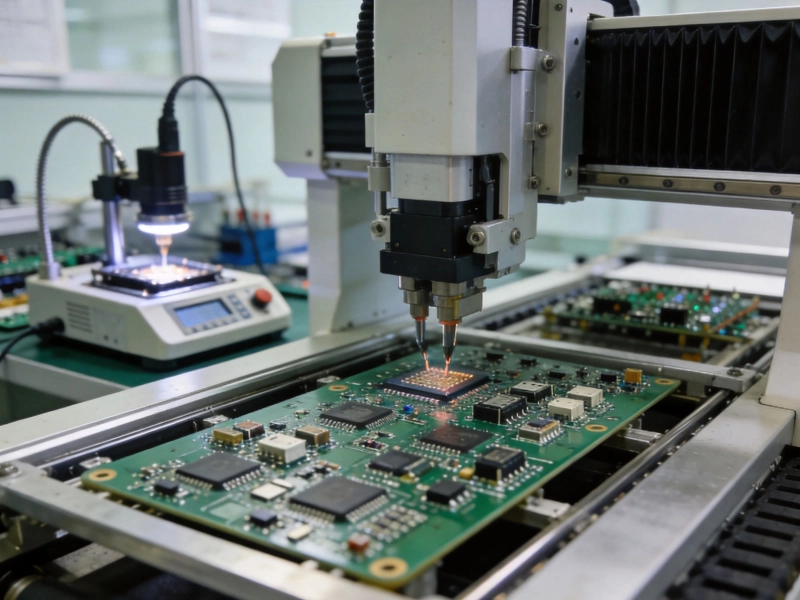
The startup had completed initial product development using in-house assembly capabilities and local prototype PCB shops. Their design featured a four-layer HDI board with BGA components, fine-pitch QFN packages for wireless communication ICs, and a mix of 0603 and 0402 passive components. The prototypes demonstrated the core functionality: continuous health monitoring, wireless data transmission, and battery operation that exceeded target specifications. The company secured initial funding and pre-order commitments from distributors who wanted product samples for evaluation.
At this point, the startup founders realized that their assembly approach was not scalable. Hand-assembling prototypes in their office was feasible for five or ten units, but distributors requested 100 to 200 units each, requiring a production quantity that exceeded their internal capacity. Furthermore, the variability of hand-assembled prototypes meant quality issues that would become unacceptable in retail products. The startup needed a manufacturing partner who could provide consistent assembly quality while accommodating volumes that were still too small for many established electronics manufacturing services (EMS) providers.
The startup approached several large EMS providers, only to be told that their initial production quantities fell below minimum order thresholds. Many providers insisted on runs of 500 to 1,000 units minimum, citing setup costs that made smaller runs economically unattractive. This created a classic chicken-and-egg problem: distributors wouldn't commit to large orders until they evaluated production samples, but the startup couldn't produce sample quantities without orders.
Local assembly shops quoted surprisingly high per-unit prices that would make the product uncompetitive in retail channels. These shops lacked the automated equipment and process controls necessary for efficient assembly, and their quotes reflected the manual labor intensity involved in producing low volumes without economies of scale. The startup faced either accepting unit costs that would kill their business model or finding a partner who could provide reasonable pricing while maintaining quality.
Beyond pricing and volume challenges, the startup discovered that their documentation package needed substantial work before any manufacturing partner could accept the job. The PCB design lacked proper design for manufacturing (DFM) optimization, with some features that would create assembly challenges. The bill of materials referenced component part numbers without specifying acceptable alternatives, creating supply chain risk. Assembly drawings lacked clarity on special requirements, testing procedures, and quality acceptance criteria.
Large manufacturing providers expected professional documentation before engaging, while smaller shops struggled with the complexity of the assembly due to limited experience with similar products. The startup needed manufacturing engineering expertise to prepare production-ready documentation while simultaneously finding assembly services flexible enough to handle their evolving requirements.
We proposed a tiered production approach that aligned with the startup's anticipated growth trajectory. Initial runs of 25 to 50 units would serve as production validation and distributor samples, providing sufficient quantity to fulfill initial commitments without requiring large inventory investment. Once these initial units validated the manufacturing process and received distributor acceptance, production runs of 100 to 250 units would fill initial retail orders. Finally, once the product proved market fit and production processes stabilized, runs of 500+ units would achieve economies of scale appropriate for full retail distribution.
This staged approach offered several advantages. It reduced upfront capital requirements by avoiding large inventory commitments before market validation. It allowed manufacturing processes to be refined incrementally rather than trying to achieve full yield immediately. And it provided natural checkpoints where product and process could be adjusted based on field feedback before scaling to higher volumes. Per-unit pricing decreased with volume as expected, but the tiered structure kept early-stage costs manageable.
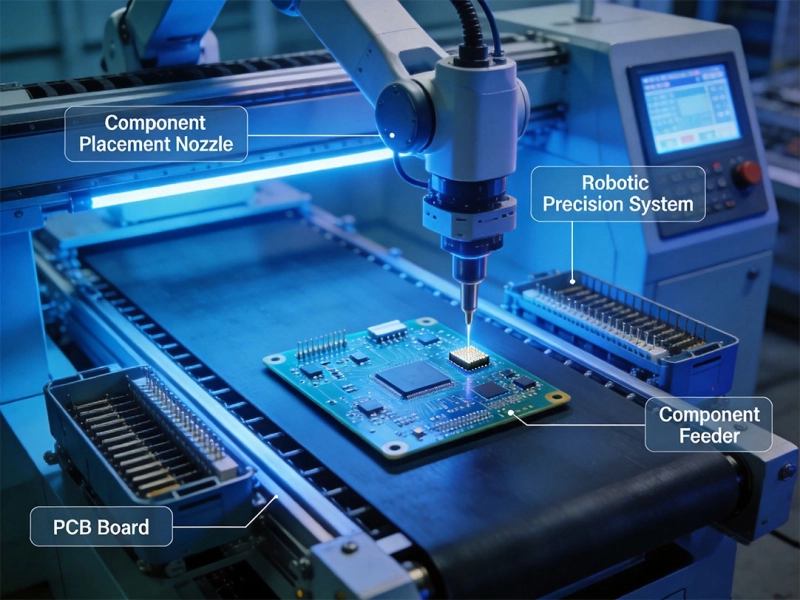
Before committing any production runs, we conducted a thorough design for manufacturing review of the PCB layout and assembly requirements. This process identified several improvements that would reduce assembly cost and improve reliability without requiring major design changes. Specific recommendations included increasing pad sizes for fine-pitch components to improve solder joint reliability, adjusting component spacing to accommodate automated placement, and modifying trace routing to optimize impedance control for high-speed signal paths.
Some recommendations required more significant effort but provided substantial long-term benefits. We proposed replacing certain custom-specification components with functionally equivalent off-the-shelf parts that offered better availability and lower cost. We identified component placements that created thermal challenges and recommended board layout modifications to improve heat dissipation. We even suggested an alternative packaging option for the wireless communication IC that would reduce board area while maintaining electrical performance.
Importantly, we presented these recommendations with associated costs, benefits, and timeline implications so the startup founders could make informed decisions about which changes to implement immediately versus which to defer for future product revisions. This approach respected their need to get product to market quickly while providing guidance for future improvements.
Component sourcing represented another challenge where our capabilities provided value. The startup had sourced components from various distributors based on availability during prototyping, resulting in fragmented supply chains with multiple suppliers for the same component types. We consolidated their component requirements into a unified sourcing strategy that reduced supplier count while improving availability and pricing.
For long-lead-time components and specialized ICs, we established buffer stock arrangements that guaranteed availability for planned production runs without requiring the startup to maintain inventory. For commodity components like passives, we identified multiple qualified sources to protect against supply disruptions. For all components, we created complete documentation specifying approved suppliers, part numbers, and acceptable alternatives, providing manufacturing flexibility while maintaining quality.
We also implemented component lifecycle tracking to identify potential obsolescence issues before they became problems. Several components in the original design had end-of-life notices that would have caused disruption after the startup committed to production. By identifying these issues early and recommending alternative components, we helped the startup avoid costly redesigns and supply chain interruptions after product launch.
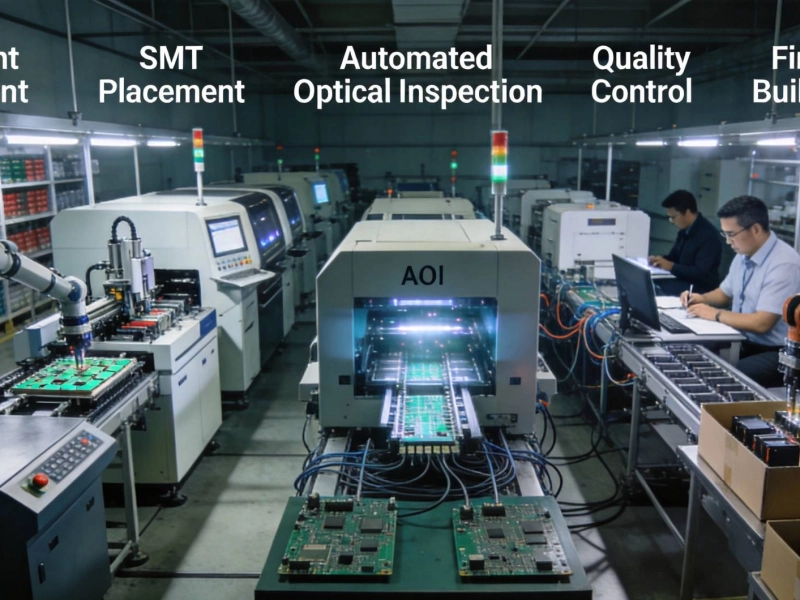
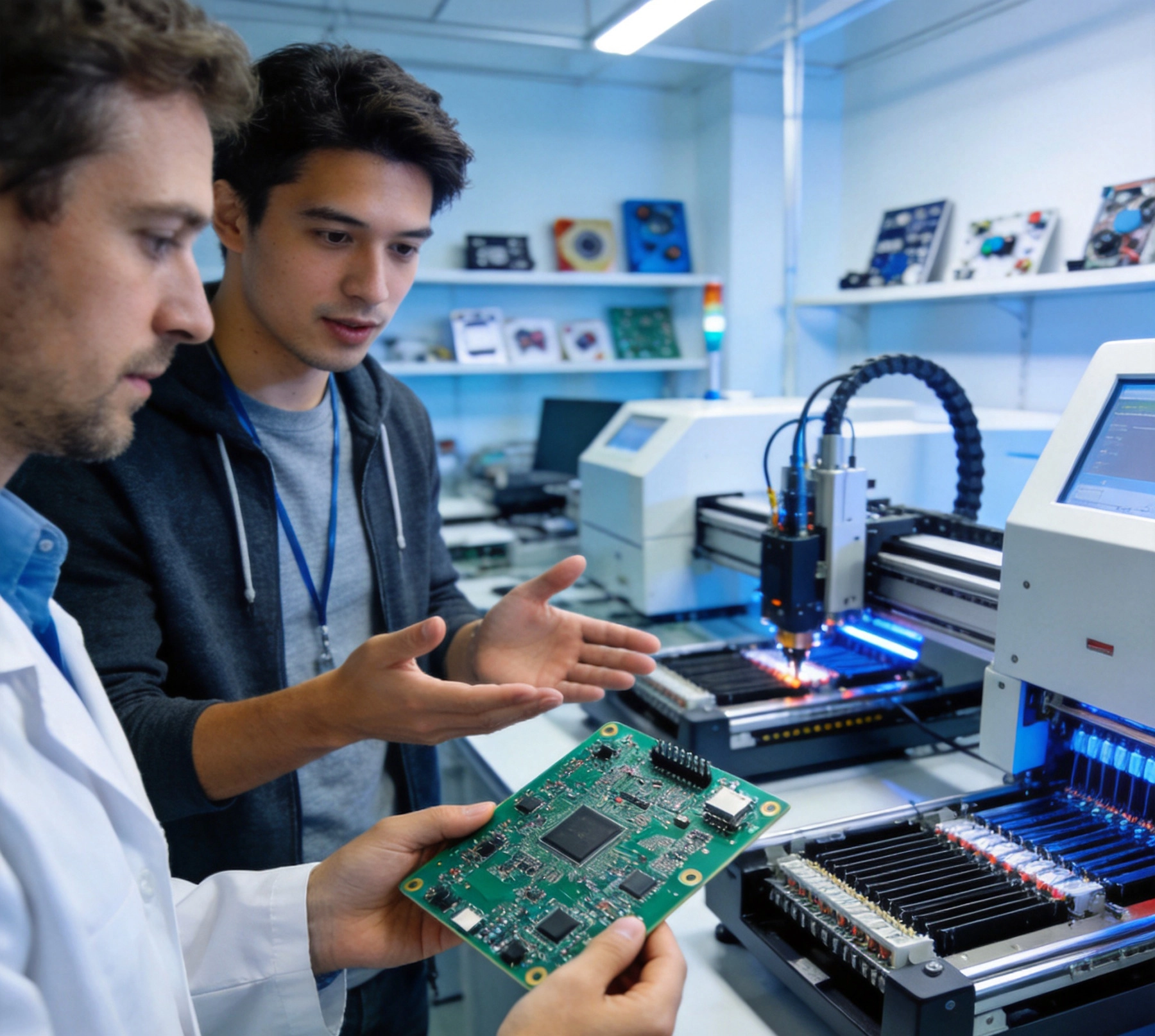
The first production run of 50 units served as a validation checkpoint for both manufacturing processes and product design. Assembly proceeded according to standard IPC Class 2 requirements, with automated optical inspection (AOI) following paste printing and component placement to catch issues before reflow. X-ray inspection verified hidden solder joint integrity for BGA and QFN packages. Functional testing confirmed that all units met electrical performance specifications.
This initial run revealed several areas for process improvement. Some components required slightly modified stencil aperture designs to achieve optimal paste transfer. Component placement needed adjustment for a few fine-pitch parts where initial placement was not ideal. Most importantly, the assembly highlighted one design issue where a connector's proximity to a heat-generating component created reliability concerns that field testing later confirmed.
Despite these issues, 47 of 50 units passed all tests initially, with the remaining three units requiring simple rework to correct minor solder joint problems. The 94% first-pass yield exceeded expectations for a complex assembly on the first production run, validating that the manufacturing processes were sound. The startup used the 50 completed units for distributor evaluation and initial customer feedback, which proved largely positive and confirmed market interest.
Using insights from the initial production run and early field feedback, the startup implemented design refinements before scaling production. The connector proximity issue identified during assembly was resolved by relocating the connector, which required some minor layout rework but proved manageable within the existing board outline. Component package selections were updated for a few parts where assembly challenges were encountered.
These design changes created a revised PCB revision (version 1.1) that addressed production issues while maintaining electrical performance. The design changes were incorporated into the production documentation package, and assembly fixtures and programs were updated accordingly. This iteration between manufacturing and product development is typical for complex products, and having an assembly partner who understood this iterative process prevented the startup from wasting time and resources on approaches that wouldn't scale.
With design refinements implemented and manufacturing processes validated, production runs increased to 100-unit quantities as initial distributor orders converted to purchase commitments. At this volume, production efficiency improved significantly as setup time amortized across more units and operators gained familiarity with the assembly process. First-pass yields improved to 97% or higher, further reducing per-unit costs.
The startup's marketing efforts generated increasing consumer interest, leading to pre-orders that exceeded initial projections. This demand justified scaling to 250-unit production runs while the startup prepared for broader retail distribution. Production at this scale remained well within our capacity, and the processes established during earlier scaling phases translated directly to higher volumes without requiring fundamental changes.
Within twelve months of initial production engagement, the startup's product achieved commercial success that warranted production quantities beyond our standard low-volume capabilities. At this point, we facilitated a seamless transition to a high-volume EMS provider with specialized equipment for high-throughput production. The detailed production documentation, validated manufacturing processes, and established supply chain relationships that we developed enabled this transition to occur without disrupting product delivery or quality.
We provided comprehensive handover documentation including assembly programs, process parameters, quality requirements, and supplier information to the high-volume provider. Our manufacturing engineers worked directly with their team to ensure smooth knowledge transfer and to address any questions about the product's assembly requirements. This transition support ensured that the startup's manufacturing scale-up proceeded without the delays or quality issues that frequently occur when changing manufacturing partners.
One of the most significant factors in this startup's success was involving manufacturing expertise early in the development process rather than attempting to transition from prototype to production independently. Many hardware startups make the mistake of completing product development before engaging with manufacturing partners, only to discover that their design requires substantial modification for manufacturable assembly. By involving manufacturing engineering expertise during design review, this startup identified and addressed manufacturability issues before committing to production, saving time and avoiding costly redesigns.
Early manufacturing involvement also established realistic expectations for costs, timelines, and quality considerations. The startup founders understood from the beginning that assembly would require investment in documentation and process optimization, and they built these activities into their product development plan rather than treating them as unexpected obstacles. This realistic planning prevented schedule overruns and budget surprises that derail many hardware projects.
The tiered production approach that matched volume to development phase proved critical for managing cash flow while building manufacturing capability. Rather than committing to large production runs before product-market fit was confirmed, the startup could validate the product and market through progressively larger runs. This approach reduced financial risk while still achieving the manufacturing expertise and quality processes needed for eventual scale.
Flexible volume arrangements also enabled the startup to respond to demand signals without over-committing production capacity. When initial distributor interest exceeded expectations, production could scale up quickly without requiring new manufacturing partner relationships. Conversely, if demand had proved weaker than projected, the startup could have limited production without significant sunk investment in capacity or inventory.
The startup invested effort into creating production-ready documentation including complete assembly drawings, bill of materials with approved sources, test procedures, and quality requirements. While this documentation preparation seemed like overhead during the early development phase, it proved essential when scaling production. Documentation quality directly impacted manufacturing efficiency, first-pass yield, and the ability to transition seamlessly between manufacturing providers.
Many startups underestimate the documentation required for professional manufacturing, treating assembly drawings and bills of materials as afterthoughts rather than foundational documents. The quality of this documentation correlates directly with manufacturing outcomes, as incomplete or ambiguous documentation inevitably leads to assembly errors, rework, and schedule delays. This startup recognized documentation quality as a competitive advantage rather than a burden.
Developing a robust supply chain early in the production process prevented common problems that plague hardware startups. By identifying component obsolescence risks, establishing buffer stock for critical parts, and qualifying multiple sources where possible, the startup avoided supply chain disruptions that could have stopped production. The supply chain work also provided better component pricing than the startup could achieve independently, improving margins even at low production volumes.
Supply chain management is often an afterthought for hardware startups focused on product development, yet it represents one of the most common causes of product launch delays and cost overruns. This startup's proactive supply chain approach provided a foundation for reliable production scaling, demonstrating that manufacturing preparation should include supply chain as a core workstream rather than a downstream activity.
The startup achieved first product shipments within four months of initial manufacturing engagement, enabling them to fulfill distributor commitments and secure additional market validation. Competing projects in their market category typically required 12 to 18 months to transition from prototype to production, giving this startup a significant time-to-market advantage. This accelerated timeline translated directly into market share gains and positioned the company as an innovative leader in their category.
The rapid transition from prototype to production also helped the startup secure additional venture funding based on demonstrated execution capability. Investors were impressed by the ability to move from concept to shippable product quickly, recognizing that manufacturing competence differentiates successful hardware startups from those that struggle with production scaling.
The product's quality performance exceeded industry benchmarks, with field failure rates below 1% during the first year of production. This reliability record was particularly impressive for a startup's first manufactured product and contributed significantly to positive customer reviews and repeat purchase rates. The quality foundation established during the low-volume production phase carried forward through later scaling, demonstrating that investing in process quality during early production pays dividends throughout the product lifecycle.
Quality performance also affected the startup's ability to negotiate favorable retailer terms. Major retailers have strict quality requirements for products they carry, and the startup's demonstrated reliability opened distribution channels that would have been difficult to access with a higher field failure rate. Quality became a competitive advantage rather than a cost burden.
The staged manufacturing approach enabled the startup to achieve positive gross margins earlier in their growth trajectory than would have been possible with a traditional large-scale production approach. By avoiding large inventory commitments until demand materialized, the startup maintained working capital flexibility while still achieving volume-based cost reductions as production scaled. This financial performance contributed to the company's ability to reinvest in product development and expansion into new market segments.
The supply chain optimizations and component sourcing improvements achieved during the low-volume phase also improved margins at scale. By establishing preferred supplier relationships and negotiating volume pricing early, the startup maintained cost advantages that competitors lacking these established relationships could not match. These margin improvements made the product more price-competitive in retail channels while maintaining profitability.
The transition from prototype to production represents one of the most challenging phases in hardware startup development. This startup's success demonstrates that Low Volume PCB Assembly services, when combined with comprehensive manufacturing engineering support and strategic supply chain management, provide a launchpad for scalable growth without requiring the massive upfront commitments that traditional EMS providers demand.
Key success factors included early manufacturing involvement during product development, flexible volume arrangements that matched production to demand, investment in comprehensive production documentation, and proactive supply chain development. These elements formed a foundation that enabled smooth scaling from prototype quantities to high-volume production without the disruptions that plague many hardware startups.
For hardware entrepreneurs facing similar challenges, the lessons from this case study provide a roadmap for approaching the manufacturing transition strategically. By viewing manufacturing as an integral part of product development rather than a downstream activity, startups can achieve faster time-to-market, higher quality, and better financial performance than those who attempt to tackle manufacturing as an afterthought. The right low volume assembly partner doesn't just build products—they become an extension of the development team, contributing expertise that scales with the business.
Low volume assembly services typically handle quantities from 25 to 500 units, with some providers accommodating even smaller prototype quantities. The exact minimum depends on complexity, with simpler boards often having lower minimums than complex HDI assemblies. Pricing per unit decreases with quantity, so staged production runs that match demand often provide the most cost-effective approach.
The transition timeline depends on design complexity, documentation completeness, and component availability. Typical timelines range from 4 to 12 weeks, with simpler designs potentially completing faster and complex designs requiring more time. Including manufacturing expertise during the design phase can significantly reduce the transition time by addressing manufacturability issues before production begins.
Large EMS providers invest significant resources in production setup including fixture fabrication, programming, and process qualification. These fixed costs must be amortized across production volume to achieve acceptable profitability. High minimum quantities ensure that setup costs represent a reasonable proportion of total production costs, which is particularly important for facilities optimized for high-throughput production.
Low volume assembly typically costs 2x to 3x per unit compared to high-volume production due to less efficient use of manufacturing capacity and less favorable component pricing. However, total cost of ownership considering inventory carrying costs, cash flow impact, and risk of overproduction often makes low volume more economical for early-stage products. Production costs decrease predictably as volume increases.
Com