Open Nav



The global semiconductor shortage, which began disrupting supply chains in earnest around 2020, has fundamentally reshaped the electronics manufacturing landscape. What started as a pandemic-induced bottleneck in automotive production quickly cascaded into a crisis touching every industry that relies on silicon — smartphones, consumer electronics, industrial automation, medical devices, and defense systems alike. For companies that depend on PCB assembly services, the effects have been far-reaching, often painful, and in many cases, permanent.
This article examines how the chip shortage has impacted PCB assembly — what has changed, what strategies have emerged, and what the current landscape looks like for buyers of electronics manufacturing services.
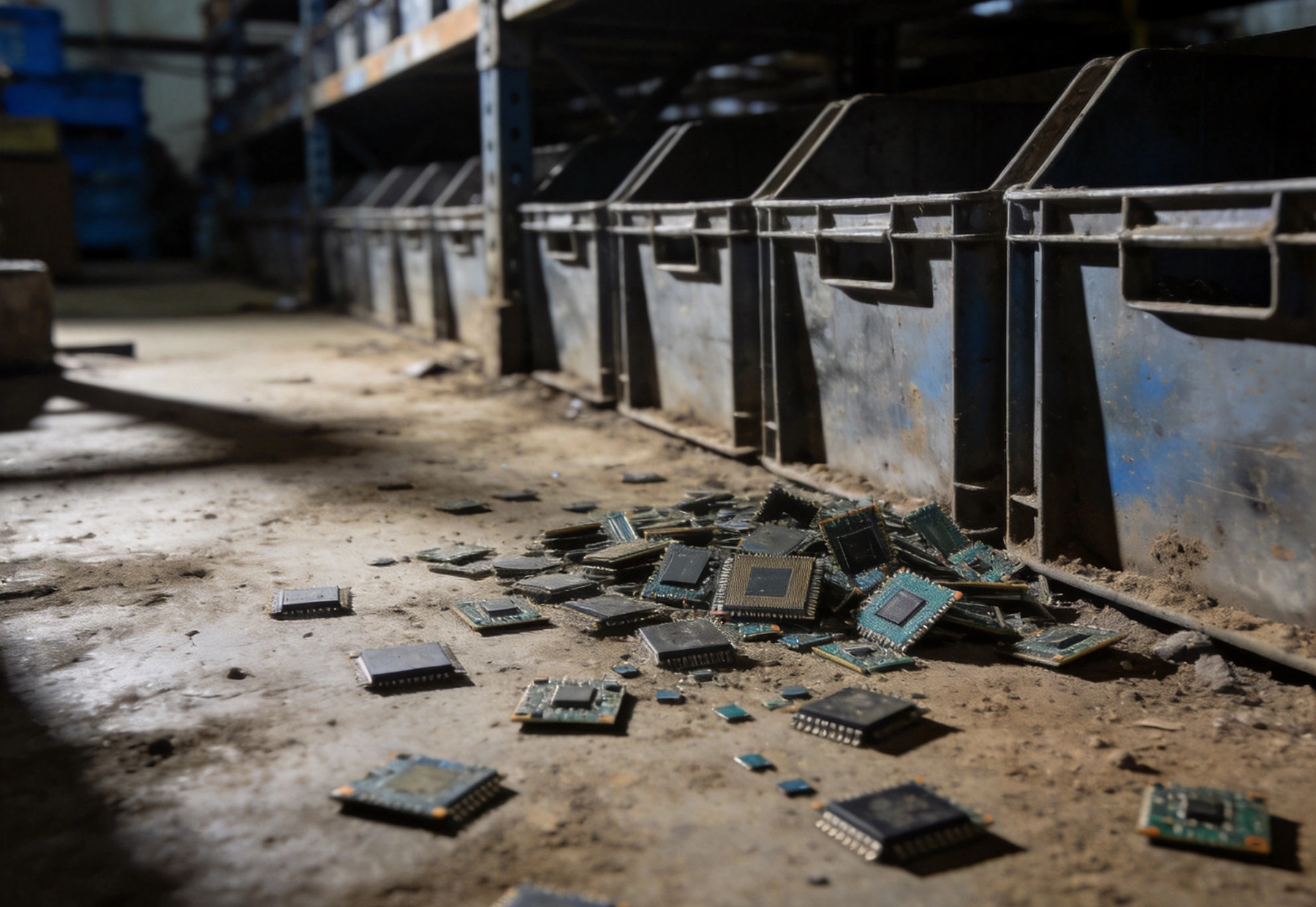
To understand the impact on PCB assembly, it helps to first appreciate the scale of the underlying problem. The global semiconductor industry operates on long cycle times: a new chip fabrication facility can take three to five years to build and billions of dollars to equip. When demand surged unexpectedly — driven by remote work, gaming, anddata center expansion during COVID-19 — supply simply could not keep pace.
The shortage was compounded by several factors:
For PCB assembly service providers, these dynamics translated into a world where the most routine component could become suddenly unavailable overnight.
PCB assembly is a sequential process that depends on every component arriving on time and in spec. Even a single missing part halts the entire build. The chip shortage has introduced new categories of risk into this process:
Microcontrollers, power management ICs, and specialized analog chips that once shipped in weeks now carry lead times measured in months — sometimes exceeding 52 weeks for certain parts. This means an assembly service provider may receive a complete bill of materials except for one component, and that single item holds up the entire order. Customers who expected four-week turnaround times suddenly find themselves waiting six months or more.
When component availability tightens, pricing rises — sometimes dramatically. Distributors and brokers enter the market offering parts at 5x, 10x, or even 20x the original unit cost. Assembly service providers who source components on behalf of customers face impossible choices: absorb the cost increase, pass it on, or cancel the order. In practice, all three happen simultaneously across the industry, creating friction and renegotiation at every level.
Desperation opens the door to fraudulent parts. When lead times are long and prices are high, the incentive for counterfeiters to supply fake or mislabeled components grows substantially. PCB assembly shops with rigorous supply chain controls spend additional resources on component authentication, increasing inspection costs and adding time to the procurement cycle.
When a critical component goes end-of-life or becomes unobtainable, some customers face the prospect of redesigning their boards to accommodate an alternative chip. This is not a trivial undertaking — it can mean re-routing traces, updating firmware, re-validating the design, and re-qualifying the assembly. For smaller companies with limited engineering bandwidth, this can delay product launches by months.
PCB assembly service providers have not been passive in the face of these challenges. The industry has developed a range of operational adaptations:
Forward-looking assembly shops have invested heavily in building component inventory for customers under blanket orders or long-term agreements. Rather than buying components on a just-in-time basis, they commit to stocking key components — particularly those with long lead times or from single-source suppliers — to protect against future disruptions. This requires significant capital and warehouse space, costs that inevitably flow into pricing.
Companies that previously specified components from a single manufacturer have been forced to adopt dual-source or multi-source strategies. Assembly services now routinely work with customers to qualify alternative parts that are pin-compatible or require minimal design changes, reducing the risk of a single point of failure in the supply chain.
Experienced assembly providers now engage with customers at the design stage to review BOMs for supply chain risk. Components that are industry-known for long lead times or obsolescence are flagged early, giving customers time to qualify alternatives before production begins. This proactive BOM review has become a value-added service that distinguishes capable assembly partners from purely transactional shops.
The shortage era has forced a culture shift toward greater transparency. Assembly services that previously quoted lead times based on assembly capacity alone now provide integrated forecasts that account for component availability. Customers receive regular updates on order status, and best-in-class providers proactively alert clients when a component in their BOM shows signs of supply stress.
Beyond immediate operational responses, the chip shortage has accelerated structural changes in the global electronics supply chain that will outlast the current crisis:
Companies are re-evaluating their dependence on geographically concentrated supply chains. The vulnerability exposed by the shortage — where a single region's pandemic restrictions or geopolitical event could halt global production — has driven interest in more distributed manufacturing footprints. This is reshaping where PCB assembly services are located and who chooses to use them.
Governments in the United States, European Union, Japan, and South Korea have launched multi-billion-dollar subsidy programs to attract semiconductor and electronics manufacturing capacity. While these investments will take years to bear fruit, they signal a long-term commitment to reducing strategic dependence on any single region. PCB assembly shops in these regions may benefit from increased demand as customers look to de-risk their supply chains.
The data transparency demands of the shortage have accelerated adoption of digital supply chain tools. Cloud-based platforms that track component availability in real time, model supply chain risk, and simulate the impact of disruptions are increasingly accessible to smaller buyers through their assembly service partners.
If your company relies on PCB assembly, the shortage era has made several things clear:
As of the mid-2020s, the acute phase of the chip shortage has eased in many segments. Lead times for commodity components have normalized, and inventory levels at distributors have recovered. However, the structural changes it triggered — regionalization, inventory buffering, BOM risk management — are now permanent features of the industry.
For specialized chips — advanced processors, certain automotive-grade MCUs, and components for AI accelerators — constraints persist. The uneven recovery means that PCB assembly service buyers face a bifurcated market: easy access to commodity parts alongside continued difficulty sourcing high-complexity or application-specific components.
The lesson most companies have internalized is that the supply chain is a strategic asset, not just a procurement function. Managing it requires ongoing attention, investment, and partnership with assembly providers who can operate as true collaborators rather than just vendors.
How can I protect my PCB assembly project from component shortages?
Start early. Provide your assembly service partner with your BOM as soon as possible. Specify alternatives for critical components, build safety stock where budget allows, and maintain a long-term relationship with a provider who understands your product roadmap and can plan inventory accordingly.
Should I redesign my board to use more readily available components?
It depends on the scope of the change. If a component is critical to your product's performance and an alternative requires significant redesign, the cost and delay may not be worth it unless the original part is genuinely unobtainable. Work with your assembly provider to assess the risk and explore pin-compatible alternatives before committing to a re-spin.
Are EMS providers still facing component shortages in 2026?
The worst of the general shortage has passed for commodity components. However, availability remains tight for specialized chips in automotive, industrial, and AI-related categories. Lead times for these parts can still stretch to 40 weeks or more, making early planning essential.
How do I verify that my assembly provider is sourcing authentic components?
Ask about their supplier qualification process, incoming inspection procedures, and traceability documentation. Reputable assembly shops follow Counterfeit Component Prevention programs aligned with AS6171 (ASTM) or IDEA-STD-1010 standards and can provide documentation upon request.
Is it worth paying a premium for an assembly provider who maintains component inventory?
In most cases, yes. The cost of delayed shipments, emergency spot purchases at inflated prices, or production line downtime almost always exceeds the carrying cost of strategic inventory. Calculate the total cost of a disruption scenario against the cost of buffer stock to make an informed decision.
Low Volume PCB Assembly for Startups The Ultimate GuideJune/03/2026
The Importance of Fiducial Marks and Tooling Holes in PCBAAugust/12/2026
The Hidden Costs of DIY PCB Assembly vs. Professional ServicesAugust/11/2026
Avoiding Tombstoning and Bridging in Your PCB LayoutJuly/30/2026
X-Ray Inspection: Detecting Hidden Defects in BGA and QFN PackagesAugust/10/2026