Open Nav



At first glance, handling PCB assembly in-house seems like an obvious way to cut costs. You already have a design team. You own the documentation. Why pay someone else to build what you can build yourself? The math looks compelling on a spreadsheet: equipment costs, labor rates, and markup percentages all seem to favor the DIY path. But the engineers and operations managers who have actually lived through both worlds will tell you a different story. The visible costs are only part of the picture. The hidden costs of DIY PCB assembly — the ones that do not show up on purchase orders — often exceed the savings within the first few production runs.
This article breaks down those hidden costs systematically, so that teams can make decisions based on real economics rather than surface-level assumptions.
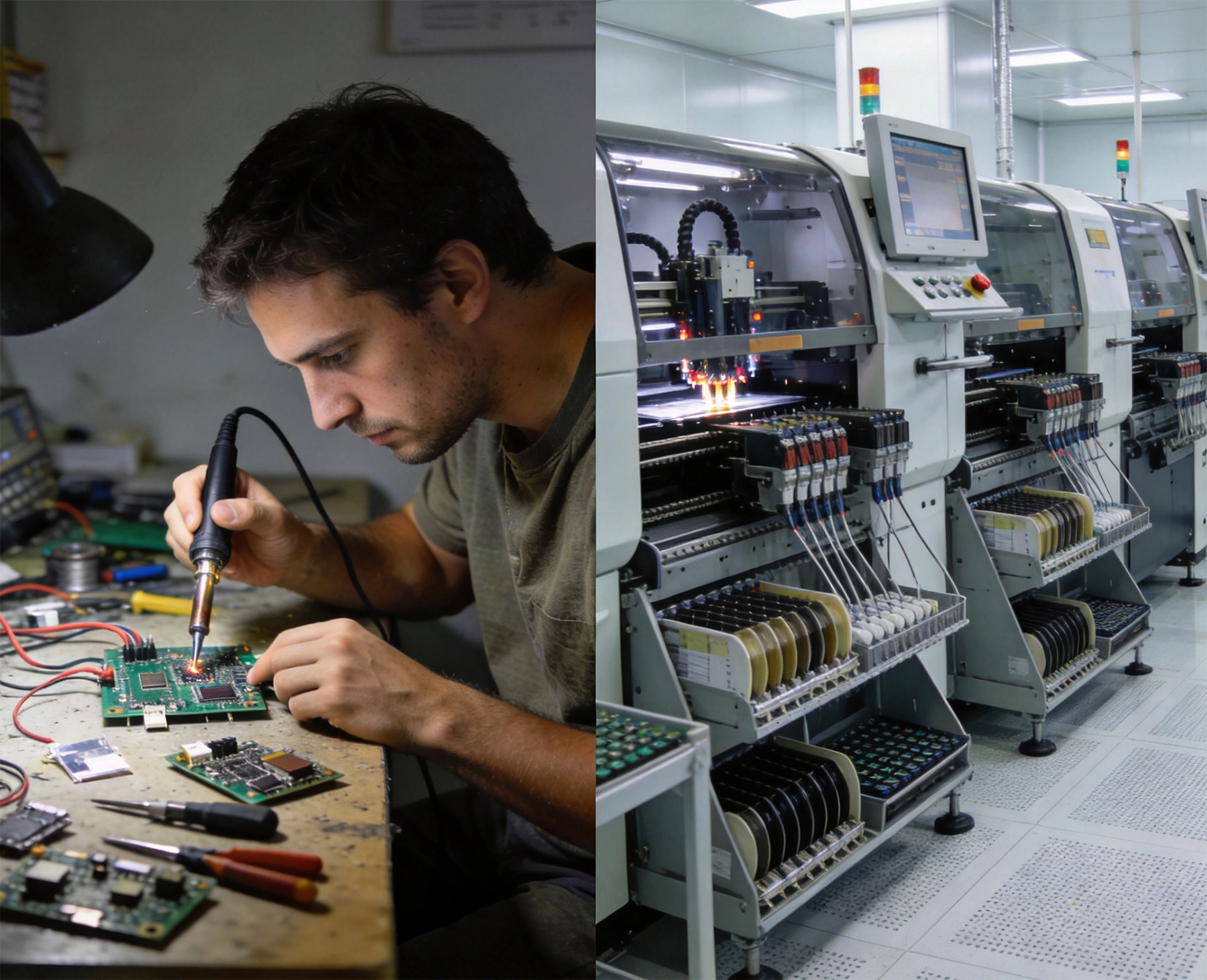
The case for DIY assembly is usually built around a simple comparison: what a contract manufacturer charges per board versus what it costs to run assembly in-house. If a CM quotes $8 per board and your in-house estimate is $3 in materials and labor, the math appears obvious. But that $3 estimate almost never captures the full picture. It typically omits equipment depreciation, the cost of consumables that wear out faster than expected, the engineering time spent managing the process instead of designing the next product, and the cost of quality failures that slip through an informal inspection process.
More fundamentally, the comparison assumes that a board assembled in-house is functionally equivalent to one assembled professionally. For simple through-hole projects with large components, that assumption may hold. For modern surface mount assemblies with fine-pitch devices, BGAs, and thermal management requirements, it almost never does.
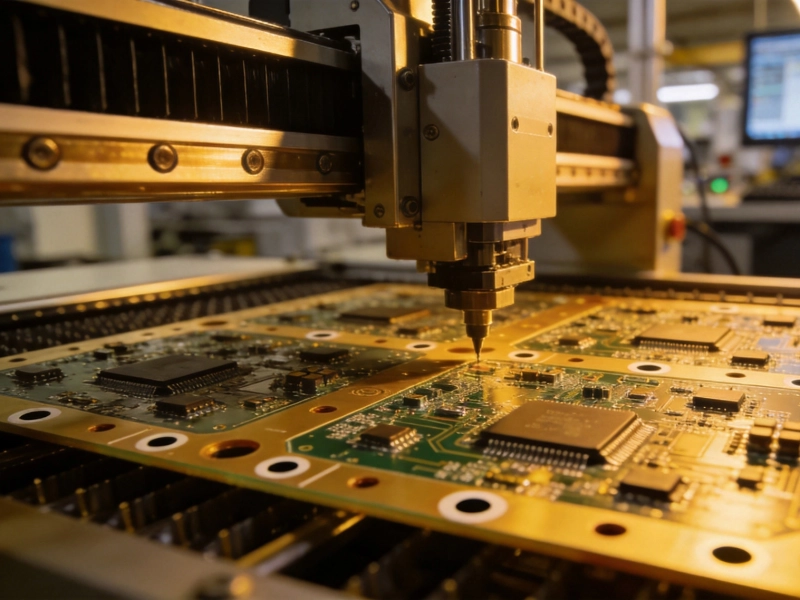
A functional SMT assembly setup requires more than a soldering iron. At minimum, a basic line includes a stencil printer, a pick-and-place machine, a reflow oven, and some form of inspection equipment. A modest but capable二手 pick-and-place machine costs tens of thousands of dollars. A reflow oven with closed-loop temperature control suitable for lead-free processing runs $5,000 to $30,000 depending on the board size and throughput requirements. AOI systems — which are effectively mandatory for any production where defect escape rates matter — add another $30,000 to $150,000 to the capital outlay.
These figures do not include the facility costs: clean bench space, ESD controls, ventilation, and climate management to keep components and solderpaste within spec. A hobby-grade setup can limp along without these controls, but the defect rates will reflect the compromise.
Then there is the maintenance and calibration overhead. Pick-and-place nozzle tips wear out. Reflow oven thermocouples drift. Stencil printers lose alignment. Each of these requires either service contracts with vendors or engineering time to manage independently. These ongoing costs are almost never factored into DIY cost models.
Perhaps the most systematically underestimated hidden cost of DIY assembly is the opportunity cost of engineering time. Your hardware engineers are not paid to operate assembly equipment. They are paid to design products, solve technical problems, and move the roadmap forward. Every hour they spend printing stencils, calibrating placement heads, and reflowing boards is an hour not spent on product development.
At fully-loaded engineering labor rates of $80 to $150 per hour in most North American and European markets, even a single production run that consumes 20 engineering hours costs $1,600 to $3,000 in opportunity cost alone — before any material or equipment expense is counted. Professional assembly services allow your engineers to stay focused on high-value work while a specialist facility handles production execution.
This calculation looks even worse when you consider that the assembly skills your team develops are narrow and non-core. The expertise required to run SMT equipment at professional quality levels is specialized and must be continuously maintained. It does not compound into broader organizational capability the way product design expertise does.
DIY assembly processes are inherently more prone to defect escape than professionally run lines, for reasons that are not hard to understand. Professional CMs run statistical process control on every shift. They calibrate equipment against known standards before each run. They use AOI and X-ray inspection to catch defects that human eyes cannot see. They maintain documented process parameters and change control procedures.
None of this infrastructure exists in a typical in-house setup. The result is a higher first-pass defect rate, which translates into rework costs — if defective boards are even identified before they are shipped to customers. Rework on complex SMT assemblies is expensive: BGA reballing, for instance, requires specialized equipment and skilled technicians, and a reballed BGA joint is never as reliable as a properly placed original.
Beyond the direct cost of rework, there are the costs of customer returns, warranty claims, and reputational damage. For industrial, medical, or automotive products, field failures can carry liability exposure that dwarfs the original assembly cost many times over.
Professional CMs maintain relationships with authorized distributors, hold safety stock on common parts, and manage component obsolescence as part of their core service. DIY operations must independently source every component on the BOM, often in small quantities at retail or small-quantity distributor pricing, which can be two to five times higher than the pricing available to high-volume CMs through authorized channels.
Managing component shelf life, moisture sensitivity levels (MSL) for surface mount packages, and electrostatic discharge (ESD) precautions also requires infrastructure and training that adds to the hidden cost of DIY assembly. Parts that have absorbed moisture before assembly can delaminate during reflow, producing latent defects that may not appear until the product is in the field.
DIY SMT equipment is designed for prototyping and low-volume production. As production volumes increase, in-house assembly runs into hard physical limits. A benchtop pick-and-place machine may place 2,000 to 5,000 components per hour. A mid-range professional line can place 30,000 to 60,000 components per hour. The throughput gap is not linear — it is an order of magnitude. At volume, the choice is stark: accept long lead times from your in-house process, or outsource and regain schedule flexibility.
Teams that build an in-house process around low-volume prototyping and then try to scale it for production typically discover that the marginal cost of each additional unit does not fall as they expected. Instead, the bottleneck simply moves from one piece of equipment to another, and the engineering team spends increasing time managing the assembly operation instead of improving the product.
For products sold in regulated markets, professional CMs can provide the documentation that compliance requires: Certificate of Conformance (CoC), first article inspection reports, IMS (Inspection Measurement System) data, and traceability records linking finished assemblies to lot-level component data. Building the documentation infrastructure to support these requirements in-house is a significant undertaking that is rarely included in DIY cost models.
Medical device manufacturers, automotive suppliers, and aerospace companies face some of the most demanding traceability requirements in the industry. In many cases, self-assembly is simply not an option under the applicable quality management system — the regulations require production by qualified suppliers with documented processes. Attempting to route around these requirements creates regulatory risk that no cost savings can justify.
This analysis is not an argument that in-house assembly is never justified. There are legitimate scenarios where it adds genuine value. Prototyping before design freeze benefits from rapid in-house iteration. Teams working on novel or highly proprietary technology may have legitimate IP reasons to keep early-stage builds internal. Extremely low volumes of highly specialized boards may not justify the minimum order quantities and setup charges of a professional service.
The key is to be honest about which category your situation falls into. If you are running DIY assembly because it genuinely serves a specific strategic purpose, that is a valid choice. If you are running it because the visible cost comparison looks favorable, it is worth running the full cost calculation before assuming the savings are real.
Before committing to DIY or professional assembly, build a cost model that includes the following:
When this full cost model is compared honestly against professional assembly pricing, the outcome surprises many teams. DIY only wins for very low volumes, very simple assemblies, or situlow-volume-pcb-assembly.comations where strategic factors genuinely override commercial considerations.
The hidden costs of DIY PCB assembly are real, cumulative, and often underestimated. Equipment capital, engineering opportunity cost, elevated defect rates, supply chain inefficiency, and compliance burden all compound over time to erode the apparent savings that make in-house assembly look attractive on a first-pass analysis. Professional assembly services exist because they deliver economies of scale, process discipline, and quality infrastructure that most organizations cannot replicate cost-effectively in-house. The most effective teams understand this clearly, invest their engineering talent in what only they can do — designing great products — and partner with specialists for everything else.

Consumer Electronics: Handling High-Density SMT AssemblySeptember/15/2026
High-Reliability PCB Assembly Services for Automotive ElectronicsJuly/08/2026
Reducing Risk in Electronics Manufacturing with Full Turnkey ServicesAugust/15/2026
The Role of Low Volume Assembly in Aerospace and DefenseJuly/21/2026
The Importance of Fiducial Marks and Tooling Holes in PCBAAugust/12/2026