Open Nav



Bringing a new electronic product from concept to market involves countless decisions, but few are more consequential than choosing your prototype PCB assembly partner. The right manufacturer can accelerate your development timeline, catch design flaws early, and smooth the path to volume production. The wrong partner can introduce mysterious yield losses, missed deadlines, and costly redesign cycles that set your project back months.
According to industry data, approximately 30% of hardware startups experience significant delays attributable to manufacturing issues, with a substantial portion stemming from poor supplier selection at the prototype stage. Prototype PCB assembly differs from standard production in critical ways: tolerances are tighter, engineering change orders are frequent, and the margin for error is essentially zero since every board carries outsized significance in validating your design. This makes evaluation of your assembly partner one of the most important decisions in your product development process.
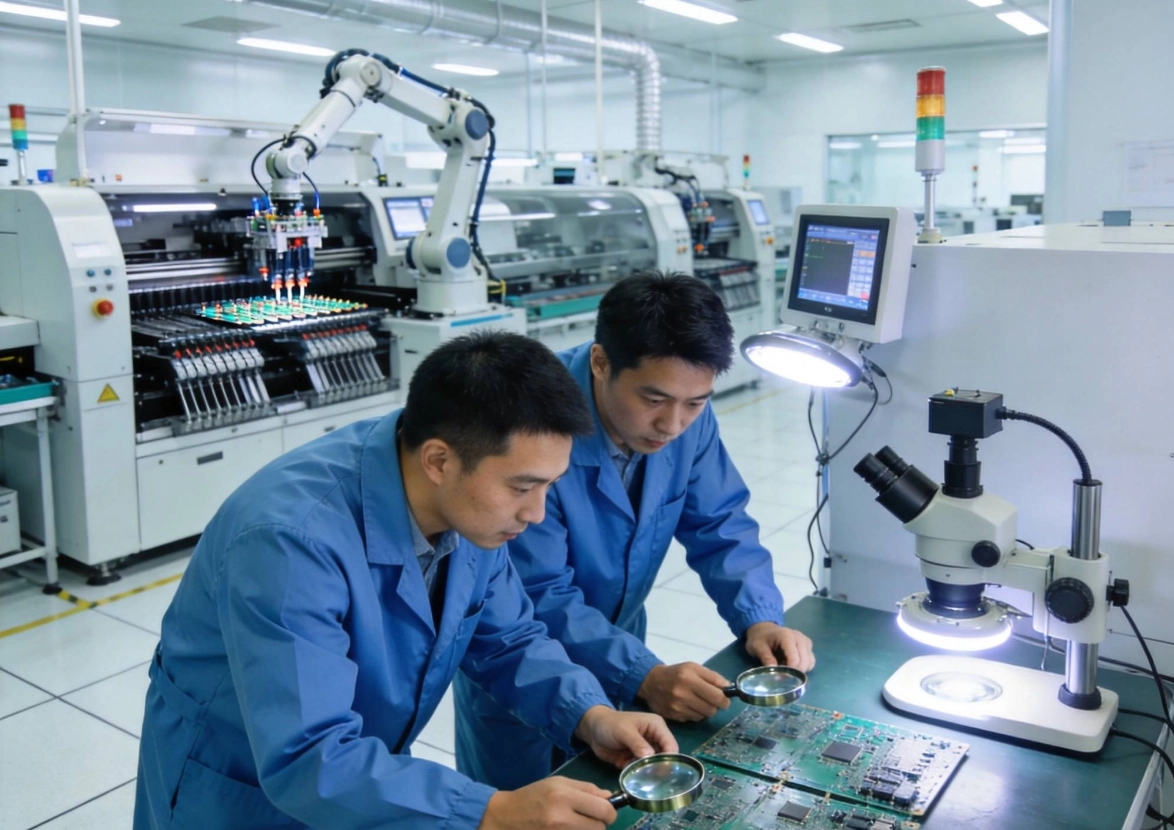
The foundation of any reliable PCB assembly partner begins with their certification portfolio. ISO 9001 represents the baseline quality management system certification that any serious manufacturer should hold. This standard demonstrates that the company has documented processes, performs internal audits, and maintains continuous improvement practices. Beyond this foundational certification, industry-specific credentials become increasingly important depending on your application.
For automotive electronics, IATF 16949 certification is mandatory for any supplier serving original equipment manufacturers. This certification requires strict process control, traceability systems, and statistical process monitoring that directly translate to higher reliability in prototype assemblies. Medical device manufacturers must work exclusively with ISO 13485 certified assembly partners, as this standard mandates comprehensive documentation, risk management, and design control procedures that go beyond standard quality systems. Military and aerospace applications typically require AS9100 or GJB 9001C certifications, each with their own stringent requirements for defect prevention and traceability.
Beyond management system certifications, look for product-specific compliance marks. UL certification confirms electrical safety compliance for North American markets. CE marking is required for European Union sales. RoHS and REACH compliance documentation proves the manufacturer controls hazardous substances throughout their supply chain. A partner that cannot produce valid certificates upon request should be immediately disqualified, regardless of how attractive their pricing might appear.
Prototype PCB assembly demands equipment precision that often exceeds mass production requirements. The difference between a capable partner and an inadequate one becomes immediately apparent when you examine their production machinery. SMT placement accuracy is perhaps the most critical specification: modern components frequently use 0201 or even 01005 passive components, and BGA packages with 0.3mm pitch demand placement accuracy of 50 microns or better. Ask potential partners about their placement equipment models and verify they can handle your component mix.
Reflow soldering capabilities matter equally. Multi-zone reflow ovens with nitrogen atmosphere support produce more consistent solder joints, particularly important for packages with varying thermal mass on the same board. For prototype assemblies with expensive components, the ability to profile reflow temperatures for your specific board stackup can mean the difference between first-pass success and repeated failures. Inquire about their SPI (Solder Paste Inspection) and AOI (Automated Optical Inspection) capabilities as well. SPI verifies paste deposition before placement, catching print quality issues early. AOI catches component placement and solder joint defects after reflow.
For boards with hidden solder joints such as BGA, QFN, or micro-BGA packages, X-ray inspection capability becomes essential. Without it, manufacturers cannot verify the quality of joints that are invisible to optical inspection. Some assembly partners lack X-ray equipment and rely on statistical process control alone, which may be acceptable for production but introduces unacceptable risk for prototype assemblies where every board must function perfectly.
The most valuable prototype assembly partners distinguish themselves through engineering expertise rather than simply executing designs handed to them. Design for Manufacturability (DFM) analysis should be a standard service offered proactively, not an optional add-on. A capable partner will review your Gerber files, BOM, and assembly drawings before manufacturing begins, identifying potential issues such as solder bridge risks, insufficient annular rings, or thermal management problems.
DFM feedback from an experienced engineering team can reduce prototype iterations by identifying problems before fabrication. Common issues caught during DFM review include missing solder mask dams between fine-pitch leads, pad designs incompatible with component footprints, and thermal relief configurations that will cause assembly difficulties. Partners who automatically process orders without engineering review may save time initially but often create problems that surface during testing, forcing rework cycles that cost far more than the original DFM analysis would have.
BOM optimization represents another valuable engineering service. Component availability fluctuates constantly, and a supplier with strong procurement relationships can often suggest equivalent parts when your specified components face long lead times or discontinuation. This capability is particularly valuable during prototype phases when design changes may substitute components mid-development. Ask potential partners specifically about their engineering review process and what documented DFM feedback you can expect with your quote.
Prototype assemblies require more rigorous inspection than production boards simply because each board carries more information value. A defective prototype wastes far more than its fabrication cost through delayed schedules and missed learning opportunities. Comprehensive quality control should span incoming materials, in-process operations, and final testing, with documentation provided for each stage.
Incoming Quality Control (IQC) verifies components and bare PCBs before assembly begins. For prototype work where you may be supplying components yourself, ask whether the partner performs incoming inspection on customer-provided materials or only on sourced components. Visual inspection under magnification, component value verification, and solderability checks on leads all contribute to catching problems before expensive assembly operations begin.
First Article Inspection (FAI) should be standard for prototype assemblies. This process compares the actual assembled board against design intent, documenting all measurements, inspection results, and any deviations. For prototype work, FAI provides valuable verification that your design has been interpreted correctly and assembled accurately. Flying probe testing or ICT (In-Circuit Test) verifies electrical connectivity across the board, identifying shorts, opens, and incorrect component values. Functional testing, while more application-specific, validates that the assembled board performs its intended function under realistic conditions.
Traceability systems deserve attention as well. Lot traceability linking finished assemblies to component批次, production dates, and inspection records enables efficient failure analysis when problems occur. Without traceability, diagnosing why a prototype failed becomes a forensic challenge rather than a systematic process. Partners with MES (Manufacturing Execution System) integration can typically provide this traceability automatically rather than through manual record-keeping.
Even if you plan to supply components yourself for prototypes, evaluating a partner's procurement capabilities matters because design changes during development often require sourcing new components quickly. A partner with established supplier relationships can procure parts within days for standard components, while one without established channels might require weeks for the same parts.
Component authenticity represents a serious concern throughout the electronics industry. Unauthorized distributors sometimes supply counterfeit or mislabeled components, particularly for obsolete or shortage items. Reliable assembly partners source components from authorized distributors and perform incoming inspection to verify authenticity. Ask potential partners about their component sources and whether they provide certificates of conformance with each shipment.
For turnkey prototype assembly where the partner sources components, evaluate their component engineering and BOM management capabilities. Can they identify alternative parts when your specified components become unavailable? Do they maintain buffer stock of common components to reduce lead times? How do they handle parts with long lead times during prototype phases when development schedules cannot accommodate weeks of waiting? The answers to these questions reveal how smoothly your prototype program will run when inevitable supply chain challenges arise.
Prototype assembly inherently involves uncertainty, change, and frequent surprises. A rigid manufacturing partner optimized for high-volume production may struggle with the frequent change orders, small batch sizes, and rapid iterations that characterize prototype work. Flexibility in production scheduling, engineering change handling, and lot size accommodation separates excellent prototype partners from capable production manufacturers.
Look for partners who maintain dedicated prototype capacity separate from production lines. This separation ensures your prototype boards receive appropriate attention and are not deprioritized when production orders conflict. Ask about typical queue times for prototype orders and whether they offer expedited service when schedules require acceleration. The best prototype partners understand that your timeline is your competitive advantage and treat urgent requests as opportunities to demonstrate partnership value rather than as disruptions to be tolerated.
Engineering change order handling deserves specific attention. During prototype development, design modifications arrive unexpectedly and frequently. A partner who quotes "engineering changes at cost" but then requires minimum quantities or charges administrative fees for every modification creates friction that slows your development process. Transparent policies for handling changes, with clear pricing and rapid implementation, demonstrate a partner that genuinely supports prototype development rather than merely tolerating it.
Prototype timelines are notoriously difficult to predict, making actual delivery reliability even more valuable than aggressive quoted lead times. A partner who consistently delivers within their stated lead time is worth more than one who quotes shorter times but frequently misses them. When evaluating delivery performance, look beyond marketing claims to actual track record evidence.
Ask for statistics on on-time delivery rates if available. Partners with 98% or higher on-time delivery rates for prototype orders demonstrate process stability and capacity management that will serve your program well. Inquire about their manufacturing facility locations and whether they have backup capacity for emergency situations. Natural disasters, equipment failures, and workforce issues occasionally disrupt even the best-run facilities, and partners with no contingency plans leave your program vulnerable to unexpected delays.
Communication practices around delivery also matter. Proactive notification of potential delays, realistic rather than optimistic schedule commitments, and regular status updates reduce the anxiety of waiting for critical prototype boards. Partners who respond to delivery inquiries with vague reassurances rather than specific status information create uncertainty that disrupts your own project planning. Evaluate their communication responsiveness during the quotation process, as this often predicts their communication quality throughout production.
Your prototype assembly partner's financial health directly affects your risk exposure. A manufacturer who suddenly closes creates a crisis far beyond the immediate inconvenience of finding a new supplier. Engineering files, component inventory, and in-process boards may all become inaccessible when a partner fails. While predicting business failure is impossible with certainty, several indicators provide meaningful risk assessment.
Company history and ownership structure provide baseline context. Established companies with transparent ownership and public financial reporting (if publicly traded) offer transparency that privately held companies may not provide. Customer references, particularly from companies similar to yours in volume and complexity, offer insight into real-world experience. Ask for three customer references and actually contact them, asking specifically about reliability, responsiveness, and problem resolution.
Industry certifications and customer portfolios also signal stability. Serving well-known brands in demanding industries such as automotive or medical requires meeting rigorous quality and reliability standards, creating a natural filter for business stability. A partner who openly discusses their major customers and is willing to have those customers speak to their experience demonstrates confidence in their service quality.
Prototype assembly costs include multiple components: bare board fabrication, component procurement, assembly labor, testing, and various administrative fees. The lowest-cost quote frequently omits necessary services or includes unrealistic assumptions that inflate costs during production. Transparent quoting practices and complete cost breakdowns enable meaningful comparison between partners.
Request itemized quotes that separately identify tooling or NRE (Non-Recurring Engineering) charges, component costs with explicit manufacturer part numbers, assembly costs per placement, testing costs, and any additional fees. Vague quotes that bundle everything into a single price make it impossible to compare fairly or identify where cost reduction efforts might be applied. Partners who provide detailed quotes and explain their pricing structure typically apply similar rigor to their manufacturing processes.
The lowest-cost quote is frequently not the best value when prototype quality and schedule are at stake. A quote that is 10% higher but includes comprehensive DFM analysis, first article inspection, and functional testing may represent better value than a lower quote where you discover problems after assembly. Evaluate total program cost including potential rework, schedule delay costs, and engineering time spent on problem resolution, not just the quoted price.
Selecting a prototype PCB assembly partner requires evaluating multiple dimensions beyond simple price comparison. Technical certifications, equipment capabilities, engineering support, quality systems, supply chain strength, production flexibility, delivery reliability, financial stability, and cost transparency all contribute to identifying a partner who will accelerate your product development rather than impede it.
The best prototype assembly relationships evolve into strategic partnerships where the manufacturer understands your products, anticipates your needs, and proactively identifies opportunities for improvement. This level of partnership develops over time, but it begins with the initial selection decision. Invest the time to evaluate potential partners thoroughly, request samples of their work, speak with their existing customers, and verify their capabilities through direct observation whenever possible.
A reliable prototype PCB assembly partner becomes an extension of your engineering team, catching design issues early, suggesting component alternatives, and delivering assemblies that work correctly the first time. This capability is worth significant premium given the downstream costs of prototype failures. Make your selection decision carefully, and your prototype program will benefit from the stability and expertise that only a truly capable partner can provide.
Prototype PCB Assembly Explained: Why It's Crucial for R&DJuly/14/2026

Understanding AOI (Automated Optical Inspection) in PCB Assembly Quality ControlJuly/28/2026
How to Prepare the Perfect BOM (Bill of Materials) for Turnkey Assembly?July/17/2026

Wave Soldering vs. Selective Soldering for Through-Hole Components: Which Process Wins?July/15/2026

How to Calculate the ROI of Outsourcing Your PCB AssemblySeptember/04/2026