Open Nav



The short answer is yes, you can get a quote for Low Volume PCB Assembly online, and in most cases, you should. The PCB assembly industry has undergone a significant digital transformation over the past decade, with a growing number of manufacturers offering online quotation systems, web-based BOM uploads, and automated pricing engines that generate quotes in minutes rather than days. For low volume orders of 10 to 500 boards, where the procurement speed and the ability to compare multiple suppliers quickly are particularly valuable, online quoting has become the standard first step in the sourcing process. But while the availability of online quotes has improved dramatically, the usefulness of those quotes depends on understanding what they include, what they omit, and how to interpret the pricing in the context of the actual manufacturing cost. Getting a quote online is straightforward; getting an accurate and complete quote that enables a fair comparison between suppliers requires a bit more knowledge and preparation.
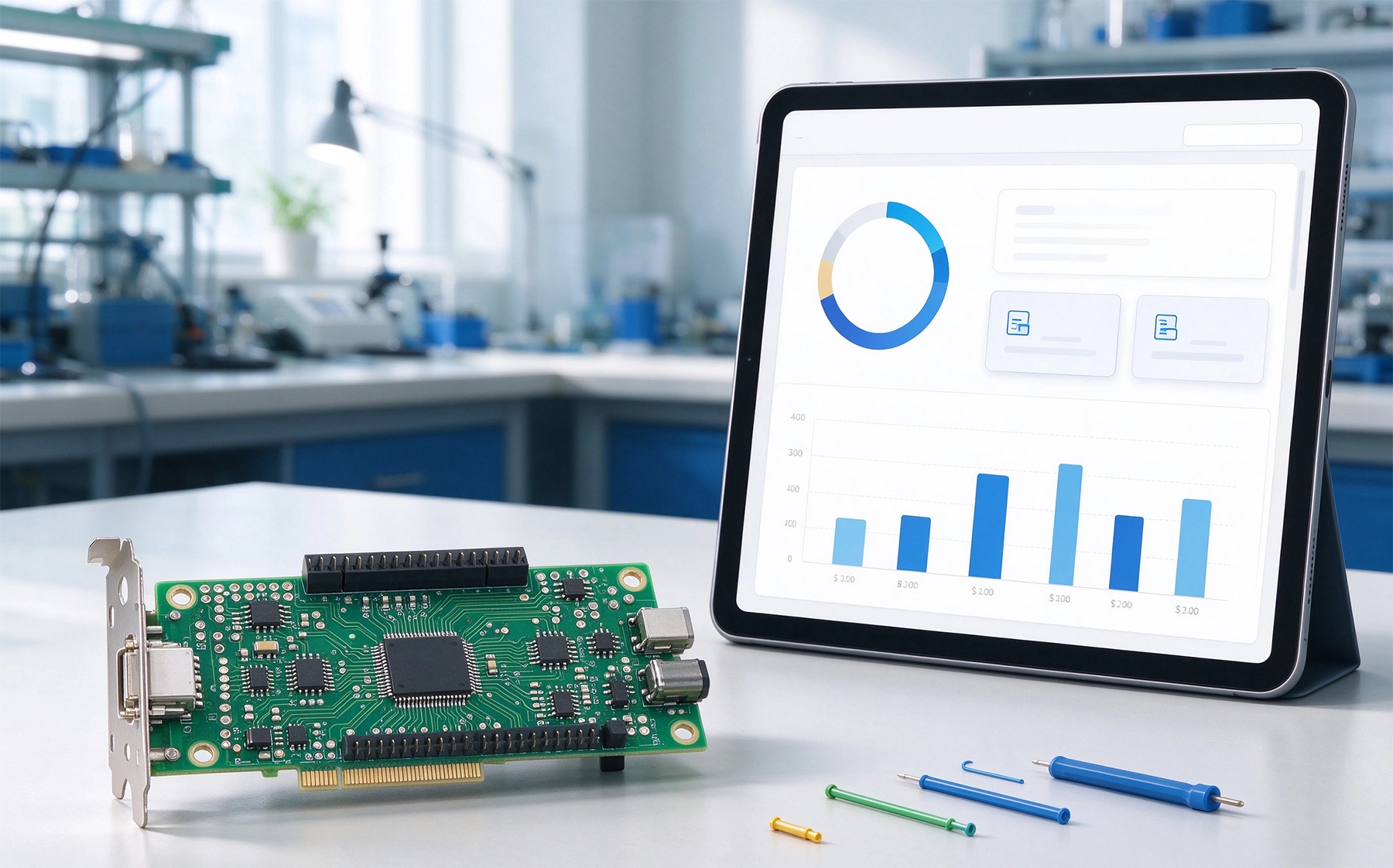
Online quoting systems for PCB assembly typically combine a web-based user interface with an automated pricing engine that calculates the estimated cost based on the information you provide. The process usually starts with uploading the design files, which may include the BOM in a standard format like Excel or CSV, the gerber files for the bare board, and any assembly drawings or special instructions. The system parses these files to extract the relevant parameters, including the component count, the board size, the layer count, and the complexity of the assembly, and uses these parameters to calculate the estimated cost.
The automated pricing engine behind online quotes is typically based on a database of standard costs that the manufacturer has developed from their production experience. The cost per component placement, the cost per solder joint, the board fabrication cost based on size and layer count, and the test cost based on the test complexity are all stored in the pricing database and retrieved when the quote is generated. For components that are not in the standard database, the system may query a component pricing database or may flag the component as requiring manual pricing. The more complete and accurate the design data you upload, the more accurate the automated quote will be, because the system has more information to work with.
Some online quoting systems offer instant quotes, where the price is displayed immediately after the files are uploaded and processed. Others offer near-instant quotes, where the basic assembly cost is displayed immediately but the component pricing is generated within a few minutes or hours after the system queries the component distribution channels. The instant portion of the quote is typically the assembly labor and the board fabrication cost, which are deterministic calculations based on the design files. The variable portion, which is the component cost, depends on the current market price for each component, which may fluctuate daily or weekly, and this is why component pricing often requires a short delay before it is finalized.
The accuracy of an online quote is directly proportional to the quality and completeness of the information you provide. A BOM that is missing manufacturer part numbers, that has ambiguous component descriptions, or that uses non-standard formats will produce a less accurate quote than a complete BOM with verified part numbers and clear quantity specifications. Before requesting an online quote, it is worth spending the time to prepare the design data properly, because the marginal effort is small compared to the value of an accurate quote.
The bill of materials is the most important input to the assembly quote, and its quality determines the accuracy of the component cost portion of the quote. A complete BOM should include the manufacturer part number for every component, the reference designator, the quantity per board, and any special handling or assembly notes. The manufacturer part number is particularly important because it specifies exactly which component is to be assembled, including the package type, the tolerance, the temperature grade, and the other specifications that distinguish one version of a component from another. A BOM that specifies only a generic description like "10K resistor 0805" may produce a quote based on the cheapest 10K resistor in that package size, which may not be the specific resistor the design actually requires. Including the exact manufacturer part number ensures the quote is based on the actual component that will be assembled.
The gerber files and the drill file define the bare board fabrication requirements, and their accuracy affects the board cost portion of the quote. The gerber files should include all copper layers, the solder mask layers, the silkscreen layers, and the paste layers if applicable. The drill file should specify all through-hole and via sizes, and any blind or buried via definitions should be clearly documented. The board dimensions, the board thickness, the number of layers, and the surface finish should be specified either in the gerber files or in a separate readme file. If the online quoting system cannot extract these parameters from the gerber files automatically, the system may require manual entry of the board specifications.
The assembly drawing, if the board has special requirements that are not captured in the BOM or the gerber files, provides the context that the quoting system needs to price the job correctly. Special requirements may include specific assembly standards like IPC Class 2 or Class 3, specific test requirements like flying probe or in-circuit test, conformal coating or potting, programming or configuration requirements, or special packaging and labeling instructions. If these requirements are not communicated to the quoting system, the quote will not include them, and the customer will receive a pleasant surprise when the invoice includes charges for requirements that were not quoted. Attaching a readme file or an assembly drawing that documents all special requirements prevents this type of quote discrepancy.
Online PCB assembly quotes, whether instant or manually generated, follow a predictable pattern in terms of what they include and what they do not. Understanding this pattern helps you interpret the quote correctly and identify the areas where additional charges are most likely to appear.
Online quotes typically include the bare board fabrication cost, the component cost for standard components in the manufacturer's database, the SMT assembly cost based on the component count and the board complexity, the THT assembly cost if through-hole components are specified, and basic test cost if the test type is specified in the quoting interface. These line items represent the core manufacturing cost and are usually reasonably accurate when the design data is complete and the component pricing is current. The total of these items gives you the baseline cost that you can use to compare between suppliers.
Online quotes commonly exclude or estimate approximately the NRE or setup charges, which cover the engineering time for BOM review, DFM analysis, tooling creation, and first article support. These charges vary widely between manufacturers and are often not captured in the automated portion of the quote because they depend on the specific complexity of the job and the amount of engineering support required. The NRE charges should be explicitly requested from the manufacturer before the order is placed, because they can add $200 to $2,000 or more to the first-order cost and can significantly affect the per-board cost comparison between suppliers.
Expedite charges for fast turnaround times are typically not included in the standard online quote because the expedite fee depends on the current production queue and the availability of expedited scheduling. If the delivery date is critical and the standard lead time does not meet the requirement, the expedite option and the associated charges should be discussed with the manufacturer directly. The expedite fee may range from 25 percent to 100 percent of the base assembly cost depending on the urgency and the manufacturer's current workload.
Special process charges for requirements like lead-free assembly, specific surface finishes, conformal coating, 100 percent X-ray inspection, or other non-standard processes are often not included in the automated quote because the quoting system may not have a line item for every possible special process. These charges should be specifically requested or confirmed before the order is placed. Discovering after the quote is accepted that the boards must be lead-free when the quote was based on lead-containing assembly, or that 100 percent X-ray inspection is required when the quote was based on sample inspection, leads to invoice surprises that can be substantial.
Getting quotes from multiple suppliers is the standard practice for any significant procurement decision, and online quoting makes it faster and easier to compare multiple options. But comparing online quotes is not simply a matter of comparing the total price; the quotes must be normalized for differences in scope, quality level, component sourcing, and service scope before a valid price comparison can be made.
The first normalization step is to verify that all quotes are based on the same design data. If one supplier received a BOM with complete manufacturer part numbers and another supplier received a BOM with generic descriptions, the component costs will not be comparable. If one quote includes the gerber files and another quote is based on an estimate of the board size and layer count, the board fabrication costs will not be comparable. Before comparing quotes, ensure that all suppliers received the same design data and that all quotes are based on the same specifications.
The second normalization step is to adjust for differences in the quoted scope. One supplier may have quoted the assembly with specific test coverage that another supplier omitted, or one supplier may have assumed standard lead-containing assembly while another assumed lead-free. The quote with the lower total may actually be more expensive if it excludes requirements that are included in the higher quote. Create a scope checklist that identifies every requirement that must be met, and verify that each supplier's quote addresses each item before comparing the totals.
The third normalization step is to account for differences in component pricing sources. One supplier may have quoted components based on their own procurement pricing, which may be higher or lower than the pricing available to another supplier. If you are planning to consign the components or to specify a specific component distributor, this should be communicated to all suppliers so that the component pricing in the quotes is comparable. If the component pricing is a significant fraction of the total and you have access to better component pricing than the suppliers are quoting, consider requesting a quote with consigned components to capture the savings.
The utility of online quoting varies with the order size and the complexity of the assembly, and understanding how the quoting process scales with order size helps set appropriate expectations for the quote accuracy and the supplier engagement.
For very low volume orders of 1 to 25 boards, online quoting is highly efficient because the automated systems are well-suited to small orders and the quotes are typically generated without human review. The per-board cost for very small orders is higher than for larger orders due to the fixed setup costs, but the total order cost is manageable and the quoting process is fast. At this volume, the primary comparison metric is the total order cost, not the per-board cost, because the fixed setup costs dominate the total. An online quote that includes the setup charges and the per-board costs for a 10-board order gives you the information you need to make a sourcing decision.
For low volume orders of 25 to 200 boards, online quoting remains efficient, but the quote accuracy becomes more important because the per-board cost is lower and the total cost is higher. At this volume, the difference between a quote that includes all costs and a quote that omits some costs becomes more significant in absolute terms. The supplier who provides a complete quote with NRE, special process charges, and test costs may appear to have a higher price than a supplier who quotes only the assembly cost, but the complete quote is actually the more reliable basis for comparison. Verify that the quotes at this volume level include all anticipated cost items before comparing.
For medium volume orders of 200 to 500 boards, online quoting is still useful for initial cost estimation and supplier screening, but the quote should be validated through direct engagement with the supplier before the order is placed. At this volume, the supplier relationship becomes more valuable and the quote is often the starting point for a negotiation that considers volume pricing, payment terms, and service commitments that are not captured in the online quote. Use the online quote to identify the most competitive suppliers, then engage directly with the top candidates to discuss the specific requirements and to negotiate terms that are appropriate for the volume.
Online quotes, particularly those generated by automated systems without human review, can be subject to discrepancies between the quoted price and the actual invoice price. These discrepancies arise from assumptions the system makes about unspecified requirements, from changes in component pricing between the quote date and the order date, and from errors in the data parsing or the pricing calculation. Being aware of the common sources of discrepancy helps you identify them before they become invoice surprises.
Component price changes between the quote and the order date are the most common source of quote-to-invoice discrepancy, particularly for components that are not stocked by the distributor and must be procured specifically for the order. The component pricing in the online quote is typically based on the current market price at the time of the quote, but component prices can change significantly within a few weeks for commodity parts, and for components that are on allocation or that have long lead times, the price at the time of procurement may be substantially different from the price at the time of the quote. Understanding the quote validity period and the policy for handling component price changes helps you anticipate and manage this risk.
Missing or incorrect BOM data produces quotes that are based on incorrect component specifications. If the BOM is missing the manufacturer part number, the quoting system may select a cheaper component that does not meet the actual design requirement. If the BOM has incorrect quantities, the component cost will be calculated on the wrong quantity. If the BOM has missing components that are added later, the quote will not include the cost of those components. The BOM should be reviewed carefully before submission to ensure it is complete and accurate, and any discrepancies between the quote and the actual components used should be addressed promptly when the invoice is received.
Assumed requirements that are not explicitly specified in the design data are another source of discrepancy. The online quoting system may assume lead-containing assembly if the lead-free requirement is not specified, may assume standard surface finish if a specific finish is not specified, or may assume no conformal coating if the coating requirement is not mentioned. When the actual requirements differ from the assumed requirements, the invoice will include additional charges for the actual requirements. Communicating all requirements explicitly, even requirements that seem obvious or standard, prevents the invoice from deviating from the quote due to assumed requirements.
Online quoting is the most efficient way to get initial cost estimates and to screen potential suppliers, but it does not replace direct communication with manufacturers for complex projects or for building long-term supplier relationships. Understanding when to use online quoting and when to engage directly with a manufacturer helps you get the best balance of speed and accuracy in the sourcing process.
Use online quoting for straightforward projects with standard components, well-documented design files, and no special requirements beyond basic assembly and test. For these projects, the online quoting system has all the information it needs to generate an accurate quote, and the speed and convenience of online quoting outweigh the benefits of direct communication. Submit the design files through the online system, review the quote against the scope checklist, and if the quote looks complete and the price is competitive, proceed with the order.
Use direct communication for complex projects with non-standard components, high complexity assembly, or special requirements that may not be captured in the online quoting interface. For these projects, the online quote is a starting point for discussion rather than a final price, and the direct engagement with the manufacturer's engineering team helps identify requirements and options that the online system does not handle. Discuss the project with the manufacturer's sales engineer, share the design files for a detailed engineering review, and request a formal quotation that is based on a complete understanding of the requirements. The time invested in this process is recovered through more accurate pricing and fewer surprises during production.
Use direct communication for establishing long-term supplier relationships, where the goal is not just to get a price for a single order but to identify a manufacturing partner who can support the product as it grows from prototype to volume production. The relationship value of a trusted supplier, including their knowledge of the product, their process qualification, and their responsiveness to problems, is not captured in an online quote. Building the relationship requires direct communication, site visits or virtual tours, and ongoing engagement that goes beyond the transactional online quoting interaction.
Not all online quotes are created equal, and some quotes signal potential problems that should cause the buyer to look elsewhere or to dig deeper before committing. Recognizing the red flags in an online quote helps avoid suppliers who may be cutting corners, misrepresenting their capabilities, or building in hidden charges that will appear later.
A quote that is significantly lower than other quotes for the same requirements, more than 20 to 30 percent below the average, should trigger skepticism. In a competitive market with transparent component pricing, a quote that is too low to be credible typically indicates that something is missing from the quote or that the supplier is planning to recover their costs through change orders, quality shortcuts, or component substitutions. Request a detailed breakdown of how the quote was calculated, and verify that all requirements are included in the scope. A legitimate supplier should be willing to explain their pricing and to confirm that the quote is complete.
A quote that is generated instantly without any review of the uploaded files may be based on generic assumptions rather than the actual design data. The system may have accepted the files but not actually parsed them, or it may have parsed them incorrectly and generated a quote based on default values. Verify that the quote reflects the actual component count, the actual board size, and the actual layer count from the uploaded files. If the quote seems too round or too uniform, it may be a default quote that does not reflect the actual requirements.
A quote from a supplier with no verifiable track record, no customer references, and no quality certifications should be treated with caution. The online quoting system may allow anyone to create an account and request quotes, without verifying the supplier's manufacturing capability or quality systems. Before placing an order with a new supplier, verify their business registration, their quality certifications, and their experience with boards similar to yours. A legitimate manufacturer should be willing to share this information and should have a track record that they can describe in specific terms.
The most effective way to validate an online quote and to ensure that the quoted price reflects the actual manufacturing cost is to request an engineering review from the manufacturer before the order is placed. The engineering review, which is typically provided at no additional charge by reputable manufacturers, provides a detailed analysis of the design files, the BOM, and the assembly requirements, and confirms or adjusts the quoted price based on the actual requirements.
The engineering review verifies that the design files are complete and consistent, that the BOM is accurate and complete, and that the assembly requirements are clearly understood. The review identifies any DFM issues that could affect the manufacturing cost or the yield, including missing solder mask openings, unclear component polarities, or test points that are inaccessible to the test system. The review may identify cost reduction opportunities, such as replacing an expensive component with a less expensive equivalent that meets the same specifications, or simplifying the assembly process by eliminating a special requirement that is not actually necessary.
The engineering review also provides the opportunity to discuss the specific requirements in detail and to confirm that the quote reflects those requirements accurately. If the online quote was based on assumptions that may not match the actual requirements, the engineering review corrects those assumptions and adjusts the quote accordingly. If the quote is missing charges for requirements that were not captured in the online quoting interface, the engineering review identifies those charges and includes them in the revised quote. The engineering review is the bridge between the automated online quote and the accurate, complete quotation that is needed for a reliable sourcing decision.
After gathering online quotes, normalizing them for scope differences, and validating the most competitive options through engineering review, the final sourcing decision should consider factors beyond the quoted price. The delivery time, the quality systems, the communication responsiveness, and the supplier relationship are all factors that affect the total value of the sourcing decision.
The delivery time comparison should be based on the same delivery date requirement, because the quoted lead time may vary depending on the supplier's current workload and their production scheduling. A quote with a longer lead time may appear cheaper but may cost more if the delayed delivery requires expensive expediting from an alternative source. The delivery time should be evaluated in the context of the product development schedule and the consequences of a delayed delivery.
The quality systems comparison should verify that the supplier has the certifications and the quality processes that are appropriate for the application's reliability requirements. A quote from a supplier with ISO 9001 certification and a documented quality system may cost slightly more than a quote from a supplier without documented quality systems, but the quality assurance value provides protection against defects that could cost far more than the price premium if they escape to the field.
The communication responsiveness during the quoting process is an indicator of the supplier's responsiveness during production. A supplier who responds to questions promptly and clearly during the quoting phase is likely to be responsive during production. A supplier who is slow or unclear during the quoting phase may be similarly unresponsive when questions arise during the build.
You can get a quote for Low Volume PCB Assembly online, and for most projects, you should start with online quoting as the fastest path to cost estimates and supplier options. The key to using online quoting effectively is to provide complete and accurate design data, to understand what the quote includes and excludes, to normalize quotes from multiple suppliers for scope differences, and to validate the most competitive options through direct engagement with the manufacturer before committing to an order.
Online quoting is a tool, not a substitute for judgment. The quote provides a data point in the sourcing decision, not the final answer. The supplier's capability, their quality systems, their communication responsiveness, and their track record with similar projects are factors that the quoting system cannot capture but that are essential to the success of the sourcing decision. Use online quotes to identify options, then apply the broader evaluation criteria to select the supplier who provides the best total value, not just the lowest price.
Contact us to request a quote for your low volume PCB assembly project and to discuss how our manufacturing capabilities meet your specific requirements.

Understanding PCBA: The Core of Modern Electronics ManufacturingAugust/08/2026
How to Prepare the Perfect BOM (Bill of Materials) for Turnkey Assembly?July/17/2026
FAQ: Can You Assemble Boards with Components on Both Sides?July/22/2026
PCB Assembly FAQ: What Files Do I Need to Submit?June/17/2026

Prototype PCB Assembly Explained: Why It's Crucial for R&DJuly/14/2026