Open Nav



There is a quiet shift happening in electronics manufacturing, and it is reshaping how companies think about their supply chains. For decades, the prevailing logic was simple: volume drives down cost. The more units you order, the cheaper each unit becomes. That equation still holds for commoditized products. But a growing number of industries are discovering that the real value lies not in pushing millions of identical units off a production line, but in the ability to build many different products in smaller quantities — reliably, consistently, and without months of lead time.
This is the world of low volume, high-mix assembly services — a manufacturing model that is rapidly gaining traction across industrial automation, medical devices, aerospace, defense, and commercial electronics. Understanding why this model is growing, what it demands from a manufacturing partner, and how to evaluate whether it fits your project is the focus of this article.
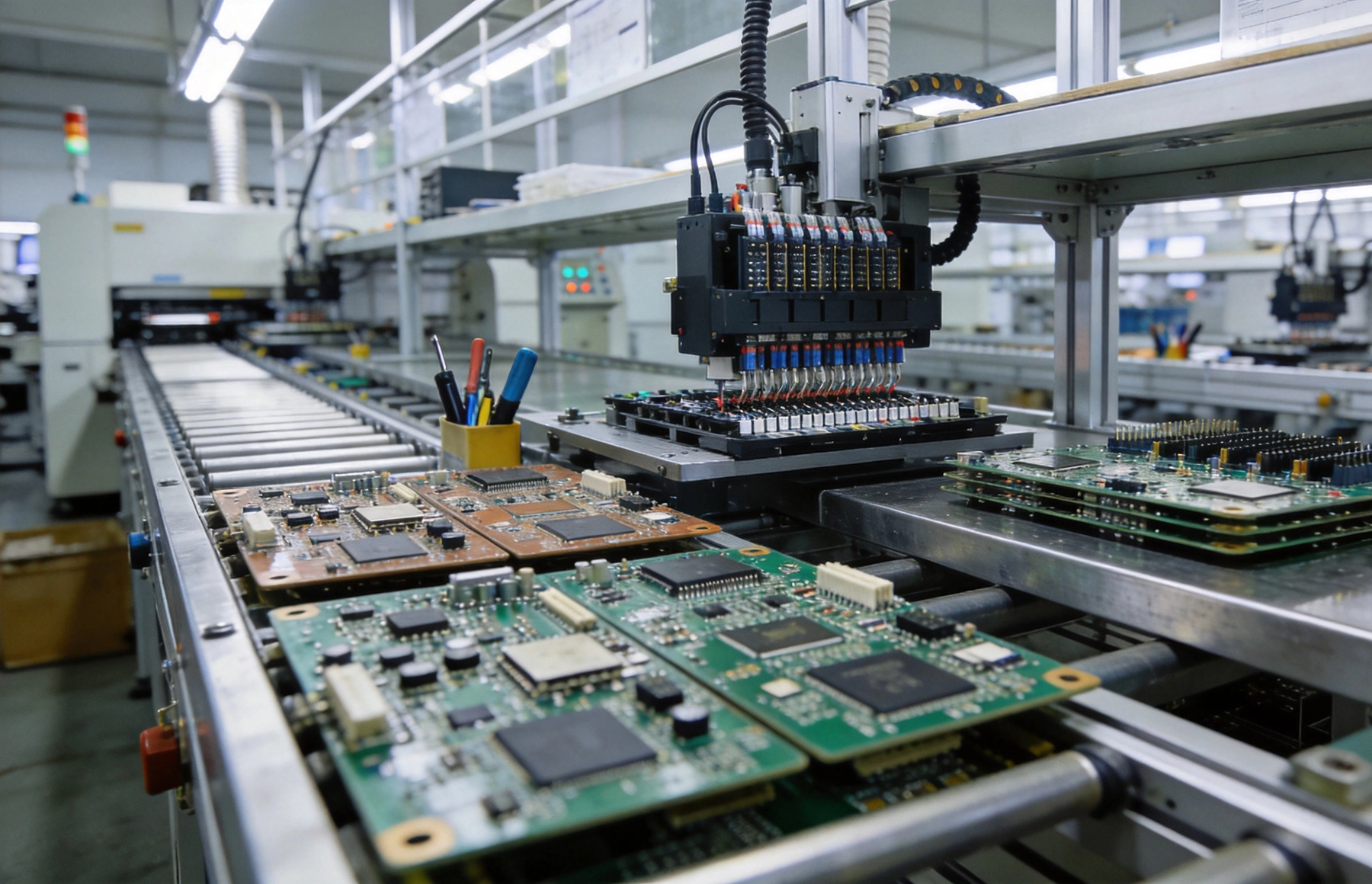
The terminology is descriptive. Low volume means the production run for any single part number is relatively small — typically anywhere from a handful of units to a few hundred. High-mix means the production mix is broad: a customer may order 50 units of product A, 20 units of product B, 100 units of product C, and 10 units of product D, all in a single production campaign.
Contrast this with a traditional high volume, low-mix model, where a single product line might run for months or years at a time with minimal changeovers. In that scenario, the line setup cost is amortized across thousands of units, making each unit inexpensive. The trade-off is inflexibility — if your product volumes are low and your mix is wide, dedicating a full production line to a 50-unit run is economically impractical.
Low volume, high-mix assembly services exist precisely to fill that gap. They are built around the ability to change over quickly between different board types, manage a large number of distinct part numbers in a single production run, and deliver consistent quality across a diverse product portfolio.
Several converging trends are driving the rise of low volume, high-mix assembly as a preferred manufacturing model.
End markets are fragmenting. Where a single industrial controller might have sold 10,000 units a year a decade ago, today the same category might require dozens of variants to serve different voltage ratings, communication protocols, form factors, or regulatory environments. Companies that once made one product for all customers now make dozens, each in relatively modest volumes.
This is especially visible in medical devices and industrial equipment, where customization for specific hospital systems, OEM partnerships, or regional certifications drives the need for many product variants at lower volumes.
The global supply chain disruptions of recent years have pushed companies away from large buffer inventories. Holding six months of stock in a warehouse feels risky when a single geopolitical event can render that inventory obsolete or inaccessible. The result is a shift toward smaller, more frequent production runs that keep inventory lean while still meeting demand.
Low volume, high-mix assembly services are naturally suited to this model. A contract manufacturer that can absorb a 50-unit order alongside other jobs in the same production week eliminates the need for customers to over-produce simply to meet minimum order quantities.
Product lifecycles are shortening across most electronics categories. A new industrial sensor or consumer device may have a commercially viable window of 18 to 36 months before a revised version arrives. In that context, betting on a 5,000-unit production run carries real financial risk. Lower volumes with shorter cycle times reduce exposure to design changes, market shifts, and component obsolescence.
The barrier to entry in electronics has dropped significantly. Hardware startups, university spin-offs, and research groups are building products that need to go from prototype to initial production in small batches before committing to higher volumes. Traditional EMS (electronics manufacturing services) providers focused on high-volume production are poorly equipped to serve these customers profitably. Low volume, high-mix specialists fill that gap with processes designed for exactly this kind of engagement.
Running a production line for low volume, high-mix work is fundamentally different from operating a high-volume, dedicated line. It requires different equipment, different staffing models, different quality systems, and a different business approach.
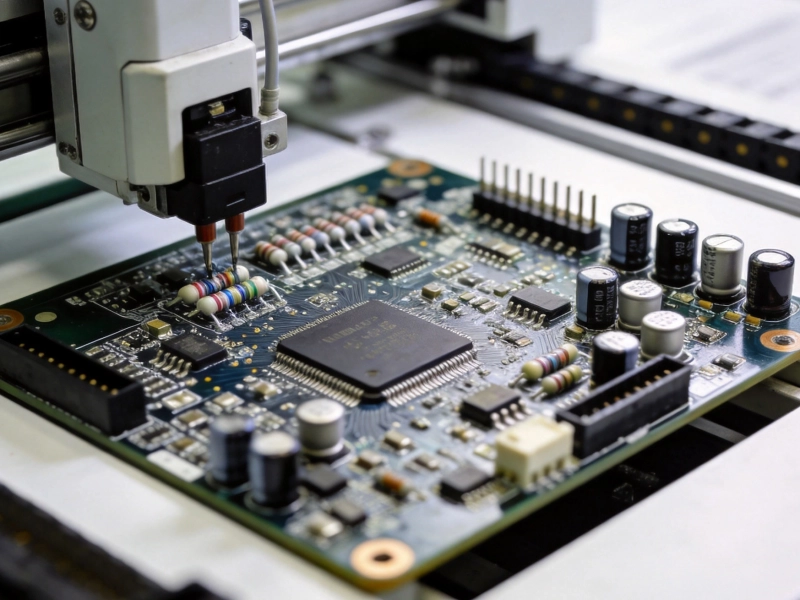
In a high-mix environment, the ability to change over between product types quickly is a core competency. Changeover time directly impacts throughput and cost, so manufacturers that specialize in this model invest heavily in standardized fixturing systems, rapid programming for pick-and-place machines, and SMT line configurations that minimize setup time between runs.
A well-run high-mix line should be able to switch between different board types within hours, not days. This requires careful pre-production planning — stencils organized by job, feeders pre-loaded where possible, and a production scheduling system that groups similar jobs to minimize the number of changeovers in a given shift.
Managing 20 different part numbers in a single production campaign generates significant documentation overhead. Each board type needs its own traveler, BOM verification, inspection plan, and test routine. A manufacturer handling high-mix work needs robust program management systems — both technical (MES systems, shop floor tracking) and administrative (clear reporting, structured handoff documentation) — to keep everything organized without dropping units.
For customers, this means having your documentation in order matters more than ever. Incomplete BOMs, ambiguous part numbers, or missing assembly drawings will cause proportionally more disruption in a high-mix environment than in a repetitive high-volume run, where errors tend to get caught in the first article inspection and corrected before the bulk of production.
High-mix assembly means managing a wide variety of component types across many different BOMs simultaneously. A manufacturer running 30 jobs in a single week may need to source and kitting components for 30 different sets of parts, each with its own lifecycle status, lead time, and qualification requirements.
This is where turnkey assembly models — where the manufacturer handles component procurement as well as assembly — deliver the most value. Attempting to manage consignment inventory for a dozen different BOMs simultaneously is a logistical challenge that few internal teams have the bandwidth to execute reliably.
With dozens of different board types, test programs must be flexible and fast to deploy. Flying probe testers are particularly well-suited to low volume, high-mix work because they do not require custom test fixtures — the test program can be loaded from CAD data and deployed without building a dedicated bed-of-nails fixture for each board type. For higher-volume jobs within the mix, in-circuit testers (ICT) or functional test (FCT) systems may justify the fixture investment, but a balanced approach that uses flying probe for low-to-medium volume boards and dedicated fixtures for high-volume boards within the mix is the most cost-effective strategy.
While low volume, high-mix assembly serves a broad range of customers, several industry sectors are particularly active drivers of demand.
Factory automation is one of the strongest drivers of high-mix demand. Industrial controllers, motor drives, sensor modules, and communication gateways come in dozens of configurations to match different voltage domains, communication protocols (EtherCAT, Profinet, Modbus, CANopen), and environmental ratings. A single OEM may serve hundreds of end customers, each with slightly different specifications — resulting in a product portfolio that naturally requires high-mix production.
Regulatory requirements and the trend toward personalized or application-specific medical devices have pushed many medical electronics manufacturers toward lower-volume, higher-mix production. Portable diagnostic equipment, patient monitoring modules, and therapeutic devices often require device-specific configurations that cannot be consolidated into a single high-volume SKU. Quality systems that can maintain lot traceability across a diverse product mix without cross-contamination or documentation errors are essential in this sector.
Defense programs are notorious for low volumes and high mix. A radar module for one platform may share only 30 percent of its components with a similar module for a different program. Add in the requirements for MIL-SPEC compliance, extended product lifecycles (programs may run 15 to 20 years), and the need for consistent builds years apart, and you have a manufacturing environment that demands extraordinary process control and documentation rigor.
The hardware startup ecosystem has expanded dramatically, and with it the need for manufacturing partners that can support products at the prototype-to-low-volume stage. Drones, robotics, IoT devices, agricultural technology, and clean energy equipment are all categories where product-market fit is still being validated and where committing to high-volume production before achieving product-market fit is financially dangerous.
Not all contract manufacturers are equipped to handle high-mix work, even if they claim to. Here are the specific capabilities to evaluate when selecting a partner for this type of production.
Ask for examples of changeover times on recent jobs. A manufacturer that quotes five-day changeover times is implicitly telling you they are not optimized for high-mix work. Look for partners that can demonstrate changeovers measured in hours rather than days, and that have standardized their changeover process as a repeatable operation rather than a custom improvisation each time.
Find out how they track jobs through the production process and how they communicate status to customers. A robust MES or job tracking system that provides visibility into where each part number is in the process — from kit receipt through SMT, through-hole, test, and ship — is a strong indicator of a mature high-mix operation. Ask to see a sample production report.
If you are choosing a turnkey model, ask how they manage kitting and component traceability for multiple simultaneous BOMs. Dedicated kitting areas, serialized tray and reel labeling, and clear separation of job-specific components during storage and on the line are all indicators of a well-run operation. Inconsistencies in kitting discipline are one of the most common sources of assembly errors in high-mix environments.
Quality control in a high-mix environment cannot rely on the same approach as a dedicated high-volume line. Look for manufacturers that use AOI universally (not just on select boards), that have standardized defect classification and escalation procedures, and that maintain first-pass yield data broken down by job. A partner that can show you consistent yield data across a diverse product portfolio has the process discipline to manage your work reliably.
With many jobs running simultaneously, communication can easily slip through the cracks if the manufacturer does not have clear ownership and escalation paths for each customer account. Ask about their primary point of contact model, typical response times, and how they handle urgent issues that arise mid-run. A manufacturer that treats low-volume customers as second-class citizens will not deliver the experience you need.
It would be misleading to discuss low volume, high-mix assembly without addressing the cost question directly. Per-unit costs for a 50-unit run will be higher than per-unit costs for a 5,000-unit run of the same board. That is simply the economics of setup amortization.
What the low volume, high-mix model offers is not lower per-unit cost — it is lower total cost of ownership when you factor in the alternatives. The cost of maintaining excess inventory to avoid under-running minimum order quantities, the cost of redesigning a product to meet a volume threshold, the cost of supply chain disruption from over-committing to a single product variant — these costs often dwarf the incremental per-unit assembly premium.
A well-run low volume, high-mix manufacturer optimizes the entire supply chain for flexibility, not just for the unit cost of assembly. When you evaluate quotes, look beyond the unit price and consider what you are paying for: faster response to demand changes, lower inventory risk, and the ability to bring products to market without betting on a single production forecast.
The demand for low volume, high-mix assembly services is not a passing trend — it is a structural shift driven by market fragmentation, supply chain risk reduction, faster product cycles, and the growth of the hardware startup ecosystem. Manufacturers that have built their operations around this model offer a compelling alternative to the traditional high-volume EMS approach, particularly for companies in industrial automation, medical devices, aerospace, and emerging technology sectors.
Choosing the right low volume, high-mix assembly partner requires looking beyond the quoted per-unit price to evaluate changeover performance, program management maturity, component handling discipline, quality systems, and communication practices. The right partner will behave as an extension of your engineering and supply chain organization — absorbing complexity, reducing your risk exposure, and enabling you to bring products to market on terms that match your actual business conditions.
Contact us to discuss your requirements.
The Hidden Costs of DIY PCB Assembly vs. Professional ServicesAugust/11/2026

Customer Success Story: Solving Complex Thermal Issues in PCBASeptember/18/2026
High-Reliability PCB Assembly Services for Automotive ElectronicsJuly/08/2026
Supply Chain Resilience: How Turnkey Providers Handle ShortagesSeptember/28/2026
Optimizing Component Spacing for Efficient PCB AssemblySeptember/10/2026