Open Nav



The electronics manufacturing industry is experiencing a revolution in solder paste technology that promises to reshape surface mount technology (SMT) assembly processes worldwide. Driven by increasingly demanding requirements for miniaturization, higher component density, and environmental sustainability, solder paste manufacturers are developing innovative formulations that address traditional limitations while opening new possibilities for advanced electronic devices. These advancements span lead-free materials, nano-coated formulations, high-temperature applications, and process automation compatibility, representing a significant leap forward in assembly quality, yield rates, and manufacturing efficiency. As manufacturers race to adopt these cutting-edge technologies, understanding the latest developments in solder paste technology becomes essential for staying competitive in today's fast-paced electronics market.
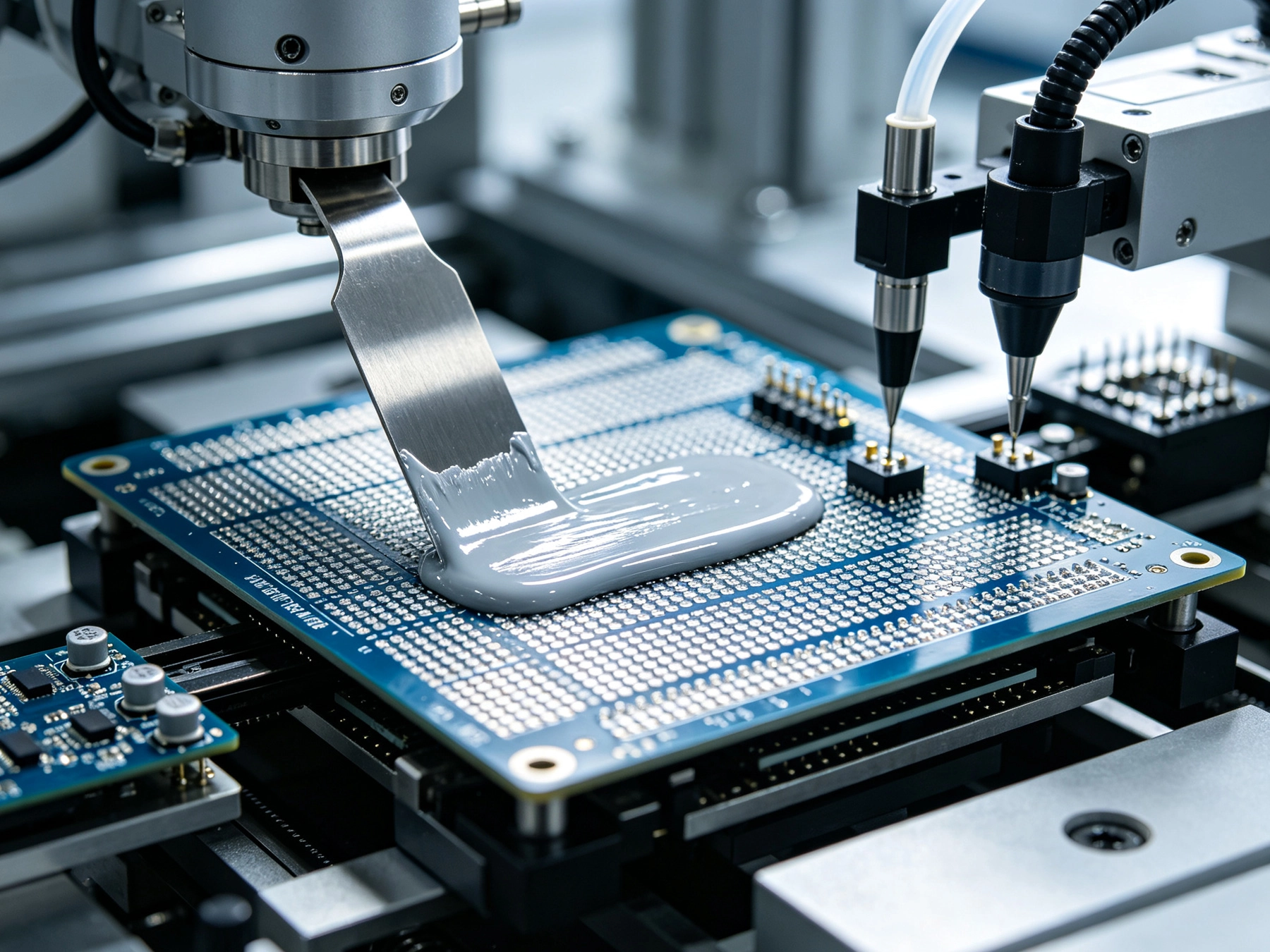
Lead-free solder paste technology has matured significantly since the initial RoHS implementation, with recent advancements addressing early challenges in thermal performance, reliability, and processability. Modern lead-free formulations now incorporate proprietary alloy combinations such as SAC305 (Sn-Ag-Cu with 3.0% silver, 0.5% copper) and alternative variants like SN100C (Sn-Cu-Ni) that offer improved wetting characteristics and reduced tombstoning potential. Manufacturers have developed specialized formulations for specific applications: low-temperature alloys (Sn-Bi-Ag based) for heat-sensitive components and flexible substrates, high-temperature alloys (Sn-Sb based) for automotive and industrial applications requiring enhanced thermal cycling resistance. Recent research focuses on nanoparticle-enhanced lead-free pastes that reduce melting points while maintaining mechanical strength, enabling lower processing temperatures without compromising joint reliability. These formulations achieve reflow temperatures 10-15°C lower than conventional lead-free materials, reducing thermal stress on components and energy consumption during manufacturing.
One of the most exciting recent developments in solder paste technology involves the application of nanocoating techniques to solder particles. Nano-coated solder paste features individual solder particles coated with nanometer-thin layers of oxidation-resistant materials such as silver, nickel, or polymer compounds. This coating technology provides multiple benefits: extended shelf life through improved oxidation resistance, enhanced thermal stability during storage and transport, superior wetting characteristics that improve joint formation, reduced void formation during reflow, and better compatibility with advanced component finishes like ENIG (Electroless Nickel Immersion Gold). The nanocoating also enables finer powder mesh sizes (Type 6 and Type 7) without sacrificing reliability, supporting the miniaturization trend toward 01005 and smaller components. Manufacturers report yield improvements of 5-8% on complex boards with high component density when using nano-coated formulations. The technology is particularly valuable for high-reliability applications in aerospace, medical devices, and automotive electronics where joint consistency is critical.
The growing demand for electronics capable of operating in extreme environments has driven development of advanced high-temperature solder paste formulations. These specialized materials address applications including automotive under-hood electronics, industrial motor controllers, aerospace systems, and energy conversion equipment where operating temperatures routinely exceed 125°C. Modern high-temperature pastes incorporate tin-antimony (Sn-Sb) based alloys with melting points above 235°C, significantly higher than standard lead-free materials. Recent formulations include proprietary additions such as bismuth, indium, and rare earth elements that improve mechanical properties without sacrificing thermal performance. Manufacturers have also developed matching flux systems optimized for high-temperature processing, preventing oxidation and ensuring proper wetting at elevated reflow temperatures. These advances enable reliable soldering of components including high-power MOSFETs, IGBTs, and power modules that require robust thermal cycling resistance. Testing shows joint strength retention exceeding 85% after 2000 thermal cycles between -40°C and 175°C, meeting demanding automotive qualification requirements.
Beyond traditional soldering, advancements in conductive paste technology are opening new possibilities for electronics manufacturing. Silver conductive pastes with nanoparticle formulations achieve conductivity levels approaching bulk silver while maintaining process compatibility with standard SMT equipment. These materials enable applications including die-attach for high-power LEDs, semiconductor packaging, and MEMS devices where traditional solder may be inappropriate. Carbon-based conductive pastes offer cost-effective alternatives for flexible electronics and wearable devices where mechanical flexibility is required. Recent developments in isotropic conductive adhesives (ICAs) provide bonding solutions for temperature-sensitive components and heterogeneous integration of dissimilar materials. Anisotropic conductive adhesives (ACAs) with controlled particle orientation enable fine-pitch interconnects for display driver ICs and camera modules. These conductive paste technologies complement traditional solder paste by providing specialized solutions for applications where mechanical, thermal, or electrical requirements demand alternative approaches.
Solder paste technology advancements extend beyond material composition to include improved compatibility with automated dispensing systems and smart manufacturing processes. Manufacturers have developed formulations optimized for high-speed jet dispensing, with rheological properties that maintain consistent droplet formation at production rates exceeding 10,000 dots per second. These materials include controlled thixotropy, reduced splattering tendencies, and fast stabilization after deposition, ensuring uniform paste deposits even at high throughput. Integration with Industry 4.0 initiatives includes smart packaging systems that track batch information, expiration dates, and storage conditions through embedded RFID or barcode systems. Paste quality monitoring systems incorporate real-time viscosity measurement, temperature tracking, and automated alert systems to prevent process drift. Machine learning algorithms analyze dispensing patterns and adjust parameters automatically to compensate for material variations. These advancements support lean manufacturing principles by reducing material waste, improving process repeatability, and enabling predictive maintenance through continuous monitoring of paste condition.
Solder paste manufacturers are increasingly focused on developing environmentally sustainable formulations that address growing regulatory requirements and corporate sustainability goals. Recent advances include halogen-free flux systems that eliminate bromine and chlorine compounds while maintaining cleaning efficiency and activity. These formulations meet IEC 61249-2-21 requirements for halogen-free electronics and support green manufacturing initiatives. Water-soluble flux systems have been improved to provide excellent cleaning characteristics without requiring organic solvents, reducing VOC emissions and simplifying waste treatment processes. Manufacturers are developing bio-based flux formulations derived from renewable resources, reducing dependency on petrochemical raw materials. Powder recovery systems reclaim unused solder paste from spent containers, reducing material waste and lowering raw material consumption. Life cycle assessment (LCA) data is increasingly available for solder paste products, enabling manufacturers to make informed decisions about environmental impact. These sustainability initiatives align with customer expectations for environmentally responsible products and prepare manufacturers for evolving regulatory requirements worldwide.
Advancements in quality assurance and traceability systems are raising standards across the solder paste industry. Manufacturers implement comprehensive testing protocols including automated metallographic analysis, X-ray inspection, and mechanical strength testing on every production lot. Traceability systems track raw material sources, batch numbers, and processing parameters throughout manufacturing, enabling complete supply chain transparency. Statistical process control (SPC) systems monitor critical parameters including particle size distribution, metal content, flux activity, and rheological properties with real-time data analysis. Certificate of Analysis (CoA) systems provide detailed specification compliance data for each lot, including pass/fail status for all critical parameters. Automated inspection systems detect contaminants, foreign objects, and processing anomalies with sensitivity approaching single-micron resolution. These quality systems are integrated into customer-facing portals providing 24/7 access to lot information, test reports, and certification documents. Enhanced traceability enables rapid root cause analysis when issues arise, supports regulatory compliance requirements, and provides assurance for high-reliability applications where material verification is critical.
The rapid advancement of solder paste technology is supported by increased industry collaboration and proactive standards development. Industry organizations including IPC, JEDEC, and IEC maintain active working groups focused on solder paste specifications, test methods, and reliability requirements. Manufacturers participate in joint development programs with leading electronics companies to address emerging application requirements. University research partnerships drive fundamental understanding of solder paste behavior and development of next-generation formulations. Standardization efforts address new requirements including nanoparticle materials, conductive adhesives, and advanced flux chemistries. Industry conferences and technical forums provide venues for sharing research findings and discussing best practices. Collaborative testing programs validate new materials through cross-industry evaluation, accelerating adoption and building confidence in novel formulations. This collaborative approach ensures that advancements in solder paste technology address real-world manufacturing challenges while maintaining compatibility with existing processes and equipment.
The future of solder paste technology promises continued innovation as manufacturers address emerging requirements for advanced electronics applications. Research on self-healing solder materials aims to develop formulations that can repair microcracks through thermal cycling, extending product life in demanding applications. Low-temperature bonding materials below 150°C enable integration of temperature-sensitive components including certain organic electronics and advanced sensors. 3D-printable solder materials support additive manufacturing approaches for rapid prototyping and specialized production runs. Smart solder materials with embedded sensing capabilities enable in-situ monitoring of joint health for predictive maintenance applications. Quantum dot-enhanced pastes provide improved thermal and electrical conductivity for power electronics applications. AI-driven formulation optimization uses machine learning to predict material performance and accelerate development cycles. These emerging technologies promise to reshape the electronics manufacturing landscape in coming years, enabling new product categories and improved performance across all application segments.
Advancements in solder paste technology represent a critical enabler for continued innovation in electronics manufacturing. From improved lead-free formulations to nano-coated materials, high-temperature solutions, and smart manufacturing integration, these developments address pressing industry challenges while opening new possibilities for advanced electronic products. Manufacturers that stay informed about these technological advances and strategically implement appropriate solutions will be positioned to achieve superior assembly quality, improved yields, and competitive advantage in their markets. The pace of innovation shows no signs of slowing, with ongoing research and development promising even more sophisticated capabilities in the years ahead. For electronics manufacturers, staying current with solder paste technology trends is not optional—it's essential for maintaining competitiveness in an industry where excellence in assembly processes directly translates to product success in the marketplace.
What is nano-coated solder paste and what are its benefits?
Nano-coated solder paste features individual solder particles coated with nanometer-thin oxidation-resistant materials such as silver, nickel, or polymer compounds. Benefits include extended shelf life through improved oxidation resistance, enhanced thermal stability, superior wetting characteristics, reduced void formation, and better compatibility with advanced component finishes. The technology also enables finer powder mesh sizes for miniaturization while maintaining reliability.
How have lead-free solder paste formulations improved since initial RoHS implementation?
Modern lead-free formulations have evolved significantly with improved alloy combinations, better wetting characteristics, and reduced tombstoning potential. Manufacturers offer specialized formulations for specific applications including low-temperature alloys for heat-sensitive components and high-temperature alloys for automotive and industrial applications. Nanoparticle-enhanced pastes reduce melting points while maintaining strength, enabling lower processing temperatures.
What applications require high-temperature solder paste technology?
High-temperature solder paste is essential for applications including automotive under-hood electronics, industrial motor controllers, aerospace systems, energy conversion equipment, and power electronics where operating temperatures exceed 125°C. These materials must maintain joint strength and reliability after repeated thermal cycling between extreme temperatures.
How is solder paste technology supporting Industry 4.0 and smart manufacturing?
Solder paste manufacturers are developing materials optimized for high-speed jet dispensing, smart packaging with RFID tracking, real-time quality monitoring systems, and machine learning algorithms for process optimization. These advancements support automated manufacturing, predictive maintenance, and continuous process improvement through data-driven decision making.
What environmental sustainability initiatives are being implemented in solder paste manufacturing?
Key initiatives include halogen-free flux systems, water-soluble formulations to reduce VOC emissions, bio-based flux from renewable resources, powder recovery systems to reduce waste, and comprehensive life cycle assessment data. These efforts address regulatory requirements, customer sustainability expectations, and corporate environmental responsibility goals.
Precision SMT PCB Assembly for Wearable TechnologyJune/16/2026
The Science of Solder Paste Printing: Keys to Perfect SMT AssemblyMay/19/2026
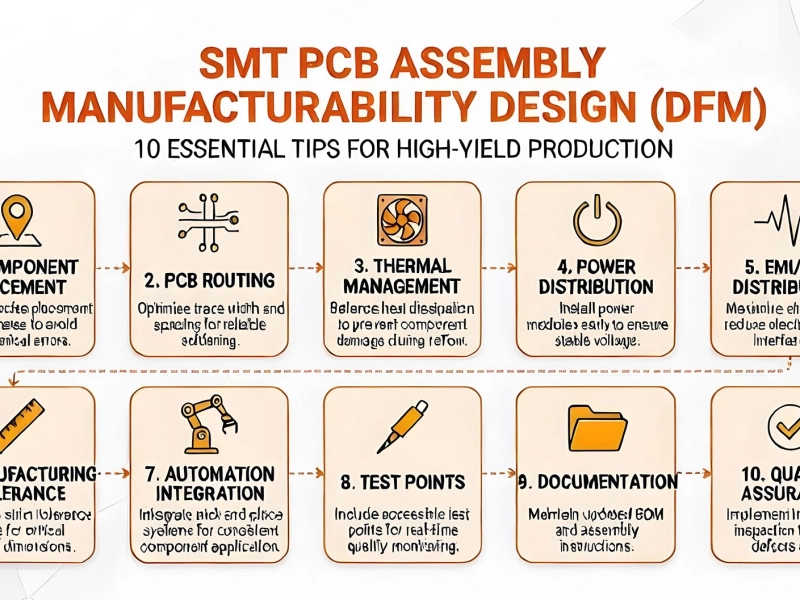
Top 10 DFM (Design for Manufacturability) Tips for SMT PCB AssemblyJune/08/2026
Avoiding Tombstoning and Bridging in Your PCB LayoutJuly/30/2026

How the Global Chip Shortage is Impacting PCB Assembly ServicesJuly/23/2026