Open Nav



Product development in the electronics industry has always been a race against time. The gap between a concept sketched on paper and a finished product sitting on a store shelf can make or break a company's competitive position. In this race, the ability to move quickly through design iterations often determines which teams cross the finish line first. Quick-turn PCB assembly has emerged as one of the most powerful enablers of this speed, compressing timelines that once took months into weeks or even days.
Iterative design is not merely a buzzword in electronics development. It is the practical reality of how robust products get built. No matter how thorough the simulation or how experienced the design team, the first physical prototype inevitably reveals issues that no amount of modeling can surface. Signal integrity problems emerge when real traces carry real currents. Thermal bottlenecks appear once components actually dissipate power. Mechanical fit issues surface when a board must be crammed into a housing that looked fine on CAD but proved impossible in the hand. Quick-turn assembly gives engineers the ability to discover these problems early, fix them rapidly, and validate the solutions before committing to expensive volume production.
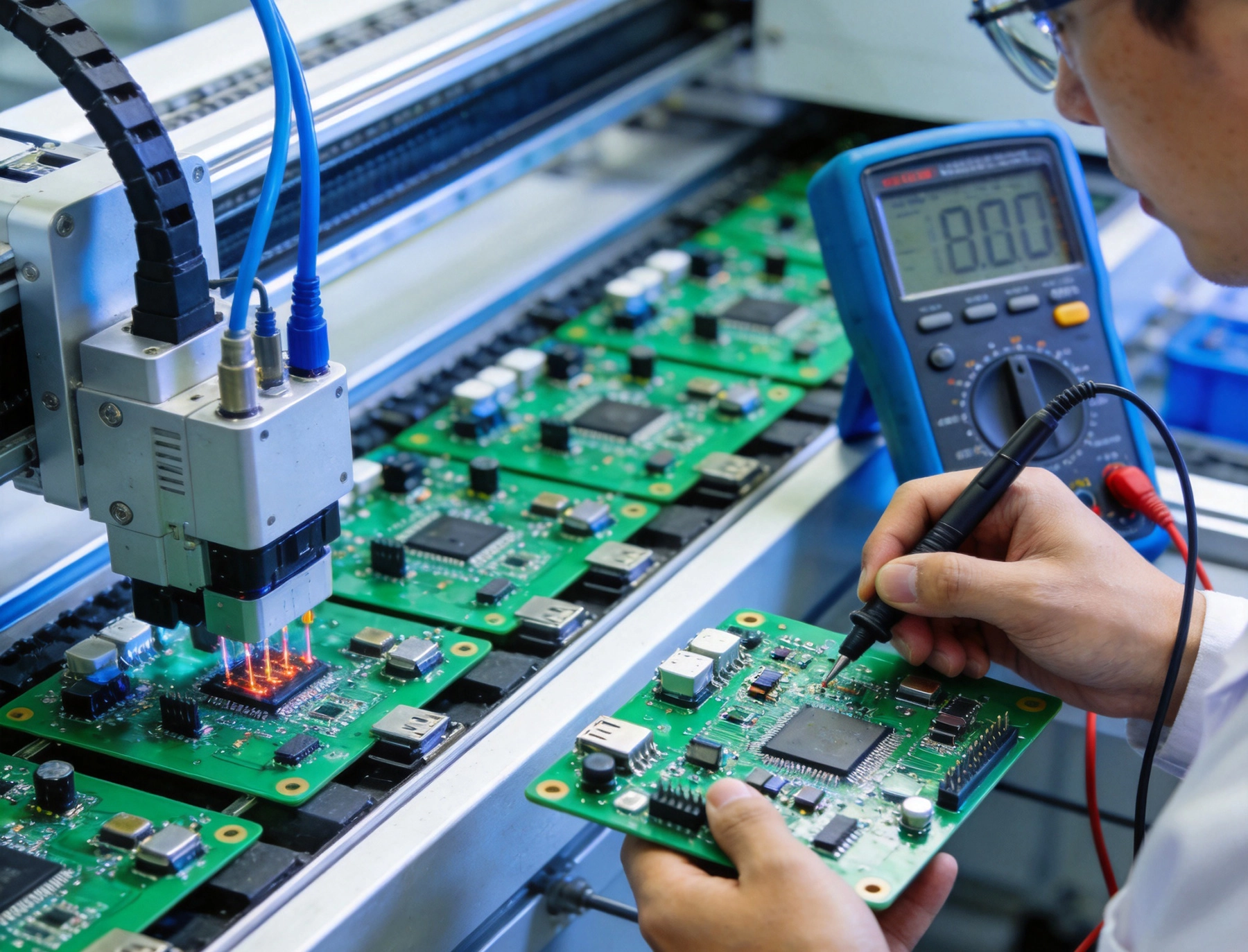
The term quick-turn can mean different things depending on who you ask. At its core, it refers to PCB assembly services capable of producing fully populated boards in substantially shorter timeframes than standard production lead times. Where typical assembly services operate on lead times of two to four weeks, quick-turn providers routinely deliver boards within five to ten business days, with some extreme cases achieving turnaround in 24 to 48 hours for simpler designs.
However, speed alone does not define quality. The best quick-turn services maintain the same inspection rigor, process controls, and documentation standards as production facilities. They simply organize their operations, material staging, and scheduling to prioritize rapid throughput without sacrificing the steps that ensure reliable results. This makes quick-turn assembly fundamentally different from improvised rush jobs that cut corners to meet artificial deadlines.
Iterative design follows a pattern that should be familiar to anyone who has developed a complex electronic product. The cycle typically progresses through schematic capture and simulation, PCB layout, prototype fabrication, testing and validation, problem identification, design revision, and then back to fabrication again. Each complete cycle narrows the gap between the design concept and a producible, reliable product.
Assembly is the step where the design transitions from virtual to physical. Before assembly, problems exist only in models and simulations. After assembly, the design faces real-world conditions: real solder joints, real component tolerances, real thermal loads, and real electromagnetic interactions. This physical manifestation of the design is where iteration delivers its greatest value, because it surfaces issues that would otherwise only be discovered during production or, worse, after product shipment.
The financial implications of iteration speed extend far beyond simple convenience. Every week saved in the development cycle translates directly into earlier market entry, which in many product categories means the difference between commanding a premium price and fighting for scraps in a crowded market. Consumer electronics particularly reward first movers, where features that seem innovative in year one become expected commodities by year three.
Beyond market timing, rapid iteration reduces overall development cost. Design errors caught early are inexpensive to fix. A schematic change costs almost nothing. A layout revision costs modest time and money. A board re-spin after a failed production run costs significantly more. A product recall after shipment can be catastrophic. By enabling earlier error detection, quick-turn assembly shifts problem-solving toward cheap, early-stage revisions rather than expensive late-stage firefighting.
Engineering teams also benefit from faster iteration through improved morale and focus. Engineers who can test their ideas quickly and see results within days rather than weeks maintain higher engagement levels and produce better work. The frustration of waiting four weeks to discover that a design choice was wrong, only to wait another four weeks to test the fix, demoralizes teams and slows progress in ways that compound across a development program.
Hardware startups face intense pressure to demonstrate functional prototypes to investors, partners, and early customers. The startup playbook often involves building a minimum viable product, gathering feedback, pivoting if necessary, and iterating rapidly. Quick-turn PCB assembly is ideally suited to this cadence, enabling startups to maintain momentum through physical prototyping without the long lead times that kill startup energy and enthusiasm.
University research labs and corporate R&D groups frequently encounter novel circuit topologies or emerging component technologies that lack established design libraries or reference designs. Quick-turn assembly allows researchers to experimentally validate theoretical predictions quickly, building physical evidence to support research findings or uncover unexpected behaviors that simulation failed to predict.
Even in industries with long production lifecycles, quick-turn assembly plays a critical role in pre-production development and obsolescence management. Engineers developing next-generation systems use quick-turn services to validate designs before locking in production configurations. Similarly, when legacy systems require replacement boards due to component obsolescence, quick-turn capabilities enable rapid development of drop-in replacements without extensive re-engineering.
The Internet of Things and wearable technology markets evolve at extraordinary speed. Product roadmaps shift based on competitive launches, technology availability, and changing market requirements. Quick-turn PCB assembly allows product teams to maintain flexibility in this dynamic environment, adapting designs rapidly when new sensor options emerge or when early user testing reveals unexpected requirements.
Speed introduces its own risks if not managed carefully. The temptation to compress testing phases to match accelerated assembly timelines can lead to insufficient validation. A board that assembles quickly but ships with undetected defects delivers zero benefit over a slowly assembled board full of bugs.
Effective use of quick-turn assembly requires disciplined testing protocols that scale appropriately with prototype stages. Early prototypes focused on concept validation may require only basic functional testing. Subsequent iterations targeting design verification should include progressively comprehensive testing including thermal characterization, EMC pre-compliance, and environmental stress screening. The key is matching test depth to design maturity, not arbitrarily skipping validation steps simply because the next board will arrive quickly.
Documentation discipline also becomes more critical in rapid iteration environments. When boards arrive every week, it is easy to lose track of which version addressed which problem, or to accidentally propagate an old error into a new revision. Maintaining clear revision control, change logs, and configuration management practices prevents these quality regressions and ensures that each iteration builds correctly on prior learnings.
Not all quick-turn services deliver equal value. Evaluating potential partners requires attention to several factors beyond simple lead time numbers.
Component access and inventory: Quick-turn services that maintain extensive component inventories can assemble boards faster than those that must source every part from distributors. Services with broad in-stock components reduce one of the most common sources of delay in rapid prototyping.
Technology range: Some quick-turn services limit themselves to simpler two or four-layer boards with standard SMD components. Projects requiring high-layer-count boards, buried capacitance technologies, or advanced component packages like BGA or QFN need partners with broader manufacturing capabilities. Verify that your potential partner can handle your actual design complexity before committing.
Quality assurance: Ask about inspection procedures. Services that perform automated optical inspection, X-ray inspection for BGA packages, and electrical testing before shipment deliver more reliable prototypes than those that skip these steps to save time. The time cost of inspection is typically small compared to the cost of debugging a defective prototype.
Engineering support: The best quick-turn partners act as extensions of your engineering team, offering DFM feedback, recommending design optimizations, and proactively flagging potential manufacturing issues before they cause delays. This engineering engagement separates premium quick-turn services from commodity assembly brokers.
One of the most common mistakes in using quick-turn assembly is attempting to do too much in a single iteration. The psychological appeal of getting everything right in one prototype often leads to overcomplex first spins that are slow to assemble and difficult to debug. Experienced engineers tend to favor simpler, more focused early prototypes that isolate specific design questions rather than attempting comprehensive validation in a single board.
This approach, sometimes called staged prototyping, uses multiple quick-turn boards, each designed to answer specific questions. One board might validate power distribution architecture. Another tests RF section performance. A third evaluates mechanical fit with the intended enclosure. This separation simplifies debugging, speeds identification of root causes, and often results in faster overall progress than attempting monolithic first prototypes.
Advances in assembly technology continue to push the boundaries of what quick-turn means. New York door SMT lines with rapid component placement, AI-driven inspection systems, and automated programming workflows are compressing timelines further. Some facilities now offer 24-hour turnaround as standard service for boards within their core technology envelope.
Vertical integration trends also favor faster iteration. Manufacturers that control fabrication, assembly, and test under one roof eliminate the transfer delays that occur when work moves between separate facilities. This consolidation can cut days from lead times without sacrificing the specialized capabilities that each processing stage requires.
Quick-turn PCB assembly has fundamentally changed the economics and timelines of electronic product development. By compressing the prototype cycle from weeks to days, it enables the iterative design approach that produces robust, reliable products while reducing development cost and risk.
For engineering teams building anything beyond the simplest circuits, access to responsive assembly partners has become a competitive necessity. The ability to test a design hypothesis, learn from the results, and validate the fix within a single week transforms what is possible in product development. Teams that master this iterative rhythm consistently outperform those constrained by traditional manufacturing timelines.
Whether you are developing the next breakthrough IoT device, advancing academic research, or engineering mission-critical aerospace systems, quick-turn PCB assembly deserves a central place in your development workflow. The investment in finding capable quick-turn partners pays dividends throughout the product lifecycle, from initial concept through production ramp. Contact us to discuss your requirements and discover how rapid assembly services can accelerate your design iteration cycle.
The Role of Low Volume Assembly in Aerospace and DefenseJuly/21/2026
Managing Component Sourcing for Low Volume Production RunsSeptember/26/2026
Offshore vs. Domestic PCB Assembly Services: Analyzing the Trade-offsJuly/16/2026
Reflow Soldering Profiles Explained: Avoiding Thermal DefectsJuly/01/2026

IoT Device Manufacturing: Speed and Efficiency in PCBAAugust/03/2026