Open Nav



Minimum Order Quantity (MOQ) requirements represent one of the most significant barriers for startups, small businesses, and product innovators looking to bring electronic products to market. Printed Circuit Board Assembly (PCBA) manufacturers impose MOQs to cover setup costs, optimize production line utilization, and maintain profitability—but these minimums often force organizations to order far more units than they actually need, tying up critical capital in excess inventory and delaying product launches.
Fortunately, as manufacturing technology evolves and market demand for flexible production grows, numerous strategies have emerged to help companies overcome MOQ challenges without compromising quality or incurring prohibitive costs. This guide explores practical approaches to navigating MOQ requirements, selecting manufacturing partners, and optimizing your product design for low-volume production efficiency.
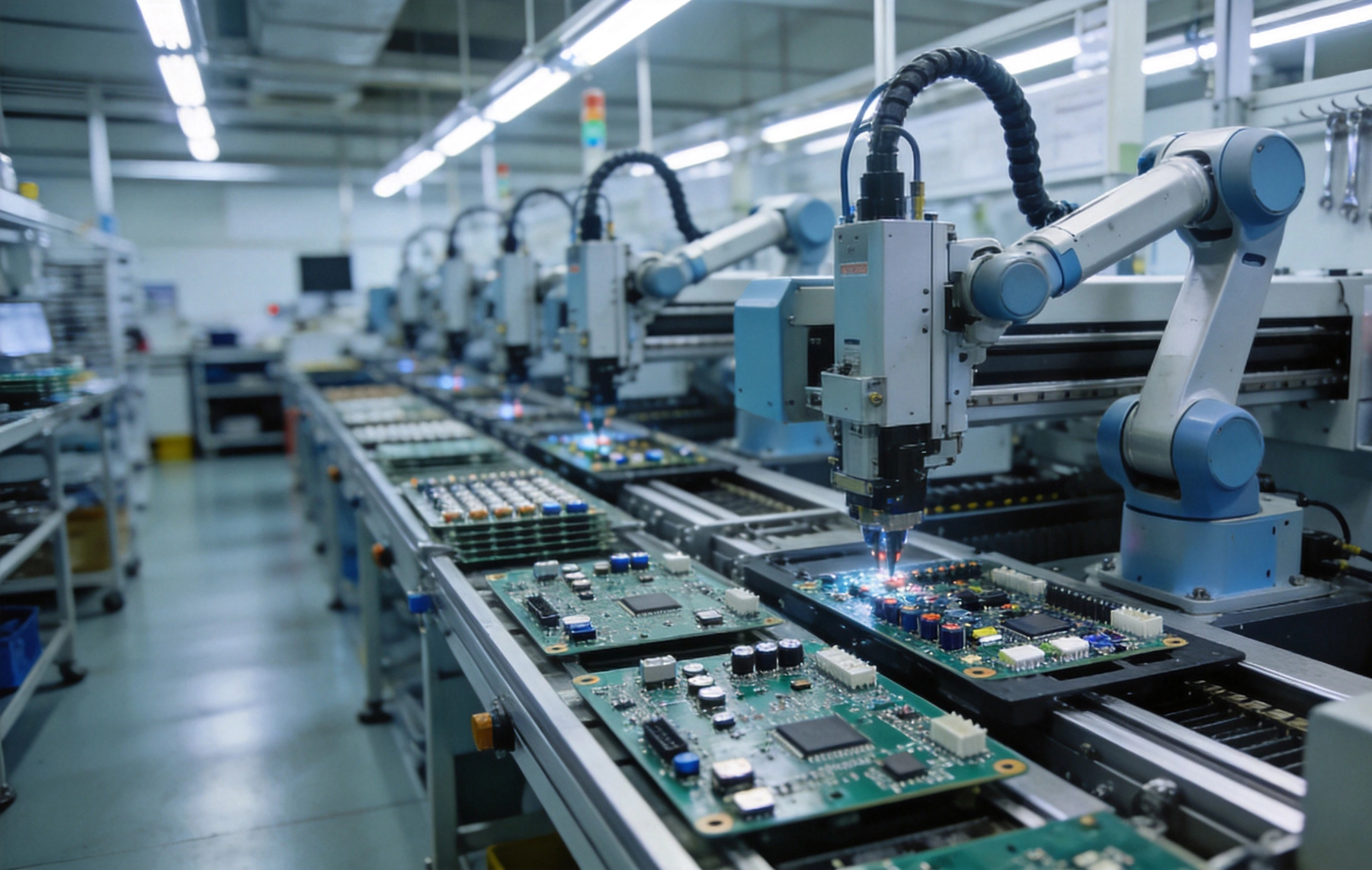
Before addressing solutions, it's important to understand why MOQs exist and how they're calculated. PCBA involves multiple complex steps including stencil creation, solder paste application, component pickup and placement, reflow soldering, inspection, and testing. Each of these steps requires setup time, equipment calibration, and labor that manufacturers must account for in their pricing structure.
MOQ requirements vary dramatically between manufacturers, ranging from just 1 unit for specialized prototype shops to 10,000+ units for high-volume mass production facilities. Factors influencing MOQ levels include the complexity of your assembly, component availability, production line capacity, and the manufacturer's target market segment. High-mix, low-volume manufacturers typically operate with lower MOQs but may charge higher per-unit pricing, while high-volume facilities offer lower per-unit costs but require larger orders.
It's also important to distinguish between board MOQs and component MOQs. While many companies focus on the assembly MOQ, electronic components often have their own minimum purchase requirements, particularly for specialized or custom parts, which can add unexpected costs even when working with low-MOQ assembly partners.
Smart design decisions made early in the product development process can significantly mitigate MOQ challenges. By optimizing your design for low-volume manufacturability, you can reduce both setup costs and component-related minimums.
Standardizing components across product lines represents one of the most effective strategies. Where possible, use common, widely available components that your manufacturer already purchases in bulk for other customers. This approach eliminates the need for special component purchases with high MOQs and may even reduce component costs due to the manufacturer's volume discounts. Avoid custom or highly specialized components unless absolutely necessary for your product's functionality.
Modular design principles can also help. By breaking your product into reusable functional modules, you can aggregate production quantities across multiple product variants to meet MOQ requirements for individual modules, even when final product quantities remain low. This approach also simplifies inventory management and reduces engineering changes across product lines.
Consider flexible design approaches that allow for configuration changes without requiring major PCB modifications. Using programming headers, configurable firmware, and selectable component options enables you to use the same base assembly for multiple product versions, increasing effective production volumes while maintaining product differentiation.
Panelization offers powerful opportunities to reduce MOQ requirements and lower per-unit costs. Most PCBA manufacturers standardize on specific panel sizes, typically around 18x24 inches or similar dimensions. By combining multiple designs on a single production panel, you can effectively split setup costs across multiple projects, reducing MOQ requirements for each individual design.
Some manufacturers offer "gang panel" services specifically designed for low-volume customers, allowing multiple clients to share panel space on a single production run. This approach can reduce effective MOQs by 75% or more compared to ordering dedicated panels for small production runs. When using shared panel services, ensure your board dimensions fit standard panel layouts and that you've accounted for edge clearances and tooling holes required by the manufacturer.
For companies with multiple products or design variants, consolidating production into less frequent, larger runs can help meet MOQ requirements while still meeting overall demand. Work with your manufacturing partner to schedule production runs that combine multiple product variants on a single panel, reducing setup costs and MOQ pressures across your entire product portfolio.
Component MOQs often represent a larger financial burden than assembly MOQs themselves, particularly for designs using specialized semiconductors or custom passive components. Several strategies can help overcome component minimums without excessive cost.
Working with turnkey PCBA partners that maintain extensive component inventories can eliminate the need to purchase components directly. Many low-volume manufacturers purchase commonly used components in large quantities and charge customers only for the exact number used in their assembly, effectively absorbing component MOQ costs across multiple customer orders. This approach is particularly beneficial for designs using standard components that the manufacturer already stocks regularly.
Authorized distributors and specialized component suppliers increasingly offer "cut tape" and "reel splitting" services that allow you to purchase smaller quantities of components than the full reel MOQ. While per-unit costs are typically higher than full reel purchases, these services eliminate the need to purchase hundreds or thousands of extra components you'll never use. Some distributors also offer consignment inventory programs for regular customers, storing your custom components and supplying them only as needed for production runs.
For specialized components with very high MOQs, consider working with your design team to identify qualified drop-in alternatives with lower minimum purchase requirements. Simple component substitutions can sometimes reduce component costs by thousands of dollars on low-volume production runs without impacting product performance or reliability.
Choosing a PCBA manufacturer aligned with your volume requirements is arguably the most critical factor in overcoming MOQ challenges. The manufacturing ecosystem has evolved significantly in recent years, with numerous specialized providers focusing specifically on low-volume and prototype production.
Specialized low-volume PCBA manufacturers typically operate with much lower or even no MOQ requirements, sometimes offering assembly for as few as 1 unit. These facilities invest in flexible production equipment, quick-change tooling, and automated setup processes that enable them to economically produce small batches. While per-unit pricing is generally higher than high-volume manufacturers, the total cost of ownership is often lower for small orders because you avoid paying for excess inventory.
When evaluating potential manufacturing partners, explicitly discuss their MOQ policies and flexibility. Many manufacturers have official MOQ requirements but will accept smaller orders for existing customers or when production capacity is available. Building long-term relationships with a manufacturing partner can often lead to more flexible MOQ terms as they gain confidence in your business and future production volumes.
Also consider the manufacturer's geographic location. While offshore manufacturers typically offer lower per-unit pricing, they often have higher MOQ requirements. Domestic or regional manufacturers may have higher per-unit costs but much lower MOQs, potentially offering lower total cost for small production runs when shipping, import duties, and inventory holding costs are considered.
For companies anticipating growing demand as their product matures, hybrid production models offer a balanced approach to MOQ challenges while maintaining scalability. These models strategically combine low-volume manufacturing for initial production with high-volume capabilities for later stages of the product lifecycle.
One common approach is to use a low-MOQ domestic manufacturer for initial production runs of 100-1,000 units while validating market demand and refining the product design. Once the design is stable and order volumes increase, transition production to a higher-volume offshore manufacturer with lower per-unit costs. This approach minimizes upfront financial risk while still positioning you to scale production as demand grows.
Another hybrid strategy involves separating complex or custom components from standard assembly. For example, you might purchase custom components in larger quantities to meet their MOQ requirements, then store them at your assembly partner for use across multiple smaller production runs over time. This approach allows you to take advantage of component volume pricing while still maintaining flexibility in your assembly scheduling.
Some manufacturers specifically cater to this product lifecycle approach, offering both prototype/low-volume services and high-volume production capabilities, with streamlined transition processes between them. Working with such a provider eliminates the need to requalify a new manufacturer when scaling production, saving time and reducing transition risk.
When MOQ requirements are unavoidable, smart inventory management and financial planning can minimize their impact on your business. View excess inventory not as wasted cost but as a strategic asset that can reduce future production costs and lead times.
Implementing a just-in-case (JIC) inventory strategy for components with long lead times or high MOQs can actually reduce overall supply chain risk. By purchasing slightly more components than you need for your immediate production run, you create a buffer against supply chain disruptions, price increases, and component obsolescence. This is particularly valuable for critical semiconductors and custom parts that may have long lead times or limited availability.
Negotiate consignment agreements with your manufacturing partner for excess components and finished goods inventory. Many manufacturers will store your excess components on their shelves at no or low cost, using them only as needed for future production runs. This arrangement eliminates the need to store and manage inventory at your own facility while still allowing you to take advantage of volume pricing and meet component MOQs.
Phased production planning can also help spread MOQ costs across multiple budget cycles. Instead of ordering a full year's production in one batch to meet MOQ requirements, work with your manufacturer to schedule quarterly production runs that meet their minimums while aligning with your cash flow and demand forecasts. This approach reduces upfront capital expenditure while still allowing you to benefit from volume pricing.
Advances in manufacturing technology are continually reducing MOQ requirements and making low-volume production more economically viable. Several emerging trends are particularly promising for companies facing MOQ challenges.
Digital manufacturing platforms that integrate automated quoting, design analysis, and production scheduling are enabling manufacturers to reduce setup times and operate more efficiently at lower volumes. These systems eliminate much of the manual labor traditionally involved in preparing for new production runs, significantly reducing the cost basis that drives MOQ requirements.
Automated component storage and handling systems allow manufacturers to efficiently manage thousands of different component reels for multiple customers simultaneously. This technology makes it practical for manufacturers to maintain extensive component inventories and handle frequent changeovers between different customer jobs, enabling lower MOQs and faster turnaround times.
The growing adoption of industry 4.0 principles and smart factory technology is further increasing manufacturing flexibility. Advanced production lines with quick-change tooling, automated calibration, and real-time production monitoring can switch between different products in minutes rather than hours, dramatically improving the economics of low-volume production.
Additive manufacturing for electronic components is also beginning to impact MOQ requirements. While still in early stages, 3D printed electronics and on-demand component manufacturing promise to eventually eliminate MOQ requirements entirely for certain types of components, enabling truly customized production at any volume.
Overcoming MOQ challenges in PCBA manufacturing doesn't require finding a manufacturer with no minimums—it requires implementing a coordinated strategy that combines design optimization, smart sourcing, appropriate partner selection, and creative production planning. The optimal approach depends on your specific situation, including your product complexity, forecasted demand, available capital, and risk tolerance.
By taking a proactive approach to MOQ management early in the product development process, you can significantly reduce their impact on your business. Focus on designing for manufacturability in low volumes, standardizing components wherever possible, and building relationships with flexible manufacturing partners that understand your business needs and can grow with you.
As manufacturing technology continues to advance, MOQ requirements will almost certainly continue to decrease, making it increasingly feasible to bring electronic products to market without the large upfront investments traditionally required. By combining the strategies outlined above with emerging manufacturing capabilities, companies of all sizes can overcome MOQ challenges and successfully bring innovative electronic products to market at any volume.

The Rise of AI in SMT Quality InspectionJune/18/2026
Medical PCBA: Meeting Strict Regulatory Standards in AssemblySeptember/01/2026

Supply Chain Resilience: How Turnkey Providers Handle ShortagesSeptember/28/2026
Optimizing Component Spacing for Efficient PCB AssemblySeptember/10/2026

Rapid Prototyping: Getting Your Electronics from Concept to RealitySeptember/11/2026